

Ready to elevate your decor beyond the floor? Explore The Definitive Guide to Turning Your Rug Into Wall Art with this expert resource from Bloom Nestify. From choosing the right rug to secure hanging techniques, this guide shows you how to transform textiles into stunning visual statements. As part of our Decor & Styling Ideas, it helps you add depth, texture, and artistic flair to your space with confidence.
Why Rugs Deserve a Place on Your Walls
Rugs are often seen as purely functional—something to soften footsteps and anchor furniture. But in reality, many rugs are works of art, showcasing intricate patterns, cultural heritage, and masterful craftsmanship. So why keep them on the floor?
Turning your rug into wall art is one of the most impactful ways to elevate your interior design. It not only protects delicate textiles from wear but also transforms them into statement pieces that command attention.
Whether you own a vintage treasure or a modern design, this guide will show you how to hang your rug like a pro—securely, stylishly, and safely.
Step 1: Choose the Right Rug for Wall Display
Not every rug is ideal for wall hanging, so selecting the right one is crucial.
Best candidates:
- Lightweight to medium-weight rugs
- Handmade or vintage pieces
- Rugs with intricate patterns or bold colors
- Flatweaves like kilims or dhurries
Rugs to be cautious with:
- Very heavy or thick pile rugs
- Fragile antiques with weakened fibers
- Rugs with existing damage
Choosing the right rug ensures easier installation and better long-term preservation.
>>> Beyond the Basics: Special Rug Types Guide to Maintenance & Creative Uses
Step 2: Select a Professional Hanging Method
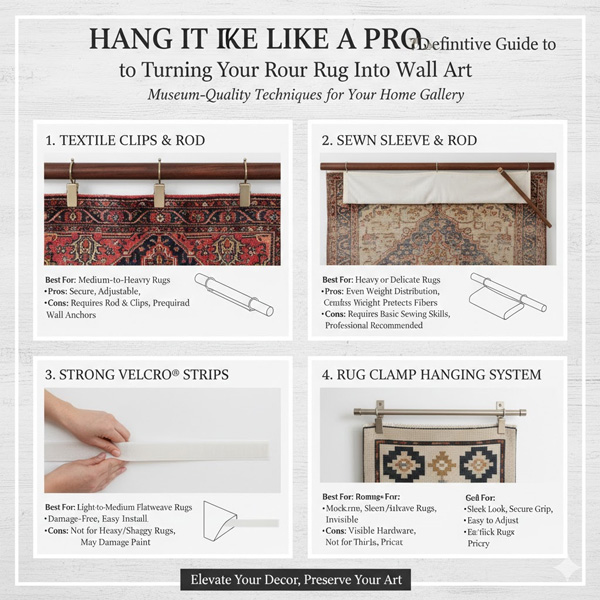
There are several ways to hang a rug, but not all methods are created equal. The goal is to support the rug evenly without causing stress or damage.
Top methods:
1. Velcro Mounting (Best Overall)
A fabric Velcro strip is sewn onto the back of the rug and attached to a mounted board. This distributes weight evenly and is widely used in galleries and museums.
2. Rod and Sleeve Technique
A fabric sleeve is sewn onto the rug, allowing a rod to pass through and be mounted on the wall. Ideal for heavier rugs.
3. Clip Systems (Temporary Use)
Clips can hold the rug in place without sewing, but they’re better suited for short-term displays or less valuable pieces.
Each method has its strengths, so choose based on your rug’s size, weight, and value.
>>> Get Inspired: 10 Unexpected Ways to Transform Your Space with a Decorative Rug
Step 3: Prepare Your Wall Like a Professional
A flawless display starts with proper wall preparation.
Key steps:
- Measure your rug and wall space carefully
- Mark placement using a level to ensure alignment
- Choose a wall that can support the rug’s weight
- Avoid areas with direct sunlight or high humidity
Proper planning prevents uneven hanging and protects your rug from environmental damage.
Step 4: Ensure Proper Weight Distribution
One of the biggest mistakes people make is underestimating the weight of a rug.
Best practices:
- Distribute weight evenly across the top edge
- Use multiple mounting points
- Avoid hanging from a single نقط
- Reinforce weak areas before installation
For large or antique rugs, even distribution is essential to prevent sagging or tearing.
>>> No-Nail Solutions: 5 Damage-Free Ways to Hang a Heavy Rug on Any Wall
Step 5: Style Your Rug Like a Designer
Once your rug is securely mounted, it’s time to make it shine.
Styling ideas:
- Use it as a focal point above a sofa or bed
- Pair with neutral furniture to let the rug stand out
- Create a gallery wall with smaller rugs or textiles
- Layer lighting to highlight textures and patterns
Think of your rug as a painting—placement and surrounding elements matter.
>>> ot Just for Floors: 10 Unexpected Ways to Use Rugs in Your Home Decor
Step 6: Maintain and Protect Your Rug Art
Wall-mounted rugs still require regular care.
Maintenance tips:
- Dust gently using a vacuum or soft brush
- Rotate periodically to prevent uneven fading
- Check mounting hardware for stability
- Keep away from moisture and pests
Proper care ensures your rug remains vibrant and intact over time.
Common Mistakes to Avoid
Even with the best intentions, mistakes can happen.
Avoid these pitfalls:
- Using nails or tacks directly through the rug
- Relying on weak adhesives for heavy pieces
- Hanging in damp or sun-exposed areas
- Ignoring the rug’s structural condition
A little extra care during setup can prevent costly damage.
>>> Professional Hanging Methods: How to Securely Mount a Large or Antique Rug
Bonus: When to Call a Professional
If your rug is particularly valuable, oversized, or fragile, professional installation may be the best option.
Experts can:
- Assess the rug’s condition
- Recommend the safest mounting method
- Ensure secure and precise installation
This is especially important for antique or heirloom pieces.
>> Wet Rug Crisis: How to Dry Any Rug Fast and Prevent Mold
Final Thoughts: Turn Your Rug Into a Masterpiece
Hanging a rug on the wall is more than a design trend—it’s a way to celebrate craftsmanship, preserve history, and express your personal style. With the right techniques and a bit of planning, you can transform any rug into a stunning piece of wall art.
From selecting the perfect rug to choosing the safest mounting method, every step plays a role in achieving a professional result. And once it’s up, your rug won’t just decorate your space—it will define it.
So go ahead—hang it like a pro and let your walls tell a story.
