

Facing a soaked rug? Discover How to Dry Any Rug Fast and Prevent Mold with expert tips from Bloom Nestify. This guide from our Rug Care & Cleaning category walks you through quick-drying techniques and preventive steps to keep your rugs safe, fresh, and mold-free.
Why a Wet Rug Is More Than Just an Inconvenience
A wet rug might seem like a minor household issue, but it can quickly escalate into a serious problem if not handled properly. Moisture trapped in rug fibers creates the perfect environment for mold, mildew, and unpleasant odors. Within as little as 24–48 hours, mold can begin to grow, potentially damaging your rug permanently and even affecting indoor air quality.
Whether your rug got soaked from a spill, flooding, or humidity, acting quickly is critical. The faster you remove moisture, the better your chances of saving your rug—and your home—from long-term damage.
This guide walks you through practical, fast, and effective methods to dry any rug and prevent mold growth.
Step 1: Remove Excess Water Immediately
The first and most important step is to get rid of as much water as possible.
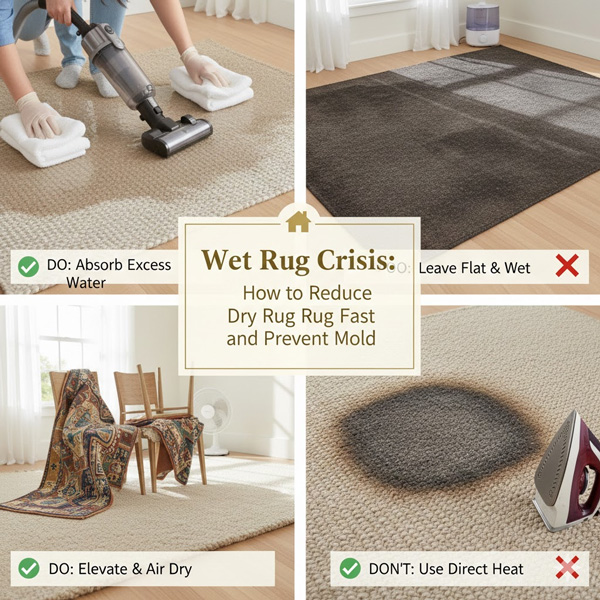
Start by blotting the rug using clean, dry towels. Avoid rubbing, as this can push water deeper into the fibers. Instead, press firmly to absorb moisture. If the rug is heavily soaked, a wet/dry vacuum is your best friend. It can extract water quickly and efficiently.
For smaller rugs, you can even roll them tightly while pressing down to squeeze out excess water. The goal here is simple: reduce the amount of moisture before moving on to drying techniques.
>> Beyond the Basics: Special Rug Types Guide to Maintenance & Creative Uses
Step 2: Maximize Airflow and Ventilation
Air circulation is key to drying a rug quickly. The more airflow you create, the faster evaporation happens.
Place fans around the rug, ideally pointing directly at it. If you have ceiling fans, turn them on as well. Open windows and doors to allow fresh air to move through the space.
If possible, elevate the rug slightly off the ground using a rack or even chairs. This allows air to circulate both above and below, speeding up the drying process significantly.
Step 3: Use Sunlight When Possible
Sunlight is a natural and powerful drying agent. It not only helps remove moisture but also kills bacteria and reduces odors.
If weather permits, take your rug outside and hang it over a railing or clothesline. Make sure both sides are exposed to sunlight at different times. Rotate it periodically to ensure even drying.
However, be cautious with delicate or antique rugs, as prolonged exposure to direct sunlight can cause fading.
>> Get Inspired: 10 Unexpected Ways to Transform Your Space with a Decorative Rug
Step 4: Dehumidify the Room
If outdoor drying isn’t an option, a dehumidifier can be extremely effective indoors. It pulls moisture from the air, which in turn helps dry your rug faster.
Place the dehumidifier in the same room as the rug and close doors and windows to create a controlled environment. Combine this with fans for optimal results.
This method is especially useful in humid climates where air drying alone may not be enough.
Step 5: Clean and Disinfect to Prevent Mold
Once your rug is mostly dry, it’s time to clean it. This step helps eliminate any bacteria or mold spores that may have started developing.
Use a mild detergent or a specialized rug cleaner. For natural solutions, a mixture of white vinegar and water works well to neutralize odors and inhibit mold growth.
Lightly spray the solution and gently scrub if necessary. Avoid soaking the rug again—keep moisture minimal during this step.
>> Hang It Like a Pro: The Definitive Guide to Turning Your Rug Into Wall Art
Signs Your Rug Might Be Developing Mold
Even with quick action, it’s important to watch for warning signs of mold:
- Musty or sour odors
- Discoloration or dark spots
- Increased allergy symptoms indoors
- A damp feeling even after drying
If you notice any of these, you may need deeper cleaning or even professional help. Mold can spread quickly and affect other areas of your home.
>> No-Nail Solutions: 5 Damage-Free Ways to Hang a Heavy Rug on Any Wall
Pro Tips to Prevent Future Rug Disasters
Prevention is always easier than recovery. Here are some simple ways to protect your rugs:
- Use waterproof rug pads underneath
- Clean spills immediately
- Keep rugs away from high-moisture areas
- Maintain proper indoor humidity levels (ideally 30–50%)
- Regularly vacuum and inspect rugs
These habits can significantly reduce the risk of future issues.
>> Not Just for Floors: 10 Unexpected Ways to Use Rugs in Your Home Decor
>> Professional Hanging Methods: How to Securely Mount a Large or Antique Rug
Final Thoughts: Act Fast, Save Your Rug
A wet rug doesn’t have to mean permanent damage—but time is your biggest enemy. Acting quickly, using the right drying techniques, and ensuring proper ventilation can make all the difference.
From blotting and airflow to sunlight and dehumidifiers, each step plays a role in restoring your rug safely. And by following preventive measures, you can avoid facing the same crisis again.
Remember: moisture is temporary, but mold damage can last. Stay proactive, and your rug will thank you.
