

Want to display your rug without damaging your walls? Discover 5 Damage-Free Ways to Hang a Heavy Rug on Any Wall in this practical guide from Bloom Nestify. From clever no-nail solutions to secure, renter-friendly methods, this article helps you showcase your rug safely and stylishly. As part of our Decor & Styling Ideas, it’s your go-to resource for creative, worry-free decorating.
Why Go Nail-Free When Hanging a Rug?
Hanging a heavy rug can instantly elevate your space, transforming a plain wall into a stunning focal point. But what if you’re renting, working with delicate walls, or simply want to avoid permanent damage? That’s where no-nail solutions come in.
Traditional mounting methods often involve drilling, anchors, or hardware that can leave lasting marks. Fortunately, there are several damage-free alternatives that are both secure and stylish.
In this guide, you’ll discover five effective, renter-friendly ways to hang a heavy rug without using nails—while keeping your walls and your rug in perfect condition.
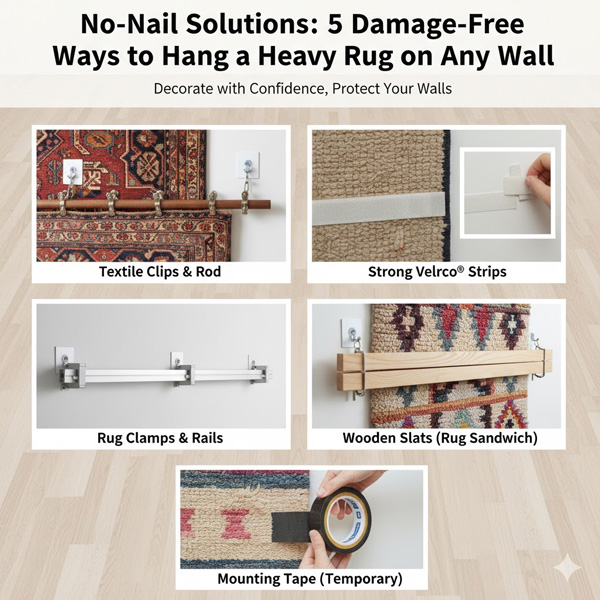
Heavy-Duty Adhesive Strips (Velcro Style)
One of the most popular no-nail methods involves heavy-duty adhesive strips, often paired with Velcro-style fasteners.
How it works:
Attach one side of the adhesive strip to the wall and the other to the back of the rug. Press firmly to secure.
Why it works:
- Distributes weight evenly
- Easy to remove without residue
- Ideal for medium to heavy rugs
Tips for success:
- Clean the wall surface before application
- Use multiple strips for added support
- Avoid textured or damp walls
This method is especially effective for renters who need a clean, reversible solution.
>>> Beyond the Basics: Special Rug Types Guide to Maintenance & Creative Uses
Adhesive Hooks with Rod Support
If your rug is particularly heavy, combining adhesive hooks with a rod system can provide extra strength.
Steps:
- Attach a fabric sleeve to the back of the rug
- Insert a sturdy rod
- Mount adhesive hooks on the wall
- Rest the rod on the hooks
Benefits:
- Stronger support than strips alone
- No direct stress on rug fibers
- Easy to adjust or remove
Make sure to use high-capacity adhesive hooks rated for the rug’s weight.
>>> Get Inspired: 10 Unexpected Ways to Transform Your Space with a Decorative Rug
Magnetic Hanging Systems
Magnetic systems are a sleek and modern way to hang rugs without nails. These systems use strong magnets embedded in bars or strips to hold the rug in place.
How it works:
The rug is sandwiched between two magnetic bars—one attached to the wall (via adhesive) and the other holding the rug from the front.
Advantages:
- Clean, minimalist appearance
- Even weight distribution
- No sewing required
This method is perfect for contemporary interiors where aesthetics matter just as much as function.
>>> Hang It Like a Pro: The Definitive Guide to Turning Your Rug Into Wall Art
Tension Rods Between Walls
If you’re working with a narrow space—like between two walls or inside an alcove—a tension rod can be a game-changer.
How it works:
Place a tension rod between two opposing walls and hang the rug using clips or a sleeve.
Why it’s effective:
- No wall damage at all
- Adjustable and removable
- Great for apartments or temporary setups
Best use cases:
- Hallways
- Closets
- Small rooms
Just ensure the rod is rated for heavy loads and fits snugly between the walls.
>>> Wet Rug Crisis: How to Dry Any Rug Fast and Prevent Mold
Rug Clips with Adhesive Backing
For a quick and flexible solution, adhesive-backed rug clips can do the trick.
Features:
- Easy to install
- No sewing or tools required
- Adjustable placement
Considerations:
- Not ideal for very delicate or antique rugs
- May leave slight pressure marks if overloaded
To minimize damage, choose clips with padded grips and distribute them evenly across the rug’s width.
>>> Not Just for Floors: 10 Unexpected Ways to Use Rugs in Your Home Decor
How to Choose the Right Method
Not all rugs—or walls—are created equal. Choosing the right method depends on several factors:
Consider:
- Weight of the rug
- Wall surface type (drywall, concrete, tile)
- Rug material and age
- Temporary vs. permanent display
For example, adhesive strips work well for lighter rugs, while rod systems or magnetic bars are better for heavier pieces.
Maintenance Tips for Hanging Rugs
Once your rug is securely mounted, proper maintenance will keep it looking its best.
- Dust regularly using a soft brush or vacuum
- Check adhesive points periodically
- Avoid direct sunlight to prevent fading
- Rotate the rug occasionally for even wear
Keeping your rug clean and well-supported ensures long-term durability.
>>> Professional Hanging Methods: How to Securely Mount a Large or Antique Rug
Common Mistakes to Avoid
Even with no-nail methods, mistakes can happen.
Avoid:
- Using low-quality adhesive products
- Ignoring weight limits
- Applying to dirty or влажные surfaces
- Hanging fragile rugs without reinforcement
A little preparation goes a long way in preventing accidents and damage.
Final Thoughts: Style Without Sacrifice
You don’t need nails, drills, or permanent fixtures to display a beautiful rug on your wall. With the right no-nail solutions, you can achieve a secure, stylish setup that protects both your rug and your space.
Whether you choose adhesive strips, magnetic systems, or tension rods, each method offers a unique balance of convenience and strength. The key is to match the solution to your rug’s needs and your living situation.
So go ahead—transform your walls with confidence, creativity, and zero damage.
