

Looking to turn your rug into a statement wall piece? Learn How to Securely Mount a Large or Antique Rug with this expert guide from Bloom Nestify. From safe hanging methods to preserving delicate textiles, this article helps you display your rug with both style and care. As part of our Decor & Styling Ideas, it’s your go-to resource for elevating your space with unique, artful touches.
Why Proper Rug Hanging Matters
Hanging a rug on the wall isn’t just about aesthetics—it’s about preservation, protection, and presentation. Whether you’re displaying a treasured antique or elevating your interior design, using professional hanging methods ensures your rug stays secure and undamaged for years.
Improper installation can lead to fabric stress, tearing, fading, or even permanent distortion. Large and antique rugs, in particular, require special care due to their weight, fragility, and historical value.
This guide explores expert-approved techniques to safely mount your rug while maintaining its integrity and beauty.
Understanding Your Rug Type Before Hanging
Before choosing a hanging method, you must understand the rug’s material and construction.
- Wool rugs are durable but can stretch under weight
- Silk rugs are delicate and prone to damage
- Cotton-backed rugs may require reinforced support
- Antique rugs often have weakened fibers due to age
Handwoven and handmade rugs typically need more careful handling than machine-made ones. Always inspect the rug for weak spots, loose threads, or existing damage before proceeding.
>> Beyond the Basics: Special Rug Types Guide to Maintenance & Creative Uses
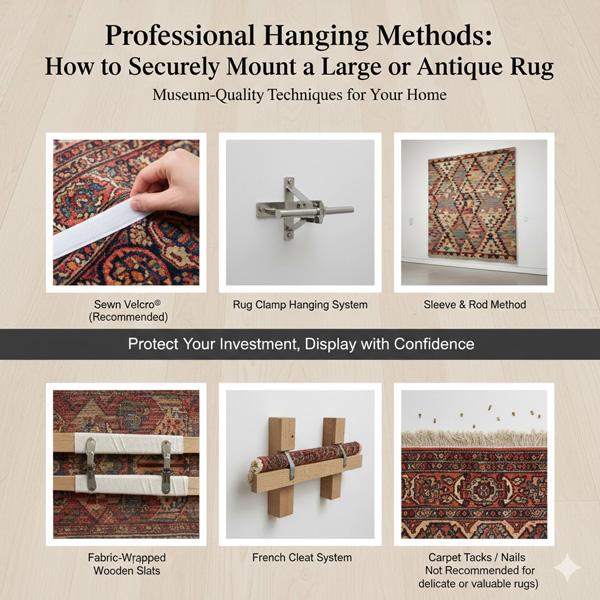
Method 1: Velcro Mounting (Museum Standard)
Velcro mounting is widely considered the safest and most professional method, especially for antique rugs.
How it works:
A strip of soft Velcro is sewn onto the back of the rug, while the corresponding strip is attached to a wooden board mounted on the wall.
Benefits:
- Even weight distribution
- Minimal stress on fibers
- Easy removal for cleaning or repositioning
- Ideal for fragile or valuable rugs
Pro Tip:
Always have the Velcro sewn by a textile professional—never glue it. Adhesives can damage fibers over time.
Method 2: Rod and Sleeve Technique
This classic method involves attaching a fabric sleeve to the back of the rug and inserting a rod through it.
Steps:
- Sew a sturdy fabric sleeve along the top back edge
- Insert a metal or wooden rod
- Mount the rod onto wall brackets
Advantages:
- Strong support for heavy rugs
- Clean, gallery-style appearance
- No direct stress on rug fibers
Considerations:
Ensure the rod is strong enough to handle the rug’s weight. For very large rugs, multiple support brackets may be necessary.
>>> Wet Rug Crisis: How to Dry Any Rug Fast and Prevent Mold
Method 3: Clip Systems for Temporary Displays
If you’re looking for a non-permanent solution, clip systems can work well—especially for modern or less valuable rugs.
Features:
- Easy to install and remove
- No sewing required
- Adjustable positioning
Downsides:
- Uneven weight distribution
- Risk of creasing or pressure marks
- Not suitable for antiques
Use padded or textile-safe clips to reduce the risk of damage.
>> Get Inspired: 10 Unexpected Ways to Transform Your Space with a Decorative Rug
Choosing the Right Wall and Placement
Where you hang your rug is just as important as how you hang it.
Key factors:
- Avoid direct sunlight to prevent fading
- Keep away from humidity to reduce mold risk
- Choose a sturdy wall that can support the weight
- Use proper anchors for drywall or plaster
Interior walls in climate-controlled rooms are ideal for long-term display.
>>> Hang It Like a Pro: The Definitive Guide to Turning Your Rug Into Wall Art
Weight Distribution and Structural Support
Large rugs can be surprisingly heavy, sometimes exceeding 50–100 pounds. Improper support can lead to wall damage or rug deformation.
Best practices:
- Use multiple mounting points
- Install into wall studs whenever possible
- Distribute weight evenly across the top
- Avoid hanging from a single نقط
For oversized rugs, consult a professional installer to ensure safety.
>>> No-Nail Solutions: 5 Damage-Free Ways to Hang a Heavy Rug on Any Wall
Maintenance Tips for Wall-Hung Rugs
Even when hung, rugs require regular care.
- Dust gently using a vacuum with low suction
- Rotate the rug occasionally to prevent uneven fading
- Inspect mounting points for wear or loosening
- Keep the area clean and dry
Avoid using harsh cleaning chemicals, especially on antique textiles.
>>> Not Just for Floors: 10 Unexpected Ways to Use Rugs in Your Home Decor
Common Mistakes to Avoid
Many rug owners unintentionally damage their pieces by using the wrong techniques.
Avoid:
- Nails or tacks directly through the rug
- Adhesives or glue-based mounting
- Hanging in damp basements or bathrooms
- Ignoring weight limits of hardware
These mistakes can lead to irreversible damage.
Final Thoughts: Display with Confidence and Care
Mounting a large or antique rug is both an art and a science. With the right method—whether it’s Velcro, rod and sleeve, or a temporary clip system—you can showcase your rug beautifully while preserving its condition.
Always consider the rug’s material, weight, and age before choosing your approach. When in doubt, consult a textile conservation expert to ensure your rug receives the care it deserves.
A well-mounted rug doesn’t just decorate a space—it tells a story, adds warmth, and becomes a timeless centerpiece in your home.
