

Not sure which rug type suits your space? Discover What is an Accent, Area, or Runner Rug in this beginner-friendly guide from Bloom Nestify. From defining each type by function to understanding where they work best, this article helps you choose with clarity. As part of our Rug Buying Guides, it’s your go-to resource for styling every room with confidence.
What Is an Accent Rug?
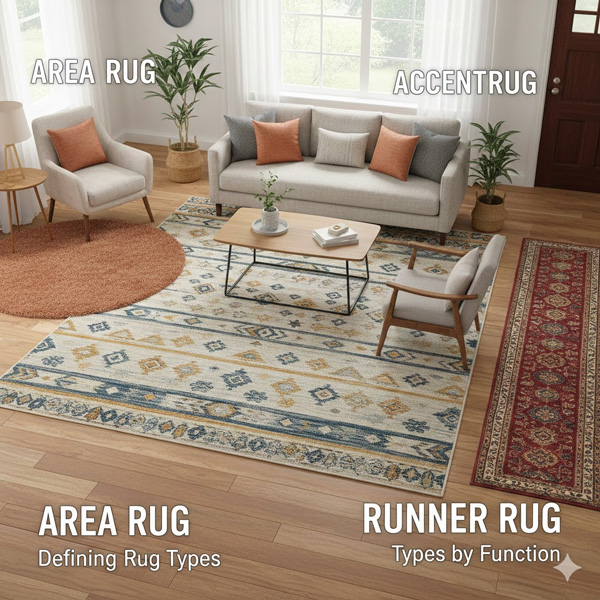
Accent rugs are small rugs designed to add a pop of color, texture, or personality to a space.
Key Features:
- Typically small in size (often under 4×6 feet)
- Used as decorative highlights
- Easy to move and swap out
Common Uses:
- Entryways
- Beside beds
- In front of sinks
- Layered over larger rugs
Why Choose an Accent Rug:
Accent rugs are perfect for experimenting with bold patterns or seasonal styles without committing to a large piece.
Think of them as the “accessories” of your room.
>>> Hand-Knotted, Tufted, or Power-Loomed? A Beginner’s Guide to Rug Construction
What Is an Area Rug?
Area rugs are larger rugs designed to define a specific zone within a room.
Key Features:
- Available in a wide range of sizes (5×7, 8×10, 9×12, etc.)
- Anchors furniture and layouts
- Covers a significant portion of the floor
Common Uses:
- Living rooms (under sofas and coffee tables)
- Dining areas (under tables and chairs)
- Bedrooms (under or around the bed)
Why Choose an Area Rug:
Area rugs create structure and cohesion, helping tie furniture and décor elements together.
They’re the foundation of your room’s design.
>>> Flatweave vs. Pile Rugs: Choosing Between Kilim, Dhurrie & Plush Styles
What Is a Runner Rug?
Runner rugs are long, narrow rugs designed for transitional spaces.
Key Features:
- Rectangular and elongated shape
- Typically 2–3 feet wide and 6–14 feet long
- Designed for high-traffic pathways
Common Uses:
- Hallways
- Staircases
- Kitchens (along counters or islands)
- Entry corridors
Why Choose a Runner Rug:
Runner rugs add comfort underfoot while protecting flooring in high-traffic areas.
They guide movement through your home.
Sofa centered on rug → rug wider than sofa → front legs of sofa + chairs resting on rug → coffee table fully on rug.
Accent vs. Area vs. Runner: What’s the Difference?
| Feature | Accent Rug | Area Rug | Runner Rug |
|---|---|---|---|
| Size | Small | Medium to large | Long and narrow |
| Purpose | Decorative | Define spaces | Protect pathways |
| Placement | Anywhere (flexible) | Under furniture | Hallways, kitchens, stairs |
| Function | Style enhancement | Layout anchoring | Traffic flow guidance |
Each type serves a distinct role, and choosing the right one depends on your space and needs.
>>> Terms & Features: Decoding Rug Design, Construction & Market Lingo
How to Choose the Right Rug Type for Your Space
Consider the Room’s Purpose
- Living room → Area rug
- Hallway → Runner rug
- Entryway → Accent rug
Think About Traffic
High-traffic areas benefit from durable runner rugs, while low-traffic zones can feature decorative accent pieces.
Measure Your Space
Choosing the right size ensures the rug enhances—not overwhelms—the room.
Balance Style and Function
A rug should look good, but also serve a practical purpose.
>>> Handmade vs. Machine-Made Rugs: How to Tell the Difference and What It Means for Value
Styling Tips: Using Multiple Rug Types Together
You don’t have to choose just one type—mixing rugs can elevate your space.
Layering Ideas:
- Place an accent rug over an area rug for added texture
- Use runners to connect spaces visually
- Coordinate colors and patterns for a cohesive look
Keep It Balanced:
Avoid overcrowding by maintaining clear visual zones.
>>> Rug Backing 101: What It Is, Types (Jute, Felt, Rubber), and Why It Matters for Your Floors
Runner centered → equal floor margins on both sides → ends stop short of walls, not touching.
>>> What Is a Rug Pile? Understanding Cut, Loop, and Cut-Loop Constructions
Common Mistakes to Avoid
Choosing the Wrong Size
A rug that’s too small can make a room feel disconnected.
Ignoring Function
Using an accent rug where an area rug is needed can reduce practicality.
Overlapping Without Purpose
Layering should feel intentional—not cluttered.
Skipping Rug Pads
Pads improve safety and extend rug life.
Large area rug → accent rug centered on top → coffee table centered on accent rug.
The Right Rug, Right Place
Understanding the difference between accent, area, and runner rugs is the key to designing a space that feels both stylish and functional.
Each type plays a unique role:
- Accent rugs add personality
- Area rugs create structure
- Runner rugs guide movement
When used thoughtfully, these rugs don’t just decorate your home—they define how it works and feels.
