

Not sure what’s underneath your rug matters? Learn all about Rug Backing in this essential guide from Bloom Nestify. From common types like jute, felt, and rubber to how they impact durability, comfort, and floor protection, this article breaks it all down. As part of our Product Deep Dives, it helps you make smarter choices for both your rug and your home.
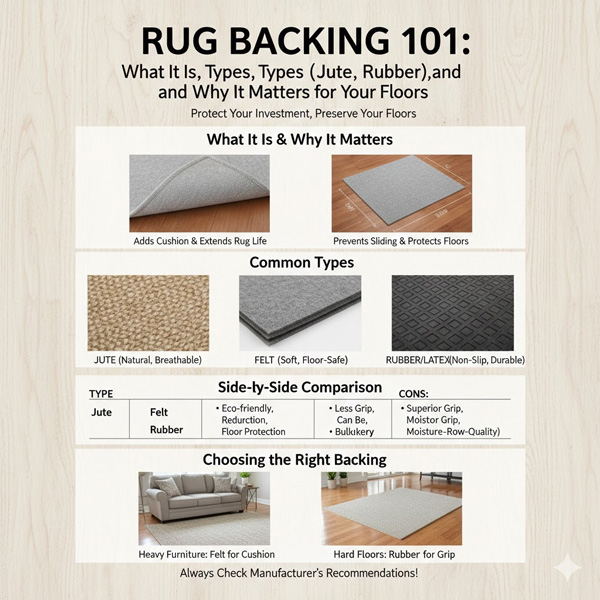
What Is Rug Backing?
Rug backing is the material attached to the underside of a rug. It serves several important purposes:
- Holds the rug’s fibers and structure together
- Provides stability and prevents slipping
- Adds cushioning and comfort
- Protects the floor beneath
Think of it as the foundation of your rug—without it, even the most beautiful design wouldn’t hold up over time.
>>> Hand-Knotted, Tufted, or Power-Loomed? A Beginner’s Guide to Rug Construction
Why Rug Backing Matters for Your Floors
The wrong backing can cause more harm than you might expect.
Floor Protection
Certain backings can scratch hardwood or leave marks on sensitive surfaces.
Moisture Control
Some materials trap moisture, which can lead to mold or floor damage.
Slip Resistance
A proper backing helps prevent accidents, especially in high-traffic areas.
Longevity
The right backing reduces wear and tear on both the rug and your flooring.
In short, backing isn’t just about the rug—it’s about your entire living space.
>>> Flatweave vs. Pile Rugs: Choosing Between Kilim, Dhurrie & Plush Styles
Types of Rug Backing: A Complete Breakdown
Jute Backing: Natural and Breathable
Jute backing is made from natural plant fibers and is commonly used in handmade or high-quality rugs.
Pros:
- Eco-friendly and biodegradable
- Strong and durable
- Allows airflow, reducing moisture buildup
Cons:
- Not naturally slip-resistant
- Can be rough on delicate floors without a pad
Best For:
- Living rooms and bedrooms with rug pads
- Homes prioritizing natural materials
>>> Handmade vs. Machine-Made Rugs: How to Tell the Difference and What It Means for Value
Felt Backing: Soft, Quiet, and Floor-Friendly
Felt backing is typically made from recycled fibers and is known for its cushioning properties.
Pros:
- Adds comfort and softness underfoot
- Protects hardwood floors
- Reduces noise
Cons:
- Not slip-resistant on its own
- May require a non-slip pad underneath
Best For:
- Hardwood or laminate flooring
- Areas where comfort is a priority
>>> What is an Accent, Area, or Runner Rug? Defining Rug Types by Function
Rubber Backing: Grip and Stability
Rubber backing is designed to keep rugs firmly in place.
Pros:
- Excellent non-slip properties
- Ideal for high-traffic areas
- No need for additional rug pads
Cons:
- Can trap moisture
- May discolor certain floor types over time
Best For:
- Kitchens, entryways, and bathrooms
- Homes with kids or elderly residents
>>> What Is a Rug Pile? Understanding Cut, Loop, and Cut-Loop Constructions
Do You Still Need a Rug Pad?
Even with built-in backing, rug pads are often recommended.
Why Use a Rug Pad:
- Adds extra cushioning
- Enhances grip and stability
- Protects both rug and flooring
- Extends rug lifespan
When It’s Essential:
- Rugs with jute or felt backing
- Delicate flooring like hardwood
- Large area rugs
Think of a rug pad as insurance for your flooring investment.
>>> Terms & Features: Decoding Rug Design, Construction & Market Lingo
Choosing the Right Backing for Your Space
Selecting the right backing depends on your specific needs.
Consider These Factors:
- Floor Type: Hardwood vs. tile vs. carpet
- Traffic Level: High vs. low traffic areas
- Moisture Exposure: Kitchens and bathrooms need special care
- Comfort Needs: Do you want softness underfoot?
Quick Guide:
- Hardwood floors: Felt + rug pad
- High-traffic areas: Rubber backing
- Eco-conscious homes: Jute backing
Common Mistakes to Avoid
Ignoring Floor Compatibility
Not all backings are safe for every floor type.
Skipping the Rug Pad
Even “non-slip” rugs can benefit from extra support.
Overlooking Moisture Risks
Bathrooms and kitchens require moisture-resistant solutions.
Choosing Based on Price Alone
Cheaper backing can lead to costly floor damage.
The Foundation of a Great Rug
Rug backing may be out of sight, but it should never be out of mind. It affects everything from comfort and safety to how long your rug—and your floors—will last.
By understanding the differences between jute, felt, and rubber backing, you can make smarter choices that protect your home and enhance your living space.
So next time you shop for a rug, don’t just look at the surface—flip it over. What’s underneath matters more than you think.
