

Confused by all the rug terminology out there? Start Decoding Rug Design, Construction & Market Lingo with this clear and practical guide from Bloom Nestify. From design elements to construction methods and industry terms, this article helps you understand what really matters. As part of our Rug Buying Guides, it gives you the knowledge to shop smarter and style with confidence.
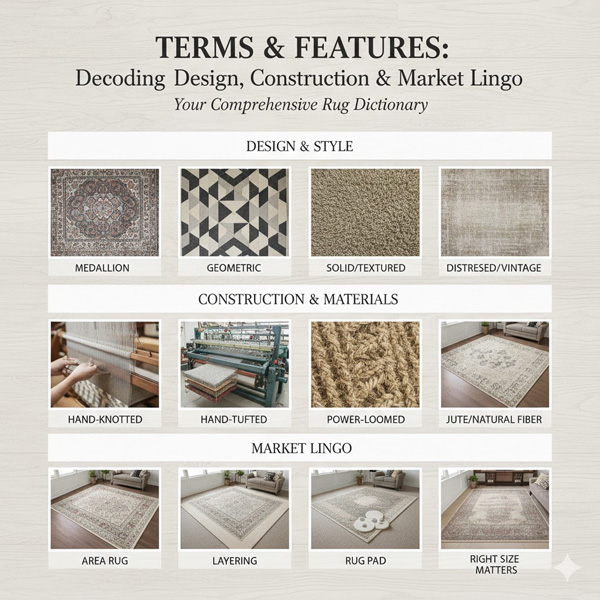
Rug Construction Types: How Rugs Are Made
Hand-Knotted Rugs
These are the gold standard of rug craftsmanship.
- Made by tying individual knots by hand
- Extremely durable and long-lasting
- Often considered investment pieces
What it means for you: Higher price, but unmatched quality and longevity.
>>> Handmade vs. Machine-Made Rugs: How to Tell the Difference and What It Means for Value
Hand-Tufted Rugs
A more affordable handmade option.
- Fibers are punched into a backing using a tool
- Faster to produce than hand-knotted rugs
- Usually finished with a glued backing
What it means for you: Softer and budget-friendly, but less durable over time.
>>> Hand-Knotted, Tufted, or Power-Loomed? A Beginner’s Guide to Rug Construction
Machine-Made Rugs
Mass-produced using power looms.
- Consistent patterns and lower cost
- Made from synthetic or blended fibers
- Widely available in many styles
What it means for you: Great for high-traffic areas and tight budgets.
>>> Flatweave vs. Pile Rugs: Choosing Between Kilim, Dhurrie & Plush Styles
Flatweave Rugs (e.g., Kilim, Dhurrie)
These rugs are woven without a pile.
- Lightweight and reversible
- No raised fibers
- Easy to clean and move
What it means for you: Ideal for casual spaces and layering.
>>> Rug Backing 101: What It Is, Types (Jute, Felt, Rubber), and Why It Matters for Your Floors
Key Design Terms: What You’re Really Looking At
Pile Height
Refers to the thickness of the rug fibers.
- Low pile: Flat, easy to clean, great for high traffic
- High pile (shag): Soft and plush, but harder to maintain
>>> What is an Accent, Area, or Runner Rug? Defining Rug Types by Function
Pattern & Motif
The visual design of the rug.
- Geometric: Modern and structured
- Floral: Traditional and decorative
- Abstract: Artistic and contemporary
>>> What Is a Rug Pile? Understanding Cut, Loop, and Cut-Loop Constructions
Colorways
Different color variations of the same design.
Why it matters: Lets you match a rug style to your existing décor without changing the pattern.
Distressing
A design technique that gives rugs a vintage or worn look.
What it means for you: Adds character without actual wear and tear.
Materials & Fibers: What Rugs Are Made Of
Natural Fibers
- Wool: Durable, soft, and naturally stain-resistant
- Cotton: Lightweight and easy to clean
- Jute/Sisal: Textured and eco-friendly
Synthetic Fibers
- Polypropylene: مقاوم للبقع وسهل التنظيف
- Nylon: قوي ومتين
- Polyester: ناعم ومناسب للألوان الزاهية
What it means for you: Synthetics are often more affordable and practical for busy homes.
Blends
A mix of natural and synthetic fibers.
What it means for you: Balanced performance, cost, and appearance.
Structural Terms: Understanding the Anatomy of a Rug
Warp and Weft
The foundation threads of a rug.
- Warp: Vertical threads (structure)
- Weft: Horizontal threads (woven through warp)
Why it matters: Determines the rug’s strength and stability.
Backing
The underside layer that holds the rug together.
- Can be made of jute, latex, or synthetic materials
- Affects durability and floor protection
Binding
The finished edges of a rug.
What it means for you: Prevents fraying and adds a polished look.
Market Lingo: What Sellers Really Mean
“Handmade”
Can include hand-knotted, hand-tufted, or handwoven rugs.
Tip: Always уточнить тип изготовления—not all “handmade” rugs are equal.
“Antique” vs. “Vintage”
- Antique: Typically over 100 years old
- Vintage: Usually 20–100 years old
“High Traffic Friendly”
Indicates durability—but doesn’t guarantee stain resistance.
“Easy Care”
Usually refers to synthetic materials or washable designs.
How to Use This Knowledge When Buying a Rug
Ask the Right Questions:
- How is it constructed?
- What materials are used?
- Is it suitable for my space?
Match Features to Your Lifestyle:
- Pets and kids → Low pile, synthetic
- Formal spaces → Hand-knotted or wool
- Busy areas → Durable, easy-care options
Common Mistakes to Avoid
Focusing Only on Appearance
A beautiful rug isn’t always practical.
Misunderstanding “Handmade”
Not all handmade rugs offer the same durability.
Ignoring Material Differences
Materials affect everything from comfort to maintenance.
Overlooking Construction Quality
How a rug is made matters just as much as how it looks.
From Confusion to Confidence
Rug terminology might seem overwhelming at first, but once you understand the basics, it becomes a powerful tool.
Knowing the difference between construction types, materials, and design features allows you to shop smarter, avoid costly mistakes, and choose a rug that truly fits your needs.
In the end, the best rug isn’t just the one that looks good—it’s the one that works for your space, your lifestyle, and your expectations.
