

Not sure which rug style suits your space best? Explore Flatweave vs. Pile Rugs in this helpful guide from Bloom Nestify. From lightweight Kilim and Dhurrie designs to soft, plush pile rugs, this article breaks down the key differences to help you choose with confidence. As part of our Rug Buying Guides, it’s your go-to resource for balancing style, comfort, and practicality.
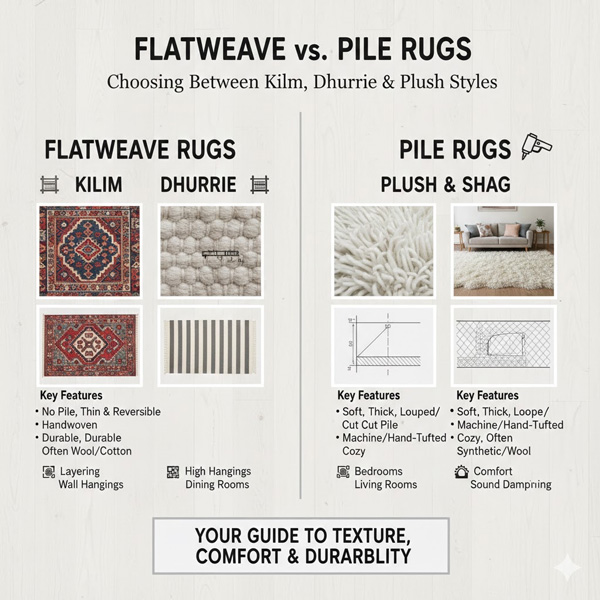
What Is a Flatweave Rug?
Flatweave rugs are exactly what they sound like—woven without a pile. This means they have no raised fibers, resulting in a flat, smooth surface.
Common Types:
- Kilim: Known for bold geometric patterns and cultural designs
- Dhurrie: Lightweight, often reversible, and typically made from cotton
Key Features:
- Thin and lightweight
- Reversible designs
- Easy to move and clean
What it means: Flatweave rugs are practical, versatile, and perfect for casual spaces.
>>> Hand-Knotted, Tufted, or Power-Loomed? A Beginner’s Guide to Rug Construction
What Is a Pile Rug?
Pile rugs have raised fibers that create a soft, textured surface. The height of these fibers (called pile height) can vary.
Types of Pile:
- Low pile: Short fibers, more durable
- Medium pile: Balanced comfort and practicality
- High pile (shag): Long, plush fibers for maximum softness
Key Features:
- Softer underfoot
- More insulating
- Available in a wide range of styles
What it means: Pile rugs prioritize comfort and luxury.
>>> Terms & Features: Decoding Rug Design, Construction & Market Lingo
Flatweave vs. Pile: Key Differences
| Feature | Flatweave Rugs | Pile Rugs |
|---|---|---|
| Texture | Flat, smooth | Soft, textured |
| Thickness | Thin | Varies (low to high) |
| Durability | High (great for traffic) | Depends on pile height |
| Maintenance | Easy | Requires more care |
| Comfort | Minimal cushioning | High comfort |
Kilim Rugs: Bold and Timeless
Kilim rugs are a type of flatweave known for their striking patterns and cultural heritage.
Why Choose Kilim:
- Eye-catching designs
- Lightweight and easy to layer
- Durable for everyday use
Best Uses:
- Living rooms
- Entryways
- Layered over larger rugs
Style Tip: Use kilims to add personality to neutral spaces.
>>> Handmade vs. Machine-Made Rugs: How to Tell the Difference and What It Means for Value
Dhurrie Rugs: Simple, Functional, and Reversible
Dhurries are another popular flatweave option, often made from cotton.
Why Choose Dhurrie:
- Budget-friendly
- Reversible for extended use
- Easy to clean and maintain
Best Uses:
- Bedrooms
- Kitchens
- Casual living areas
Practical Insight: Dhurries are perfect for homes that need flexibility and easy care.
>>> What is an Accent, Area, or Runner Rug? Defining Rug Types by Function
Plush & High-Pile Rugs: Comfort First
High-pile rugs, including shag styles, are all about softness and coziness.
Why Choose Plush Rugs:
- Luxurious feel underfoot
- Adds warmth and insulation
- Creates a cozy atmosphere
Best Uses:
- Bedrooms
- Lounges
- Relaxation areas
Downside: They require more maintenance and are less suited for high-traffic spaces.
>>> What Is a Rug Pile? Understanding Cut, Loop, and Cut-Loop Constructions
Which One Is Right for You?
Choose Flatweave If:
- You need durability
- You prefer low-maintenance options
- Your space has high foot traffic
Choose Pile Rugs If:
- Comfort is your priority
- You want a cozy, luxurious feel
- The rug will be in a low-traffic area
>>> Rug Backing 101: What It Is, Types (Jute, Felt, Rubber), and Why It Matters for Your Floors
Styling Tips: Mixing Flatweave and Pile Rugs
You don’t have to choose just one—combining both can elevate your space.
Layering Ideas:
- Place a plush rug over a flatweave base
- Use flatweaves in high-traffic zones and plush rugs in relaxation areas
- Mix textures for visual depth
Function Meets Feel
The choice between flatweave and pile rugs comes down to one simple question: Do you value practicality or comfort more?
Flatweave rugs like kilims and dhurries offer durability, versatility, and ease of care. Pile rugs, on the other hand, deliver softness, warmth, and a touch of luxury.
The best choice isn’t about trends—it’s about how you live. Match your rug to your lifestyle, and you’ll create a space that feels as good as it looks.
