

Rug size is not a small detail — it’s a design decision that can make or break an entire room. A rug that’s too small can cause even the most expensive furniture to feel disconnected, while a well-sized rug instantly brings balance, warmth, and intention to your space.
That’s why this isn’t just another blog post. This is a complete, step-by-step Rug Sizing & Placement Guide you can actually follow.
In this guide, you’ll learn a simple 4-step process used by interior designers:
- Learn the non-negotiable rules
- Measure your space the right way
- Apply the rules room by room
- Avoid the most common (and costly) mistakes
Follow these steps in order, and you’ll never second-guess rug size again.
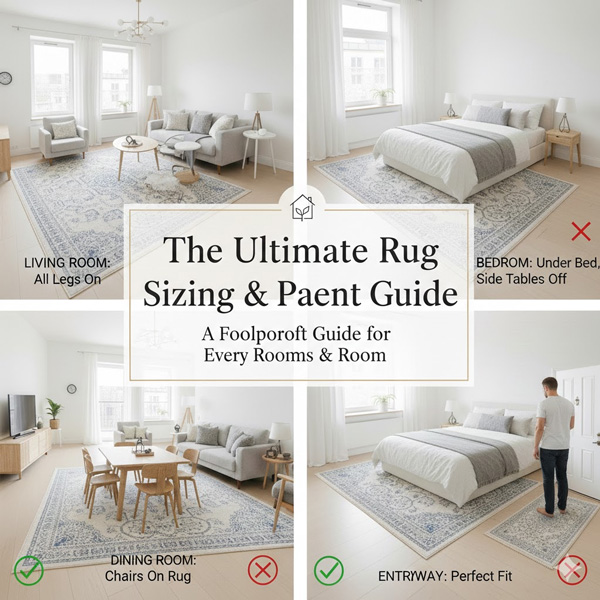
Step 1: Learn the 3 Non-Negotiable Rug Placement Rules
Before you think about measurements, colors, or patterns, you must understand the three core area rug placement rules. These rules determine whether a room feels cohesive or chaotic.
The “All Legs On” Rule
Best for: Large living rooms, formal seating areas, open layouts
This rule means:
- All major furniture pieces (sofa, chairs, coffee table) sit entirely on the rug
- The rug acts as a foundation for the whole seating zone
Why it works: It creates a polished, intentional look and visually defines the space.
Remember: If your room can accommodate this layout, it’s almost always the most elegant choice.
Area Rug Placement Rules: A Foolproof Guide for Living Rooms & Bedrooms
Can a Rug Be Too Big? (And 5 Other Rug Sizing Mistakes to Avoid)
The “Front Legs On” Rule
Best for: Medium-sized rooms, flexible budgets, most homes
This is the most common and practical rule:
- Only the front legs of sofas and chairs sit on the rug
- Back legs remain off the rug
Why it works:
- Maintains visual connection between furniture
- Requires a smaller rug than “all legs on”
- Works in nearly any living room layout
This rule alone solves 80% of rug sizing problems.
The “Floating” Rule (Use With Caution)
Best for: Dining tables, coffee tables, small accent areas
A floating rug means:
- No furniture legs rest on the rug, or
- Only a single piece (like a coffee table) sits on it
When it works:
- Under a coffee table that’s already anchored by nearby furniture
- Under a dining table, only if chairs stay on the rug when pulled out
Avoid this mistake: A floating rug in a seating area almost always feels undersized and disconnected.
Runner Rugs 101: The Right Size & Placement for Hallways, Kitchens & Stairs
What Size Rug Under a Couch? Rules for Standard Sofas, Loveseats & Sectionals
Step 2: How to Measure Your Space Like a Pro
Now that you know the rules, it’s time to measure — properly. Guessing is how mistakes happen.
What You’ll Need
- A tape measure
- Painter’s tape (or masking tape)
- A notepad or phone
Start by Measuring the Furniture (Not the Room)
This is the most overlooked step when learning how to choose rug size.
- Measure the width and depth of your main furniture (sofa, bed, dining table)
- Decide which placement rule you’re using (all legs on, front legs on, floating)
- Add the necessary clearance based on that rule
Pro Tip: Use Painter’s Tape to Map Out the Rug
This is a designer-approved trick.
- Tape the outline of the rug directly on your floor
- Step back and look at proportions
- Walk through the space to check flow and walkways
If it looks right taped out, it will look right in real life.
Sectional Sofa Rug Sizing: The Definitive Guide for L-Shaped and U-Shaped Layouts
The Definitive Guide to Rug Sizes & Placement for Every Room
Account for Furniture Legs and Walkways
Always leave room for movement.
- Living areas: 12–18 inches of exposed floor around the rug (when possible)
- Dining rooms: Chairs should stay fully on the rug when pulled out
- Bedrooms: Make sure your feet land on the rug when getting out of bed
This step ensures your rug supports daily living — not just aesthetics.
Visual Guide: How Big Are Common Rug Sizes? (3×5, 5×7, 6×9 & More)
What Size Rug for a Queen Bed? (And King, Full, Twin) – Layouts That Work
Step 3: Apply the Rules to Every Room in Your Home
Now let’s put everything into action. This section answers the most common real-world questions about rug size for living room, bedroom, dining room, and more.
The Living Room
Goal: Anchor seating and create visual unity
Standard Sofa Layout
- Front Legs On Rule:
- Best rug sizes: 8’ x 10’ or 9’ x 12’
- All Legs On Rule:
- Best rug sizes: 9’ x 12’ or 10’ x 14’
Sectional Sofa Layout
- The rug should extend 6–12 inches beyond each side of the sectional
- Include the chaise section whenever possible
Recommended sizes:
- 9’ x 12’
- 10’ x 14’
👉 When choosing a rug size for living room, always prioritize sofa width over room width.
Practical Guides: How to Measure for a Rug, Buy Your First, & Start Off Right
The Dining Room
Goal: Comfort and function while seated and moving chairs
The Simple Formula
Table dimensions + 24–36 inches on each side
This ensures chairs remain on the rug when pulled out.
Examples:
- 6-seat table → 8’ x 10’ rug
- Large table → 9’ x 12’ rug
Tip: Low-pile or flatweave rugs perform best in dining spaces.
The Bedroom
Goal: Softness where you step and visual balance under the bed
Layout 1: Partial Under-Bed
- Rug placed under the lower two-thirds of the bed
- Most popular and budget-friendly option
Layout 2: Full Under-Bed
- Rug extends under bed and nightstands
- Creates a luxury hotel feel
Layout 3: Runners
- Two runners placed on each side of the bed
- Great for small rooms
Rug Under Bed Size Recommendations
- Queen Bed:
- Ideal: 8’ x 10’
- King Bed:
- Ideal: 9’ x 12’
- Twin Bed:
- 5’ x 8’ or runners
This answers the most common question about rug under bed size clearly and confidently.
Dining Room Rug Size Calculator: How to Choose (So Chairs Don’t Catch)
Hallways & Entryways
Goal: Guide movement and protect high-traffic areas
Runner Selection Rules
- Leave 3–5 inches of floor visible on each side
- Runner should be shorter than the hallway — not wall-to-wall
Common runner sizes:
- 2’ x 6’
- 2’ x 8’
- 2’ x 10’
Step 4: Final Checks & Common Mistakes to Sidestep
Before purchasing, run through these final checks.
The “Bigger Is Almost Always Better” Mindset
The #1 rug mistake: choosing a rug that’s too small.
- Too small = furniture floats
- Slightly too big = looks intentional
When in doubt, size up.
Does Your Rug Match the Room’s Shape?
- Long rooms → rectangular rugs
- Square rooms → square or oversized rectangular rugs
- L-shaped rooms → define zones with multiple rugs
Let the rug reinforce the room’s natural flow.
Standard Rug Sizes & Their Best Uses At a Glance
| Standard Rug Size | Best Use | Ideal Placement |
|---|---|---|
| 2’ x 3’ | Entry, Accent | Door clearance |
| 5’ x 8’ | Bedroom, Small Living | Twin bed, compact seating |
| 6’ x 9’ | Bedroom, Dining | Queen bed (partial), 4-seat table |
| 8’ x 10’ | Living Room, Bedroom | Standard sofa, queen bed |
| 9’ x 12’ | Living, Dining | Sectional, king bed |
| 10’ x 14’ | Large Living Room | Full furniture layout |
| 2’ x 8’ Runner | Hallway | Narrow walkways |
These are the most common standard rug sizes you’ll encounter while shopping.
You’re Ready to Transform Your Space!
Let’s recap the process:
- Learn the rules that govern rug placement
- Measure with intention, not guesswork
- Apply the rules room by room
- Avoid common sizing mistakes
You now know exactly how to measure for rug placement, how to choose rug size, and how to apply professional design logic in your own home.
✨ Now that you’re armed with the perfect size, browse our curated collection of premium rugs — filterable by exact dimensions — to find your match at Bloom Nestify.
Your space is ready. Your confidence is solid. All that’s left is choosing the rug that brings it all together. Bloom Nestify thanks you for reading our blog!
