

Not sure where to begin with your first rug? Learn How to Measure for a Rug and make confident choices with this practical guide from Bloom Nestify. From accurate measuring tips to smart buying advice, this article helps you start off right and avoid common mistakes. As part of our Rug Buying Guides, it’s your go-to resource for building a space that feels both functional and beautifully styled.
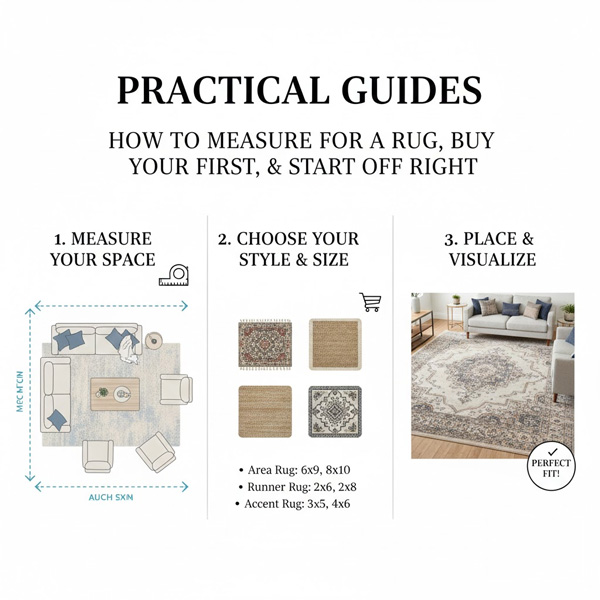
Why Getting Your First Rug Right Matters
Buying your first rug can feel surprisingly overwhelming. With so many sizes, materials, patterns, and placement rules, it’s easy to make costly mistakes. But here’s the truth: a well-chosen rug can transform your space instantly, while the wrong one can throw off your entire room.
This practical guide will walk you through everything you need to know—from measuring your space correctly to choosing the right rug and setting it up for long-term success. Whether you’re decorating a living room, bedroom, or small apartment, this step-by-step approach will help you start off right.
Step 1: How to Measure for a Rug (The Right Way)
Before you even browse for rugs, you need accurate measurements. This is the foundation of a successful purchase.
Measure Your Space
Start by measuring the length and width of your room using a tape measure. Write down the dimensions and note where your furniture sits.
Define the Rug Area
Decide how much of the floor you want your rug to cover. A general rule is to leave 6–12 inches of space between the rug and the walls.
Use Painter’s Tape Trick
Outline your desired rug size on the floor using painter’s tape. This gives you a visual sense of how the rug will look in your space.
Consider Furniture Placement
- Living room: Rug should fit under at least the front legs of furniture
- Bedroom: Rug should extend beyond the bed for comfort
- Dining room: Rug should be large enough for chairs to stay on it when pulled out
Pro Tip: When in doubt, go bigger. A rug that’s too small can make your room feel disconnected.
Area Rug Placement Rules: A Foolproof Guide for Living Rooms & Bedrooms
Can a Rug Be Too Big? (And 5 Other Rug Sizing Mistakes to Avoid)
Step 2: Choosing the Right Rug for Your Needs
Once you know your size, it’s time to choose the right rug.
Pick the Right Material
Different materials offer different benefits:
- Wool: Durable, soft, and naturally stain-resistant
- Cotton: Lightweight and easy to clean
- Synthetic (polypropylene, polyester): Budget-friendly and stain-resistant
- Natural fibers (jute, sisal): Eco-friendly but less soft
Choose a Style That Fits Your Space
- Neutral rugs create a calm, timeless look
- Bold patterns add personality and visual interest
- Textured rugs bring depth and warmth
Think About Lifestyle
Ask yourself:
- Do you have pets or kids?
- Is the area high-traffic?
- Do you need something easy to clean?
Your lifestyle should guide your decision as much as your design preferences.
Dining Room Rug Size Calculator: How to Choose (So Chairs Don’t Catch)
Step 3: Setting a Realistic Budget
Rugs come in a wide price range—from budget-friendly options to high-end investments.
Budget Guidelines:
- Small rugs: Affordable and great for beginners
- Medium rugs: Balanced cost and impact
- Large rugs: Higher investment but transform the room
Where to Save vs Spend:
- Spend more on high-traffic areas (living room)
- Save on low-traffic or decorative spaces
Remember, a quality rug can last for years, making it a worthwhile investment.
Rug Sizing & Selection for Living Room Layouts
Runner Rugs 101: The Right Size & Placement for Hallways, Kitchens & Stairs
Step 4: Setting Up Your Rug Properly
Buying the rug is only half the job—setting it up correctly is just as important.
Use a Rug Pad
A rug pad:
- Prevents slipping
- Adds cushioning
- Extends the life of your rug
Align with Furniture
Make sure your rug aligns with your furniture layout. It should anchor the space, not float awkwardly.
Smooth It Out
Flatten any wrinkles or folds immediately to prevent tripping hazards and uneven wear.
Sectional Sofa Rug Sizing: The Definitive Guide for L-Shaped and U-Shaped Layouts
The Definitive Guide to Rug Sizes & Placement for Every Room
Step 5: Maintenance from Day One
Starting with good maintenance habits will keep your rug looking new for years.
Weekly Routine:
- Vacuum regularly to remove dirt and dust
- Shake out smaller rugs if possible
Immediate Care:
- Blot spills right away
- Avoid scrubbing to protect fibers
Long-Term Care:
- Rotate your rug every few months
- Schedule deep cleaning once a year
Consistency is the secret to longevity.
The Ultimate Rug Sizing & Placement Guide
Visual Guide: How Big Are Common Rug Sizes? (3×5, 5×7, 6×9 & More)
Common Mistakes First-Time Buyers Make
Avoid these common pitfalls:
❌ Buying a Rug That’s Too Small
This is the #1 mistake and can make your room feel disjointed.
❌ Ignoring Material Needs
Choosing the wrong material can lead to faster wear and tear.
❌ Skipping the Rug Pad
Without a pad, your rug may slip and wear out faster.
❌ Focusing Only on Looks
A beautiful rug that doesn’t fit your lifestyle won’t last long.
What Size Rug for a Queen Bed? (And King, Full, Twin) – Layouts That Work
What Size Rug Under a Couch? Rules for Standard Sofas, Loveseats & Sectionals
Pro Tips to Start Off Right
- Start with a versatile, neutral rug if you’re unsure
- Layer rugs to experiment with style
- Take photos of your space before buying for reference
- Don’t rush—measure twice, buy once
A well-sized, well-made neutral rug outperforms a trendy rug that’s too small.
Build Confidence with Your First Rug
Buying your first rug doesn’t have to be stressful. With the right measurements, thoughtful choices, and proper setup, you can create a space that feels both stylish and comfortable.
Think of your rug as the foundation of your room—it ties everything together. By following this practical guide, you’ll avoid common mistakes and make a confident, informed decision.
Start simple, stay practical, and most importantly—choose a rug that fits your life as well as your space.
