

Struggling to get your rug placement just right? Follow these Area Rug Placement Rules to create a balanced and stylish space with ease. In this guide from Bloom Nestify, you’ll learn foolproof tips for arranging rugs in both living rooms and bedrooms. As part of our Rug Buying Guides, it helps you define spaces, improve flow, and achieve a polished, designer look every time.
Why Rug Placement Matters More Than You Think
An area rug does more than just sit on your floor—it anchors your furniture, defines your space, and enhances the overall design of your home. Yet, one of the most common decorating mistakes homeowners make is improper rug placement.
Too small? The room feels disconnected.
Too large? The space can feel crowded or awkward.
The good news is that with a few simple rules, you can create a balanced, stylish, and functional layout. In this guide, you’ll learn foolproof rug placement rules for living rooms and bedrooms, along with expert tips to elevate your home design.
The Golden Rule: Size First, Then Placement
Before you even think about placement, you need the right size rug.
General Sizing Guidelines:
- Leave 6–12 inches of floor space between the rug and walls
- Choose a rug that fits under key furniture pieces
- When in doubt, go bigger—a larger rug creates a more cohesive look
A rug that’s too small is the most common design mistake. It can make your room feel fragmented instead of unified.
>> Can a Rug Be Too Big? (And 5 Other Rug Sizing Mistakes to Avoid)
>> Dining Room Rug Size Calculator: How to Choose (So Chairs Don’t Catch)
Living Room Rug Placement Rules
The living room is where rug placement matters most. It’s the heart of your home and often the most used space.
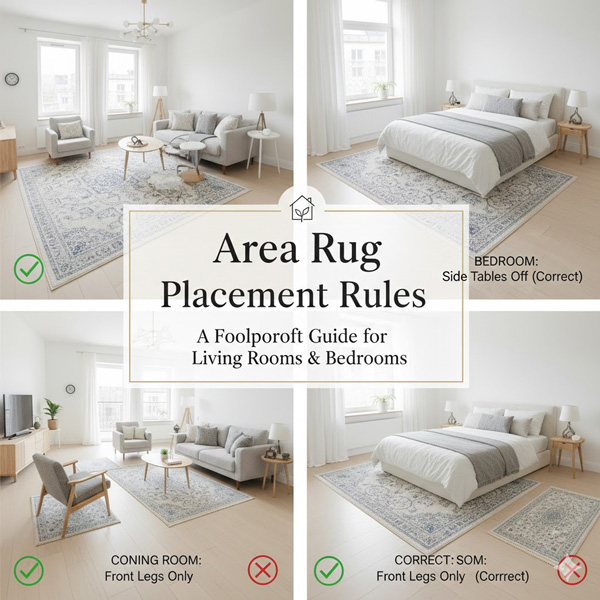
All Legs On (Best for Large Rooms)
Place all furniture legs—sofa, chairs, and coffee table—on the rug.
Why it works:
- Creates a cohesive, luxurious look
- Defines the seating area clearly
Front Legs On (Most Popular)
Only the front legs of your sofa and chairs sit on the rug.
Why it works:
- Balances size and budget
- Keeps the room visually connected without needing an oversized rug
Coffee Table Only (Small Spaces)
Place just the coffee table on the rug.
Why it works:
- Ideal for compact rooms
- Adds a decorative touch without overwhelming the space
Pro Tip:
Make sure the rug extends at least 6–8 inches beyond your sofa on each side for proper proportion.
>> How to Perfectly Measure a Round Rug for Any Room
>>> Practical Guides: How to Measure for a Rug, Buy Your First, & Start Off Right
Bedroom Rug Placement Rules
In the bedroom, rugs add warmth and comfort—especially when stepping out of bed.
Full Coverage (Under Entire Bed)
Place a large rug under the bed and nightstands.
Why it works:
- Creates a hotel-like feel
- Provides symmetry and softness
Bottom Two-Thirds Placement
Position the rug under the lower two-thirds of the bed.
Why it works:
- Saves cost while maintaining style
- Leaves space at the head of the bed
Side Runners (Budget-Friendly)
Use smaller rugs on each side of the bed.
Why it works:
- Perfect for smaller bedrooms
- Adds comfort where you need it most
Ideal Placement Tip:
Ensure the rug extends at least 18–24 inches beyond the bed for a balanced look.
Rug Sizing & Selection for Living Room Layouts
Runner Rugs 101: The Right Size & Placement for Hallways, Kitchens & Stairs
Common Rug Placement Mistakes to Avoid
Even with the best intentions, it’s easy to get rug placement wrong. Here are the most common mistakes:
❌ Choosing a Rug That’s Too Small
This makes your furniture look like it’s “floating” and disconnected.
❌ Ignoring Room Shape
Match your rug shape to your room layout. Rectangular rugs work best in most spaces, while round rugs can soften smaller areas.
❌ Poor Alignment
Your rug should align with your furniture—not sit awkwardly off-center.
❌ Skipping a Rug Pad
A rug pad prevents slipping, adds cushioning, and extends the life of your rug.
Sectional Sofa Rug Sizing: The Definitive Guide for L-Shaped and U-Shaped Layouts
The Definitive Guide to Rug Sizes & Placement for Every Room
Design Tips to Elevate Your Space
Once you’ve mastered placement, you can take your design to the next level.
Layering Rugs
Layer a smaller patterned rug over a larger neutral one for added depth and texture.
Color Coordination
Choose rug colors that complement your furniture and décor. Neutral rugs are versatile, while bold patterns can make a statement.
Texture Matters
Mix textures to create visual interest—think plush rugs in bedrooms and flatter weaves in high-traffic areas.
The Ultimate Rug Sizing & Placement Guide
Visual Guide: How Big Are Common Rug Sizes? (3×5, 5×7, 6×9 & More)
How to Adjust Rug Placement for Different Room Sizes
Small Rooms:
- Use lighter colors to make the space feel bigger
- Avoid oversized rugs that overwhelm the room
Large Rooms:
- Use larger rugs to define zones
- Consider multiple rugs for open-concept spaces
Open Floor Plans:
- Use rugs to separate areas (living, dining, workspace)
- Keep consistent color tones for harmony
What Size Rug for a Queen Bed? (And King, Full, Twin) – Layouts That Work
What Size Rug Under a Couch? Rules for Standard Sofas, Loveseats & Sectionals
Mastering the Art of Rug Placement
Area rug placement doesn’t have to be complicated. By following a few simple rules—choosing the right size, aligning with furniture, and considering room layout—you can transform any space into a cohesive and stylish environment.
Whether you’re decorating a cozy bedroom or a spacious living room, the right rug placement can elevate your home’s comfort and design instantly.
Take your time, measure carefully, and don’t be afraid to experiment. With these foolproof guidelines, you’ll get it right every time.
