

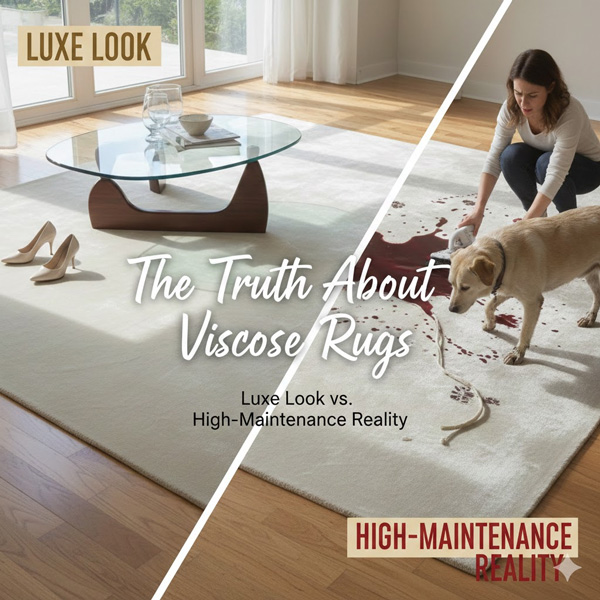
Thinking about a viscose rug? Discover The Truth About Viscose Rugs in this honest guide from Bloom Nestify. From their luxurious, silk-like appearance to the reality of high-maintenance care, this article helps you weigh the pros and cons before you buy. As part of our Rug Care & Cleaning, it gives you the insight you need to choose wisely and care for your rug properly.
What Is a Viscose Rug, Really?
Viscose is often marketed as “art silk,” and for good reason. It’s a semi-synthetic fiber made from natural materials like wood pulp, bamboo, or cotton linters. Through a chemical process, these raw materials are transformed into a soft, shiny fiber that closely resembles silk.
This manufacturing process gives viscose rugs their signature traits:
- A smooth, luxurious feel underfoot
- A reflective sheen that changes with light and direction
- Intricate pattern detailing due to fine fibers
However, while the raw materials are natural, the end product behaves quite differently from traditional natural fibers like wool or cotton.
>>> Delicate Rug Warning: How to Safely Clean Viscose, Silk & Polyester Rugs
The Luxe Appeal: Why People Love Viscose Rugs
There’s no denying the visual impact of a viscose rug. Here’s why so many homeowners and designers are drawn to them:
High-End Look for Less
Viscose rugs mimic the elegance of silk rugs without the hefty price tag. You can achieve a sophisticated, designer look without overspending.
Ultra-Soft Texture
These rugs are incredibly soft—almost velvety—making them a pleasure to walk on, especially in low-traffic areas like bedrooms.
Light-Reflecting Shine
Viscose fibers reflect light beautifully, giving rugs a dynamic, almost glowing appearance that changes depending on your viewing angle.
Intricate Designs
Because the fibers are so fine, manufacturers can create detailed patterns that look crisp and refined.
>>> Rug Care 101: How to Clean Every Rug Material
The Reality Check: Hidden Downsides
While viscose rugs may look luxurious, they come with significant drawbacks that can quickly turn admiration into frustration.
Extremely Sensitive to Moisture
Water is viscose’s biggest enemy. Even a small spill can:
- Cause staining
- Lead to fiber weakening
- Leave permanent marks or discoloration
Unlike wool or synthetic rugs, viscose does not handle cleaning well, especially with water-based methods.
Prone to Crushing and Wear
High foot traffic can flatten the fibers, leading to:
- Visible wear patterns
- Loss of sheen
- Uneven texture
Once crushed, the fibers rarely bounce back.
Difficult to Clean
Professional cleaning is often required—and even then, results aren’t guaranteed. DIY cleaning can easily make things worse.
Shedding and Fiber Damage
Viscose rugs can shed over time, especially in the early stages. The fibers are also weaker than those in wool or nylon rugs, making them more prone to breakage.
>>> Natural Fiber Rug Care: Your Guide to Wool, Sisal, Jute & Braided Rugs
Viscose vs. Other Rug Materials
To truly understand viscose rugs, it helps to compare them with other popular materials:
Viscose vs. Wool
- Wool: Durable, stain-resistant, long-lasting
- Viscose: Soft and shiny but fragile and high-maintenance
Viscose vs. Synthetic Fibers (Polypropylene, Nylon)
- Synthetic: Easy to clean, budget-friendly, great for high traffic
- Viscose: More elegant appearance but far less practical
Viscose vs. Silk
- Silk: Extremely durable (when properly maintained), luxurious, expensive
- Viscose: Affordable alternative but significantly less durable
In short, viscose prioritizes aesthetics over functionality.
>>> Professional vs. DIY: When to Clean Your Silk Rug at Home and When to Call the Experts
Where Should You Use a Viscose Rug?
If you decide to go for a viscose rug, placement is everything.
Ideal Locations:
- Bedrooms
- Formal living rooms (low traffic)
- Decorative areas with minimal use
Places to Avoid:
- Entryways
- Dining rooms
- Homes with pets or kids
- High-traffic hallways
Think of viscose rugs more as decorative pieces rather than everyday functional flooring.
>>> The Truth About Jute Rugs and Water: Can They Get Wet?
Maintenance Tips: If You Already Own One
Owning a viscose rug doesn’t have to be a nightmare—if you know how to care for it properly.
Avoid Water at All Costs
Blot spills immediately with a dry cloth. Never rub or use excessive moisture.
Use a Rug Pad
A good rug pad reduces friction and helps prevent fiber damage.
Limit Foot Traffic
Place furniture strategically or rotate the rug occasionally to distribute wear.
Vacuum Carefully
Use a suction-only vacuum—no rotating brushes—to avoid pulling fibers.
Professional Cleaning Only
When deep cleaning is needed, consult professionals experienced with viscose materials.
>>> Sisal & Jute Rug Care: The Absolute Do’s and Don’ts for Natural Beauty
>>> Cowhide Rug Care 101: To Vacuum or Not to Vacuum? And Other Essential Tips
>>> Wool Rug Love: How to Reduce Shedding & Keep Your Investment Looking New
Are Viscose Rugs Worth It?
This is the ultimate question—and the answer depends on your priorities.
Choose a Viscose Rug If:
- You want a luxurious look on a budget
- The rug is for a low-traffic, decorative space
- You’re willing to handle delicate maintenance
Avoid Viscose Rugs If:
- You need durability and longevity
- You have kids, pets, or frequent guests
- You want a low-maintenance option
For many homeowners, the initial beauty doesn’t outweigh the long-term inconvenience.
>>> Viscose Rug Nightmare? Why Water is the Enemy & How to Spot Clean Safely
Viscose rugs are a classic case of style over substance. They deliver undeniable elegance and softness, making them a tempting choice for design lovers. However, their fragility and demanding care requirements mean they’re not suitable for every home.
If you treat a viscose rug like a piece of art—something to admire rather than heavily use—you’ll likely be satisfied. But if you expect it to handle daily wear and tear, you may find yourself disappointed.
Before buying, consider how you live—not just how you want your space to look.
