

Looking to keep your rugs in top condition naturally? Discover Natural Fiber Rug Care in this practical guide from Bloom Nestify. From wool and sisal to jute and braided rugs, this article covers the best care techniques to maintain their beauty and durability. As part of our Rug Care & Cleaning, it helps you protect your investment while preserving the charm of natural textures.
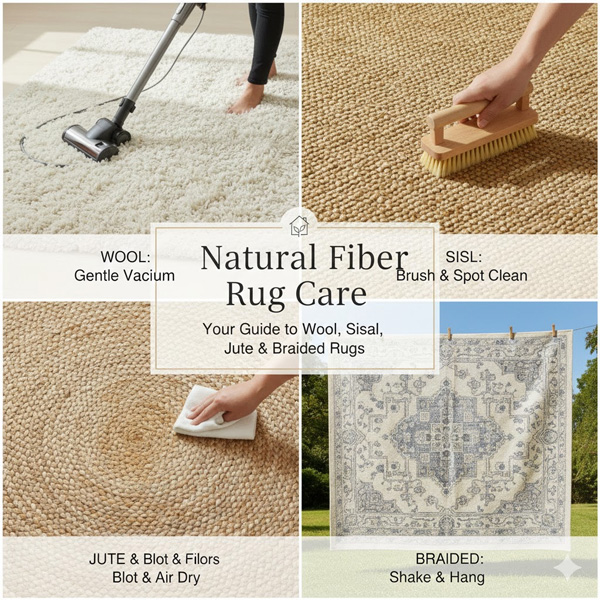
Wool Rugs: Resilient, Soft, and Naturally Protective
Wool rugs are one of the most popular natural fiber options thanks to their durability and built-in stain resistance.
Why Wool Stands Out:
- Naturally repels dirt and moisture
- Soft and comfortable underfoot
- Long-lasting with proper care
How to Care for Wool Rugs:
- Vacuum regularly using suction-only settings
- Blot spills immediately with a clean cloth
- Use wool-safe detergents for spot cleaning
What to Avoid:
- Over-wetting the rug
- Harsh chemical cleaners
- High heat drying
Care Insight: Wool fibers have a natural coating (lanolin) that helps resist stains—so gentle cleaning goes a long way.
>>> Delicate Rug Warning: How to Safely Clean Viscose, Silk & Polyester Rugs
Sisal Rugs: Tough, Textured, and Moisture-Sensitive
Sisal rugs are known for their strength and structured texture, making them ideal for high-traffic areas.
Why Choose Sisal:
- Highly durable
- Adds a natural, earthy look
- Great for busy spaces
How to Care for Sisal Rugs:
- Vacuum frequently to remove dirt buildup
- Blot spills immediately—speed is key
- Use dry cleaning methods only
What to Avoid:
- Water or steam cleaning
- Humid environments
- Scrubbing stains
Important: Sisal absorbs moisture quickly, which can lead to staining or fiber damage.
>>> Rug Care 101: How to Clean Every Rug Material
>>> Sisal & Jute Rug Care: The Absolute Do’s and Don’ts for Natural Beauty
>>> The Truth About Viscose Rugs: Luxe Look vs. High-Maintenance Reality
Jute Rugs: Soft, Cozy, and Best for Low-Traffic Areas
Jute rugs offer a softer alternative to sisal, with a more relaxed and casual look.
Why Jute Is Popular:
- Soft underfoot
- Budget-friendly
- Stylish and versatile
How to Care for Jute Rugs:
- Vacuum gently and regularly
- Shake out smaller rugs to remove debris
- Blot spills with a dry cloth
What to Avoid:
- Excess moisture
- Heavy foot traffic
- Aggressive cleaning
Care Tip: Jute is more delicate than sisal, so it’s best used in quieter areas like bedrooms or sitting rooms.
>>> Viscose Rug Nightmare? Why Water is the Enemy & How to Spot Clean Safely
>>> Wool Rug Love: How to Reduce Shedding & Keep Your Investment Looking New
>>> Professional vs. DIY: When to Clean Your Silk Rug at Home and When to Call the Experts
Braided Rugs: Classic Style with Unique Care Needs
Braided rugs often combine multiple fibers (like wool, cotton, or jute) into a woven, textured design.
Why People Love Braided Rugs:
- Timeless, rustic appeal
- Reversible for extended use
- Durable construction
How to Care for Braided Rugs:
- Vacuum both sides regularly
- Rotate frequently for even wear
- Spot clean using appropriate methods for the material
What to Avoid:
- Letting dirt settle deep into braids
- Ignoring the rug’s fiber composition
- Over-saturating during cleaning
Pro Tip: Always identify the primary fiber before cleaning—braided rugs don’t all behave the same.
>>> The Truth About Jute Rugs and Water: Can They Get Wet?
Spot Cleaning Natural Fiber Rugs: A Gentle Approach
Spills and stains are inevitable—but how you handle them makes all the difference.
Step-by-Step Spot Cleaning:
- Blot the spill immediately (don’t rub)
- Use a dry or slightly damp cloth (depending on material)
- Apply minimal cleaning solution if needed
- Allow the area to air dry completely
Golden Rule:
Less moisture = less damage
>> Cowhide Rug Care 101: To Vacuum or Not to Vacuum? And Other Essential Tips
Preventative Care: Keep Your Rugs Looking New Longer
The best way to maintain natural fiber rugs is to prevent damage before it happens.
Smart Maintenance Habits:
- Use rug pads to reduce wear and slipping
- Rotate rugs every few months
- Keep rugs away from direct sunlight
- Maintain low indoor humidity
These small habits can dramatically extend your rug’s lifespan.
Choosing the Right Placement for Each Rug Type
Where you place your rug plays a huge role in how well it holds up over time.
Best Placements:
- Wool: Living rooms, bedrooms, hallways
- Sisal: Entryways, offices, high-traffic areas
- Jute: Bedrooms, cozy corners, low-traffic spaces
- Braided: Versatile—depending on fiber composition
Areas to Avoid:
- Bathrooms
- Damp basements
- Spill-prone dining areas (especially for jute and sisal)
Care That Honors Natural Beauty
Natural fiber rugs bring warmth, texture, and authenticity into your home—but they also ask for a little extra care in return.
The key to keeping them beautiful isn’t complicated—it’s about understanding the material and treating it with respect. Whether you’re maintaining a durable wool rug or a delicate jute piece, the right approach ensures your rug stays a centerpiece, not a problem.
Invest a little time in proper care now, and your natural fiber rugs will reward you with years of timeless style and comfort.
