

Sisal and jute rugs are beautiful, sustainable—and utterly unforgiving of mistakes. One wrong cleaning method, one careless placement choice, one moment of moisture exposure can cause permanent, irreversible damage. There is no reset button. No miracle cleaner. No second chance.
At Bloom Nestify’s Rug Care Academy, we consider sisal and jute not as casual floor coverings, but as plant-based structural materials governed by strict biological and chemical laws. These rugs reward respect. They punish ignorance.
This article is your final line of defense. It establishes a non-negotiable boundary between what you must do and what you must never do. We will explain why these rules exist, grounded in the behavior of cellulosic fibers, and we will give you safe, confidence-building rescue protocols for real-life accidents.
If you remember only one thing: Moisture is the enemy. Everything else flows from that truth.
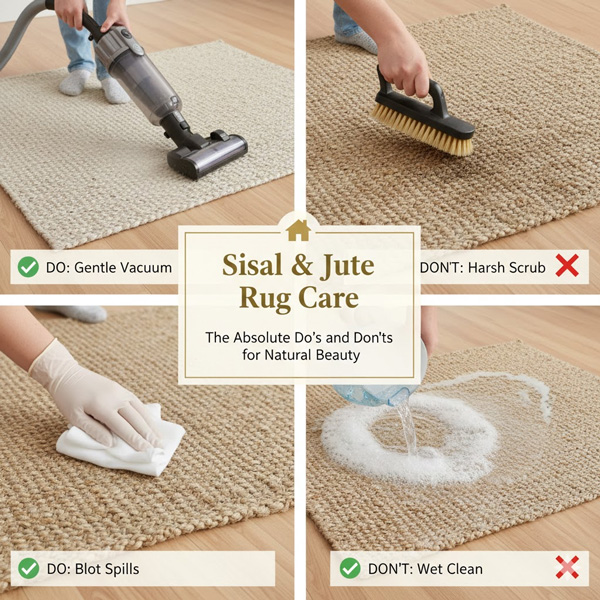
The Life-or-Death Summary: Sisal & Jute Care at a Glance
| Situation | ✅ DO (Preserve) | ⚠️ DON’T (Destroy) |
|---|---|---|
| Daily Cleaning | Dry vacuum only; remove grit | ⚠️ Wet mop or shampoo |
| Spills | Immediate dry blotting | ⚠️ Pour water or scrub |
| Oil Stains | Baking soda / cornstarch | ⚠️ Liquid degreasers |
| Placement | Dry, low-traffic rooms | ⚠️ Bathrooms, kitchens, entryways |
| Humidity | Use a dehumidifier | ⚠️ Ignore musty odors |
| Deep Cleaning | Specialized dry compound only | ⚠️ Steam cleaning (ever) |
⚠️ One violation can mean permanent browning, warping, or mold growth.
>>> Delicate Rug Warning: How to Safely Clean Viscose, Silk & Polyester Rugs
THE SACRED DO’S: Your Preservation Protocol
Do: Choose Their Home Wisely (Placement Is Everything)
The cardinal rule is this: You cannot out-clean bad placement.
Sisal and jute are made of highly porous, absorbent cellulosic fibers. They pull moisture from the air, the floor, and spills like a sponge. Your first defense is strategic placement.
Placement Decision Matrix
| Room | Verdict | Why |
|---|---|---|
| Living Room | ✔️ Safe | Controlled humidity, low spill risk |
| Bedroom | ✔️ Ideal | Dry, calm environment |
| Home Office | ✔️ Safe | Predictable use |
| Dining Room | ⚠️ Caution | Only with extreme care |
| Kitchen | ❌ Forbidden | Oils + water vapor = damage |
| Bathroom | ❌ Never | Constant humidity |
| Entryway | ❌ Never | Wet shoes, dirt, salt |
Additional rules:
- Use a dehumidifier in humid climates or basements.
- Avoid damp concrete floors without a breathable rug pad.
- Moderate direct sunlight to prevent uneven bleaching.
>> Professional vs. DIY: When to Clean Your Silk Rug at Home and When to Call the Experts
Do: Clean Using “Dry Methods Only”
If it involves liquid, it does not belong on a sisal or jute rug.
- Regular dry vacuuming is essential to remove abrasive grit that cuts fibers.
- A beater bar may be used only on the lightest setting.
- For surface debris, gentle brushing with a soft bristle brush is acceptable.
The Oil Stain Powder Formula (Your Safest Rescue Tool)
Oil-based stains are among the few you can address safely—if you stay dry.
Step-by-step:
- Blot excess oil immediately with a dry cloth.
- Generously cover the area with baking soda or cornstarch.
- Leave undisturbed for 8–12 hours to absorb oils.
- Vacuum thoroughly. Repeat if necessary.
This works because powders bind oil without swelling the fibers.
>>> Natural Fiber Rug Care: Your Guide to Wool, Sisal, Jute & Braided Rugs
Do: Act With Lightning Speed on Spills
Speed determines survival.
Step 1: BLOT—Never Rub
Use a clean, dry, absorbent towel. Press firmly. Extract as much liquid as possible.
Step 2: Minimal Intervention Only If Necessary
If residue remains, use a slightly damp cloth to blot—not clean—then immediately blot dry with a fresh towel.
Understand this reality: some water exposure may leave a faint water ring or patina caused by tannins. This is not failure. It is the material’s nature.
>>> Rug Care 101: How to Clean Every Rug Material
THE FORBIDDEN DON’TS: What Will Ruin Your Rug
⚠️ DON’T: Introduce Liquid or Steam (The Unforgivable Sin)
Under no circumstances should you:
- ⚠️ Steam clean
- ⚠️ Shampoo
- ⚠️ Soak
- ⚠️ Use vinegar or soap solutions
- ⚠️ Pressure wash
The Science Behind the Damage
When moisture enters cellulosic fibers, they swell. This causes:
- Warping and buckling
- Browning from tannin migration (water staining)
- Increased susceptibility to mildew and mold
- Structural weakening when fibers dry and become brittle
Steam cleaning is not “gentle.” It is catastrophic.
>>> The Truth About Viscose Rugs: Luxe Look vs. High-Maintenance Reality
⚠️ DON’T: Place Them in the Path of Moisture
Humidity alone is enough to destroy these rugs over time.
- Never use as a bath mat or kitchen runner
- Keep away from humidifiers, leaky windows, or doors
- Do not place directly on non-breathable surfaces
A musty smell is not cosmetic. It is a biological warning sign.
>>> Viscose Rug Nightmare? Why Water is the Enemy & How to Spot Clean Safely
⚠️ DON’T: Scrub or Use Harsh Chemicals
Scrubbing frays fibers and drives stains deeper. Chemical cleaners react unpredictably with plant fibers, often causing permanent discoloration.
If a stain cannot be handled with dry methods, stop. Further action may worsen the damage.
Advanced Care & “Oh No!” Troubleshooting
Dealing With a Musty Smell (Possible Mold)
- Sprinkle baking soda generously over the rug.
- Leave for several hours to absorb odors.
- Vacuum thoroughly.
- Increase airflow and reduce humidity immediately.
If the smell persists, mold may be present beneath the surface. Professional assessment is required. Do not attempt wet cleaning.
>>> Wool Rug Love: How to Reduce Shedding & Keep Your Investment Looking New
Can a Sisal or Jute Rug Ever Be Professionally Cleaned?
Yes—but only by specialists experienced with plant fibers.
Acceptable methods:
- Dry compound cleaning
- Ultra-low moisture systems designed specifically for natural fibers
Standard carpet cleaners are not qualified.
>>> The Truth About Jute Rugs and Water: Can They Get Wet?
The Reality of “Character Marks”
Water rings, slight fading, and minor abrasions are not defects. They are the honest record of an organic material aging naturally.
Sisal and jute are not plastic. They are not perfect—and that is their beauty.
>> Cowhide Rug Care 101: To Vacuum or Not to Vacuum? And Other Essential Tips
Embrace the Natural Imperfection, With Confidence
Let us be clear: sisal and jute rugs demand a hands-off, dry-first philosophy. Respecting their limits is not optional—it is the price of ownership.
Smart Alternatives & Proactive Protection
- Love the look but fear the risk? Explore our polypropylene and indoor/outdoor rugs that replicate sisal’s texture with total moisture resistance.
- Already own a natural fiber rug? Install a breathable rug pad immediately to improve airflow and isolate floor moisture.
Knowledge is power. You now understand the rules—and the reasons behind them. With informed care, your rug can age with dignity rather than regret.
