

Natural fiber rugs are not just floor coverings. They are expressions of ecology, craftsmanship, and time. Wool, sisal, jute, and braided rugs carry with them qualities that synthetic materials can only imitate: biodegradability, textural warmth, breathability, and a unique aging process that tells a story rather than hiding it.
But these same qualities demand respect. A method that works perfectly on a polypropylene rug can permanently damage a hand-knotted wool heirloom or stain a sisal rug beyond recovery. As we teach at Bloom Nestify’s Rug Care Academy, the first rule of preservation is to work with the material, not against it.
This guide is a deep, conservation-minded exploration of natural fiber rug care—designed for homeowners who value sustainability, authenticity, and long-term beauty. You’ll learn not just what to do, but why each fiber requires a distinct philosophy of care.
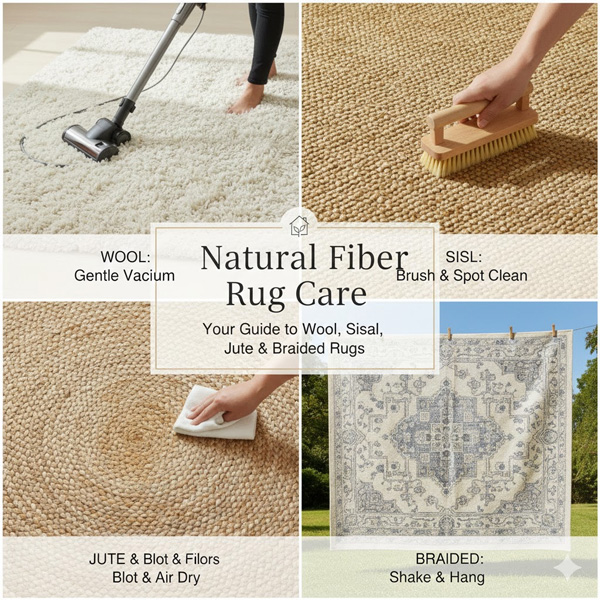
Key Characteristics Comparison: Wool vs. Sisal/Jute vs. Braided
| Fiber Type | Fiber Source | Best For | Worst For | Water Tolerance | Vacuum Rule |
|---|---|---|---|---|---|
| Wool | Animal (sheep fleece) | Living rooms, bedrooms, heirloom spaces | High heat, harsh chemicals | Low–Moderate | Suction only, no beater bar |
| Sisal | Plant (agave) | Dry, low-moisture interiors | Spills, humidity | Very Low | Beater bar on low |
| Jute | Plant (jute stalk) | Casual, eco-focused spaces | Liquids, kitchens | Very Low | Beater bar on low |
| Braided | Wool or cotton blend | Cozy, traditional interiors | Neglected seams/edges | Varies by material | Gentle, seam-aware |
Crucial distinction: “Natural fiber” is not a single category. Each fiber has its own chemistry, structure, and vulnerabilities. Treating them the same is the fastest path to irreversible damage.
>>> Delicate Rug Warning: How to Safely Clean Viscose, Silk & Polyester Rugs
Wool Rugs: The Resilient, Living Fiber
Material Profile Box
- Personality: Warm, intelligent, quietly luxurious
- Strength: Naturally soil-resistant, resilient pile, flame-resistant
- Achilles’ Heel: Shrinkage and felting from heat, moisture, or agitation
Wool is a living fiber. Each strand is a protein fiber coated with lanolin, a natural oil that repels dirt and inhibits dust mites. This is why wool rugs often look clean even when they aren’t—and why improper cleaning can strip away their natural defenses.
>>> Rug Care 101: How to Clean Every Rug Material
Daily & Weekly Care
- Vacuum once a week using suction only (no beater bar) to avoid pile distortion.
- Use a rug pad to absorb impact, reduce fiber compaction, and improve airflow.
- Expect some initial shedding—this is normal and temporary.
Spot Treatment Protocol
- Immediate blotting with a white microfiber cloth—never rub.
- Mix cold water with a pH-neutral, wool-safe detergent.
- Dab gently, working from the outside of the stain inward.
- Rinse with a barely damp cloth and blot dry thoroughly.
Always test in a hidden corner first.
>>> Sisal & Jute Rug Care: The Absolute Do’s and Don’ts for Natural Beauty
The Deep Cleaning Dilemma
Professional cleaning is strongly recommended every 12–18 months, especially for:
- Hand-knotted wool rugs
- Antique or heirloom pieces
- Rugs with natural or vegetable dyes
DIY shampooing risks felting, color bleeding, and sticky residue that attracts soil.
>>> The Truth About Viscose Rugs: Luxe Look vs. High-Maintenance Reality
Seasonal & Long-Term Preservation
- Rotate your rug seasonally to ensure even wear.
- Protect from prolonged direct sunlight to prevent fading.
- For storage: clean first, roll (never fold), and use natural moth deterrents like cedar or lavender.
>>> Viscose Rug Nightmare? Why Water is the Enemy & How to Spot Clean Safely
Sisal & Jute Rugs: The Dry & Earthy Companions
Material Profile Box
- Personality: Organic, tactile, eco-chic
- Strength: Durable underfoot, low static, visually grounding
- Achilles’ Heel: Extreme moisture sensitivity, browning, warping
Sisal and jute require a “less is more” approach. These are cellulosic plant fibers with high absorbency. Water triggers tannin reactions, leading to browning, stains, and structural distortion.
>>> Wool Rug Love: How to Reduce Shedding & Keep Your Investment Looking New
The Golden Rule: Keep Them Dry
FOR SISAL & JUTE: WATER IS THE ENEMY. Never soak or steam clean.
- Vacuum frequently to remove grit that can abrade fibers.
- A beater bar is acceptable on low, as these rugs have no pile to crush.
Spot Treatment Protocol (Dry Methods Only)
- Solid debris: Scrape off gently.
- Grease or oil: Apply cornstarch or baking soda, wait several hours, then vacuum.
- Liquids: Blot immediately with dry towels.
If a mark remains, it may become part of the rug’s natural patina.
>>> Professional vs. DIY: When to Clean Your Silk Rug at Home and When to Call the Experts
Placement Is Preventative Care
- Ideal for living rooms and bedrooms only.
- Never place in kitchens, bathrooms, basements, or entryways.
- In humid climates, a dehumidifier is a powerful preservation tool.
Natural color variations and slight staining are not flaws—they are part of the material’s honest aging process.
>>> The Truth About Jute Rugs and Water: Can They Get Wet?
Braided Rugs: The Heart of American Craftsmanship
Material Profile Box
- Personality: Nostalgic, cozy, handcrafted
- Strength: Thick construction, often reversible
- Achilles’ Heel: Seams, edges, and material variability
Braided rugs are defined as much by construction as by fiber. They may use a wool face with a cotton warp, or blends that change how they respond to moisture.
Care Based on Fiber Content
- Wool-braided rugs: Follow wool care principles—cool, gentle, professional when needed.
- Cotton or synthetic-blend braided rugs: More tolerant of light surface cleaning.
Special Attention to Seams & Edges
- Vacuum along seams, not across them, to avoid pulling.
- Inspect regularly for loose braids or binding.
- Hand-stitch small separations immediately—early repair prevents major failure.
Cleaning Vintage vs. New
- Vintage braided rugs may have brittle fibers and weakened seams.
A professional assessment is essential before any wet cleaning.
- Newer rugs may tolerate gentle surface cleaning with a mild upholstery shampoo—but never oversaturate.
>> Cowhide Rug Care 101: To Vacuum or Not to Vacuum? And Other Essential Tips
The Unified Philosophy of Natural Fiber Care
Natural fibers are not meant to look “perfect.” They are meant to look authentic.
- Wool rewards gentle care and professional expertise.
- Sisal & jute demand dryness and thoughtful placement.
- Braided rugs ask you to respect structure as much as material.
When you honor these principles, natural fiber rugs become long-term companions—aging gracefully, developing character, and anchoring your home with quiet integrity.
From Care to Commitment: Your Next Steps
Caring properly for natural fiber rugs is an act of preservation—of materials, of craftsmanship, and of story.
For valuable or heirloom rugs:
Contact our Certified Professional Cleaning Partner Network for expert evaluation and conservation-grade care.
For everyday protection:
Start with a high-quality rug pad to safeguard both your rug and your floors.
To deepen your knowledge:
Revisit our foundational guide: Rug Care 101: How to Clean Every Rug Material, or explore the full curriculum at Bloom Nestify’s Rug Care Academy.
Respect the Fiber, Preserve the Story
Each natural fiber has a personality. Wool is forgiving but proud. Sisal and jute are honest and uncompromising. Braided rugs are communal, built stitch by stitch.
There is no universal cleaning method—only informed care. When you understand and respect the inherent traits of your rug, you don’t just maintain it. You build a lasting relationship with it—one grounded in knowledge, patience, and appreciation for nature’s design.
