

Using the wrong cleaning method on a silk rug can cause permanent fiber distortion, while that same method might be perfectly safe for a polypropylene rug.
This is the first and most important lesson we teach at Bloom Nestify’s Rug Care Academy:
The first rule of rug care is: know your material.
Every rug fiber has a different fiber structure, dye stability, and moisture sensitivity. That’s why there is no universal “best” way to clean a rug.
This guide breaks rug care into four major material categories, each with its own rules, risks, and recommended actions. Think of this page as your printable action map—a reference you return to before you clean, spot-treat, or panic.
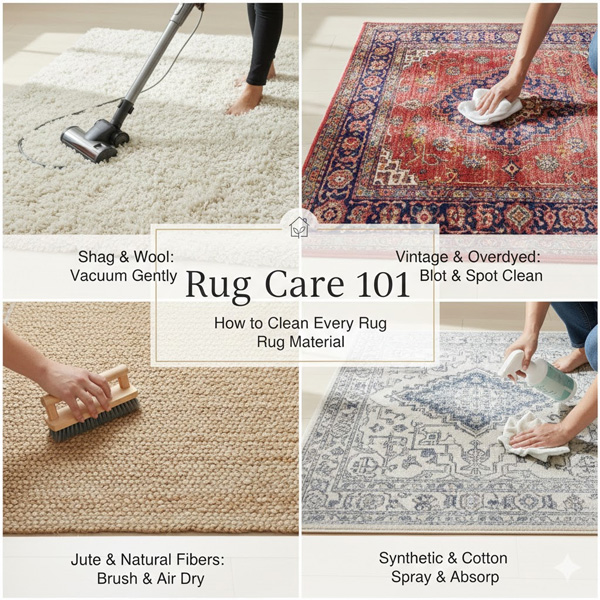
Rug Material Cleaning Quick-Reference Chart
| Material Type | Water Tolerance | Vacuum Setting | Best Cleaning Method | Biggest Danger |
|---|---|---|---|---|
| Wool | Low–Moderate | Suction only / No beater bar | Professional cleaning or mild wool detergent | Shrinkage, color bleeding |
| Silk | Very Low | Suction only | Dry cleaning by a specialist | Fiber distortion, water marks |
| Jute / Sisal / Seagrass | Extremely Low | Suction only | Dry methods only | Browning, warping |
| Polypropylene (Olefin) | High | Normal settings | DIY spot cleaning, mild soap & water | UV fading |
| Nylon | High | Normal settings | DIY or professional deep cleaning | Heat damage |
| Polyester | Moderate–High | Normal settings | DIY cleaning, controlled moisture | Oil attraction |
| Viscose / Rayon / Bamboo | Extremely Low | Suction only | Dry vacuuming only | Permanent water damage |
Category 1: Luxury & Delicate Natural Fibers (Wool & Silk)
Quick Summary Box
- Water Sensitivity: Medium–High
- Best For: Professional care, controlled spot cleaning
- Traffic Level: Medium (wool), Low (silk)
The Basics
- Wool is a natural protein fiber coated with lanolin, which repels dirt but reacts poorly to excess moisture and heat.
- Silk is made of ultra-fine protein fibers with low tensile strength when wet, making it extremely vulnerable during cleaning.
>>> Delicate Rug Warning: How to Safely Clean Viscose, Silk & Polyester Rugs
The Do’s
- Vacuum regularly using suction only (no beater bar).
- Blot spills immediately using a white microfiber cloth.
- For small spots on wool, use a pH-neutral, wool-specific detergent diluted in cool water.
- Always work from the outside of the stain inward.
The Don’ts
- NEVER use hot water or steam.
- Avoid harsh chemicals, bleach, or ammonia.
- No aggressive scrubbing—this causes pile crushing and fuzzing.
- Do not oversaturate the rug backing.
>>> Natural Fiber Rug Care: Your Guide to Wool, Sisal, Jute & Braided Rugs
When to Call a Pro
- Large spills
- Overall dinginess
- Valuable or hand-knotted rugs
Professional cleaning preserves rug longevity and prevents irreversible damage.
➜ Deep Dive:
- Natural Fiber Rug Care: Your Guide to Wool, Sisal, Jute & Braided Rugs
- Delicate Rug Warning Guide (Silk & Fine Fibers)
>>> Sisal & Jute Rug Care: The Absolute Do’s and Don’ts for Natural Beauty
Category 2: Plant-Based & Natural Casual Fibers (Jute, Sisal, Seagrass)
Quick Summary Box
- Water Sensitivity: EXTREMELY HIGH
- Best For: Dry environments only
- Cleaning Style: Preventive, dry-only
The Basics
These rugs are made from cellulosic plant fibers, which absorb moisture rapidly. Water causes:
- Browning
- Warping
- Permanent staining
>>> Professional vs. DIY: When to Clean Your Silk Rug at Home and When to Call the Experts
The Do’s
- Vacuum frequently using suction only.
- Absorb oils with cornstarch or baking soda, then vacuum.
- Spot clean using a barely damp cloth—only if unavoidable.
- Use a rug pad to improve airflow and prevent moisture trapping.
>>> The Truth About Viscose Rugs: Luxe Look vs. High-Maintenance Reality
The Don’ts
- NEVER steam clean, shampoo, soak, or pressure wash.
- Avoid kitchens, bathrooms, or basements.
- Never allow liquid to penetrate the backing.
When to Call a Pro
- Most professionals will not wet-clean these rugs.
- Severe staining often cannot be reversed—replacement may be the only option.
➜ Deep Dive:
The Truth About Jute Rugs and Water: Can They Get Wet?
>>> Viscose Rug Nightmare? Why Water is the Enemy & How to Spot Clean Safely
Category 3: Durable & Stain-Resistant Synthetics (Polypropylene, Nylon, Polyester)
Quick Summary Box
- Water Tolerance: High
- Best For: Busy homes, pets, kids
- Cleaning Style: DIY-friendly
The Basics
- Polypropylene (Olefin) is naturally stain-resistant and colorfast.
- Nylon is extremely durable and resilient.
- Polyester is soft and fade-resistant but attracts oils.
The Do’s
- Vacuum regularly using standard settings.
- Spot clean with mild dish soap and warm water.
- Many small synthetic rugs are machine washable—check labels.
- Use a wet-dry vacuum for faster drying.
>>> The Truth About Jute Rugs and Water: Can They Get Wet?
The Don’ts
- Avoid bleach on colored rugs (causes yellowing).
- Don’t rely on heat—air drying is safer.
- Prolonged direct sunlight can cause UV fading.
When to Call a Pro
- Large area rugs
- Deep-set grease or pet odors
- When odor persists after DIY cleaning
➜ Deep Dive:
Beyond Wool: Understanding Olefin (Polypropylene) & Other Budget-Friendly Rug Options
>> Wool Rug Love: How to Reduce Shedding & Keep Your Investment Looking New
Category 4: The “Faux Silk” Warning Zone (Viscose / Rayon / Bamboo)
Quick Summary Box
- Water Sensitivity: EXTREME – HIGHEST RISK
- Best For: Low-traffic, decorative spaces
- Cleaning Style: Dry-only, minimal handling
The Basics
These fibers mimic silk’s sheen but lack its durability. When wet, they:
- Lose structure
- Develop dark water marks
- Permanently distort pile direction
This is the #1 rug cleaning disaster category we see.
The Do’s
- Dry vacuum only.
- Blot spills immediately with a dry cloth.
- Accept that these rugs are “look, don’t touch.”
>>> Cowhide Rug Care 101: To Vacuum or Not to Vacuum? And Other Essential Tips
The Don’ts
- NEVER introduce liquid, steam, or shampoo.
- No DIY stain removers.
- No aggressive brushing.
When to Call a Pro
- Immediately, and only one experienced with viscose.
- Even professionals cannot always reverse damage.
➜ Deep Dive:
Viscose Rug Nightmare? Why Water Is the Enemy & How to Spot Clean Safely
