

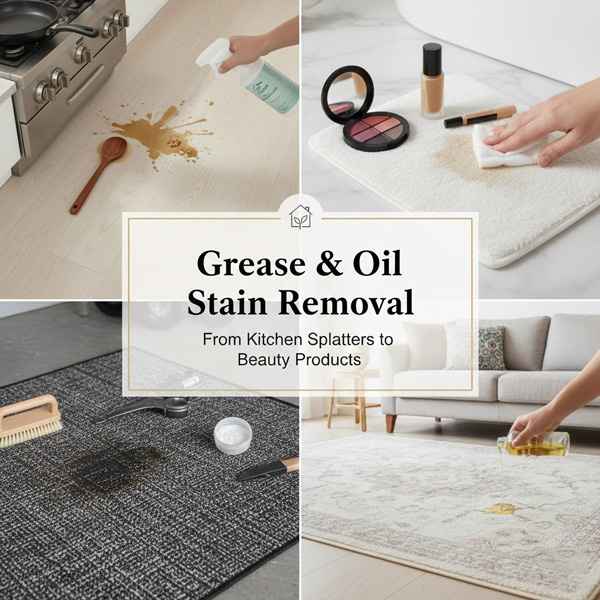
Dealing with stubborn spills? This guide from Bloom Nestify breaks down effective Grease & Oil Stain Removal techniques for everything from kitchen splatters to beauty product mishaps. As part of our Rug Care & Cleaning series, you’ll learn safe, practical steps to lift oily stains and keep your rug looking fresh without damaging its fibers.
Understanding Why Grease Stains Are So Stubborn
Before jumping into solutions, it helps to understand the problem. Grease and oil are hydrophobic, meaning they repel water. This is why simply rinsing a stain with water often makes it worse-it spreads instead of dissolving.
The key to removing grease stains is breaking down the oil using the right agents, such as dish soap, baking soda, or specialized cleaners. These substances bind to the oil and lift it away from surfaces.
Dog Urine on Your Rug? The Step-by-Step Rescue Guide for Wool & Cowhide
Banishing Kitchen Grease Stains
The kitchen is ground zero for grease splatters. From stovetops to cabinets, oil can settle everywhere during cooking.
Common Problem Areas
- Stovetops and backsplashes
- Countertops
- Cabinets and handles
- Floors near cooking areas
Step-by-Step Cleaning Method
Act Quickly
Fresh grease is much easier to remove. Wipe up splatters as soon as the surface cools down.
Use Dish Soap
Dish soap is designed to cut through grease. Mix a few drops with warm water and scrub the affected area using a sponge.
Apply Baking Soda for Tough Stains
For stubborn spots, sprinkle baking soda directly on the stain. Add a bit of water to form a paste and scrub gently.
Use Vinegar for Final Shine
White vinegar helps remove residue and leaves surfaces sparkling clean.
Pro Tip
Avoid using abrasive scrubbers on delicate surfaces like stainless steel or glass cooktops, as they can cause scratches.
Can I Bleach My White Rug? Safe Alternatives for Brightening & Stain Removal
Removing Grease & Oil from Clothing
Getting grease on clothes is almost inevitable—but it doesn’t have to ruin your favorite outfit.
>> Laughing Buddha with Five Children Statue – 3.3 ft Huong Stone Wood
What You’ll Need
- Dish soap or liquid laundry detergent
- Baking soda or cornstarch
- An old toothbrush
Ink & Marker Magic: How to Lift Pen Stains from Your Carpet
Red Wine on the Rug? Don’t Panic, Follow These Steps for Wool & Synthetics
Step-by-Step Guide
Blot the Stain
Use a paper towel to absorb excess oil. Don’t rub—it can push the grease deeper into the fabric.
Apply Absorbent Powder
Sprinkle baking soda or cornstarch over the stain and let it sit for 10–15 minutes. This helps draw out the oil.
Add Dish Soap
Apply a small amount of dish soap directly to the stain and gently scrub with a toothbrush.
Wash in Warm Water
Check the care label and wash the garment in the warmest water safe for the fabric.
Air Dry First
Avoid using a dryer until you’re sure the stain is gone—heat can set the stain permanently.
Special Note for Delicate Fabrics
For silk or wool, consider using a specialized detergent or taking the garment to a professional cleaner.
Cleaning Up Beauty Product Oil Stains
Beauty products like foundation, lotions, and hair oils often contain oils that can stain fabrics and surfaces.
Common Culprits
- Liquid foundation
- Facial oils
- Hair serums
- Body lotions
How to Remove Beauty Oil Stains
Remove Excess Product
Use a clean cloth or tissue to gently lift off any excess without spreading it.
Use Micellar Water (Optional)
Micellar water can break down makeup oils effectively, especially on fabrics.
Apply Dish Soap or Shampoo
Hair shampoo works surprisingly well for oil-based stains since it’s designed to break down scalp oils.
Rinse and Repeat
Rinse with warm water and repeat the process if necessary.
For Upholstery and Carpets
Blot the stain with a mixture of dish soap and warm water. Avoid soaking the area, as excess moisture can damage upholstery.
Natural Remedies for Grease Stain Removal
If you prefer eco-friendly cleaning solutions, several natural ingredients work just as well as commercial products.
Effective Natural Cleaners
Baking Soda
Absorbs oil and neutralizes odors.
White Vinegar
Cuts through grease and disinfects surfaces.
Lemon Juice
Acts as a natural degreaser with a fresh scent.
Cornstarch
Excellent for absorbing fresh oil stains from fabric.
DIY Grease Cleaner Recipe
Mix:
- 1 cup warm water
- 1 tablespoon baking soda
- 1 tablespoon white vinegar
Use this solution to tackle light grease stains on most surfaces.
Mistakes to Avoid When Removing Grease Stains
Even with the best intentions, some common mistakes can make grease stains worse.
Using Hot Water Immediately
Hot water can set the stain if the grease hasn’t been treated first.
Skipping the Pre-Treatment Step
Always treat the stain before washing.
Using Too Much Detergent
Excess soap can leave residue and trap grease instead of removing it.
Drying Too Soon
Heat from dryers can permanently set stains.
Preventing Future Grease Stains
Prevention is always better than cleanup. Here are a few simple habits to reduce grease messes:
- Use splatter guards when frying
- Wear an apron while cooking
- Store oily beauty products securely
- Clean surfaces regularly to prevent buildup
Grease and oil stains might seem intimidating, but they’re completely manageable with the right approach. The key is acting quickly, using the proper cleaning agents, and avoiding common mistakes.
From kitchen splatters to beauty product spills, these practical techniques will help you keep your home and wardrobe spotless. With a little effort and consistency, you can tackle even the toughest stains like a pro.
