

Not sure how to properly maintain your cowhide rug? Learn Cowhide Rug Care with this practical guide from Bloom Nestify. From whether you should vacuum to essential everyday maintenance tips, this article helps you preserve the natural beauty and durability of your rug. As part of our Rug Care & Cleaning, it’s your go-to resource for keeping cowhide rugs looking their best.
Why Cowhide Rugs Need Special Care
Cowhide rugs are a unique blend of natural beauty, durability, and statement style. Unlike traditional woven rugs, cowhide is made from animal hide, which means it behaves differently when it comes to cleaning and maintenance.
That’s why one of the most common questions homeowners ask is:
“Can I vacuum a cowhide rug?”
The short answer is yes—but carefully. In this complete guide, we’ll walk you through everything you need to know about cowhide rug care, from vacuuming techniques to stain removal and long-term maintenance.
>> Viscose Rug Nightmare? Why Water is the Enemy & How to Spot Clean Safely
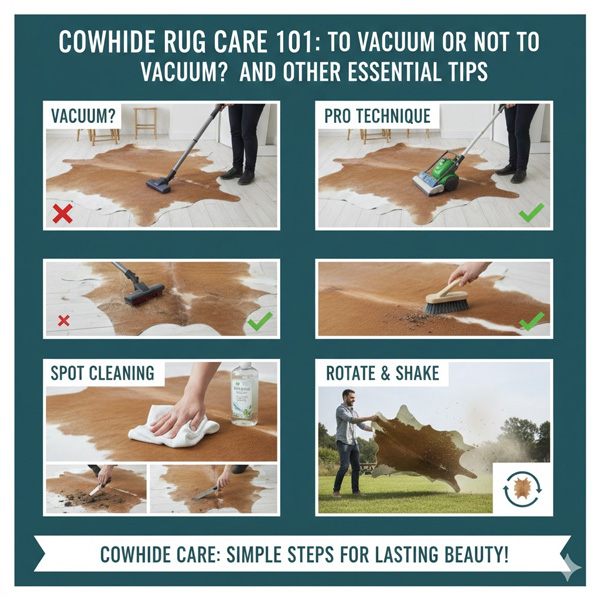
To Vacuum or Not to Vacuum? The Truth Explained
✅ Yes, You Can Vacuum—But Gently
Vacuuming is safe for cowhide rugs as long as you follow a few key rules:
How to Vacuum Properly:
- Use a vacuum without a rotating brush (beater bar)
- Vacuum in the direction of the hair, not against it
- Use low suction settings
- Avoid frequent aggressive cleaning
Why It Matters:
Cowhide rugs have natural hair that can loosen or shed if handled roughly. Gentle vacuuming helps remove dust and dirt without damaging the fibers.
What to Avoid When Vacuuming
To keep your rug in top condition, avoid these common mistakes:
- Using a beater bar or rotating brush
- Vacuuming against the hair direction
- Applying high suction power
- Over-vacuuming (once a week is enough)
These mistakes can lead to hair loss, uneven texture, and premature wear.
>>> Delicate Rug Warning: How to Safely Clean Viscose, Silk & Polyester Rugs
How to Clean Spills & Stains Safely
Accidents happen—but with cowhide, quick action is key.
Step-by-Step Cleaning:
- Blot immediately with a dry cloth (never rub)
- Use a slightly damp cloth with mild soap if needed
- Gently wipe in the direction of the hair
- Let it air dry completely
For Tough Stains:
- Use a mixture of water and mild shampoo
- Avoid soaking the rug
Important:
Never use harsh chemicals or bleach—they can damage the hide permanently.
>>> Natural Fiber Rug Care: Your Guide to Wool, Sisal, Jute & Braided Rugs
Dealing with Odors Naturally
Cowhide rugs don’t trap odors as easily as fabric rugs, but they can still pick up smells over time.
Natural Deodorizing Tips:
- Air out your rug in a well-ventilated space
- Lightly sprinkle baking soda, then shake it off
- Avoid heavy sprays or perfumes
Fresh air is often the best and safest solution.
Protecting Your Cowhide Rug from Damage
Avoid Direct Sunlight
Prolonged exposure can cause fading and dryness.
Keep Away from Moisture
Excess water can warp the hide or cause stiffness.
Rotate Regularly
This ensures even wear and prevents one area from fading or flattening.
>> Rug Care 101: How to Clean Every Rug Material
Daily & Weekly Maintenance Routine
Keeping your cowhide rug looking great doesn’t require much effort.
Weekly:
- Light vacuuming
- Shake out dust if possible
Monthly:
- Inspect for stains or damage
- Spot clean as needed
Occasionally:
- Brush lightly with a soft brush to maintain texture
Consistency is key to preserving the rug’s natural beauty.
>>> Professional vs. DIY: When to Clean Your Silk Rug at Home and When to Call the Experts
Pro Tips for Long-Lasting Cowhide Rugs
Use It as a Layered Accent
Place your cowhide over a larger rug (like jute) to reduce wear.
Keep It Flat
Avoid folding your rug—this can cause creases.
Brush Occasionally
A soft brush can help maintain the natural look of the hair.
Avoid Heavy Furniture Pressure
Too much weight can flatten the hide over time.
>>> Wool Rug Love: How to Reduce Shedding & Keep Your Investment Looking New
>>> Sisal & Jute Rug Care: The Absolute Do’s and Don’ts for Natural Beauty
Common Cowhide Rug Care Mistakes
- Over-wetting the rug
- Using harsh cleaning chemicals
- Scrubbing instead of blotting
- Ignoring sunlight exposure
- Using the wrong vacuum settings
Avoiding these mistakes can significantly extend your rug’s lifespan.
>>> The Truth About Viscose Rugs: Luxe Look vs. High-Maintenance Reality
>>> The Truth About Jute Rugs and Water: Can They Get Wet?
Final Thoughts: Simple Care, Long-Lasting Beauty
Cowhide rugs are surprisingly low-maintenance—as long as you treat them correctly.
Yes, you can vacuum them—but gently. Combine that with quick stain response, minimal moisture, and regular upkeep, and your rug will stay beautiful for years.
Think of your cowhide rug as a natural piece of art. With the right care routine, it will continue to add warmth, texture, and personality to your home without demanding too much effort.
