

Handling delicate rugs requires extra care. Learn How to Safely Clean Viscose, Silk & Polyester Rugs with this essential guide from Bloom Nestify. From gentle cleaning methods to common mistakes to avoid, this article helps you protect fragile fibers while keeping your rugs looking their best. As part of our Rug Care & Cleaning, it’s your trusted resource for safe and effective rug maintenance.
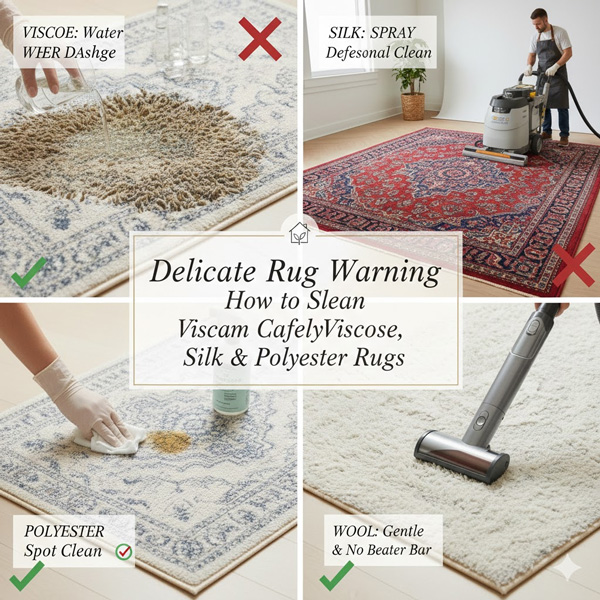
The Delicate Rug Danger Level Matrix
| Material | Risk of Water Damage | Risk of Heat Damage | DIY Cleaning Path |
|---|---|---|---|
| Viscose / Rayon | 🔴 Extreme | 🟡 Moderate | ❌ Dry methods only |
| Silk | 🔴 Extreme | 🟡 Moderate | ❌ Professional only |
| Polyester | 🟡 Low–Moderate | 🔴 Extreme | ⚠️ Cool & gentle only |
Key takeaway: “Silky” rugs are not equal. Each one fails differently—and expensively.
>>> Rug Care 101: How to Clean Every Rug Material
Material 1: Viscose / Rayon – The Wolf in Sheep’s Clothing
The Reality: What Viscose Really Is
Viscose (also called rayon) is a cellulosic regenerated fiber. It is made from plant cellulose that has been chemically processed and extruded into filaments. While it looks luxurious, its internal structure behaves more like antique paper than fabric.
Scientifically speaking:
- It is highly absorbent
- It loses up to 80% of its strength when wet
- It has extremely low wet resilience
- It becomes brittle and distorted after drying
Calling viscose “faux silk” is one of the most dangerous misnomers in the rug industry.
>>> Natural Fiber Rug Care: Your Guide to Wool, Sisal, Jute & Braided Rugs
The Trap: Why People Destroy Viscose Rugs
The biggest misconception is visual. Viscose feels cool, smooth, and refined. Owners assume it can tolerate gentle water cleaning like wool or cotton.
It cannot.
A single drop of water can trigger:
- Permanent water staining
- Pile collapse and distortion
- Uneven shrinkage
- Hard, crunchy texture after drying
>>> Cowhide Rug Care 101: To Vacuum or Not to Vacuum? And Other Essential Tips
➜ DISASTER SCENARIO: Water Meets Viscose
Soap + water applied → fibers swell and soften → cellulose structure collapses → fibers shrink unevenly as they dry → rug becomes stiff, warped, and blotchy.
This damage is ABSOLUTELY IRREVERSIBLE.
The Safe Protocol for Viscose – DRY METHODS ONLY
- Daily care: Dry vacuuming with suction only (no aggressive beater bar).
- Dry debris: Gently lift with a plastic spoon or soft bristle brush.
- Spills: Apply the 4-Step Spill Protocol (below). Do not use damp cloths.
- Any visible stain: Stop immediately and call a professional.
If moisture is introduced, you have crossed the line from maintenance into damage.
>>> Sisal & Jute Rug Care: The Absolute Do’s and Don’ts for Natural Beauty
Material 2: Silk – The Noble Heirloom
The Reality: Silk Is a Protein, Not a Plant
Silk is a protein fiber, similar in chemical sensitivity to human hair—but far less forgiving. It is prized for its luster, fineness, and role in hand-knotted oriental and heirloom rugs.
Key scientific traits:
- Extremely delicate dye bonds
- Highly pH-sensitive
- Prone to color bleeding
- Vulnerable to sunlight degradation
Silk rugs are not decor accessories. They are investments.
>>> The Truth About Viscose Rugs: Luxe Look vs. High-Maintenance Reality
The Trap: “Natural” Does Not Mean Durable
Many owners assume silk can be treated gently at home because it is a natural fiber. This assumption leads to catastrophic results.
Even distilled water can cause:
- Water spotting
- Dye migration
- Permanent dulling of luster
The Safe Protocol for Silk – PROFESSIONAL FIRST
- Routine care: Light dry vacuuming only, no beater bar.
- Spills or stains: Stop. Do not test. Do not blot repeatedly. Call a professional immediately.
- Long-term care: Keep out of direct sunlight. Schedule periodic professional dry cleaning.
For silk, DIY cleaning is not brave—it is reckless.
>>> Viscose Rug Nightmare? Why Water is the Enemy & How to Spot Clean Safely
Material 3: Polyester – The “Easy-Care” Myth
The Reality: Durable… Until Heat Is Introduced
Polyester is a synthetic polymer. It is generally water-resistant and does not swell like cellulosic fibers. This earns it an “easy-care” reputation—but that reputation is dangerously incomplete.
Polyester is:
- Heat-sensitive
- Capable of melting or glazing
- Prone to attracting oil-based stains
- Susceptible to permanent crushing in high-pile rugs
The Trap: Overconfidence
Because polyester tolerates water better, owners often use:
- Hot water
- Steam cleaners
- Heated dryers
- Aggressive beater bars
This introduces direct heat, which can permanently fuse or flatten the fibers.
>>> Wool Rug Love: How to Reduce Shedding & Keep Your Investment Looking New
➜ DISASTER SCENARIO: Heat on Polyester
Steam cleaner applied → fiber surface softens → pile melts microscopically → rug dries stiff, shiny, and permanently crushed.
No cleaning can reverse melted polymer.
The Safe Protocol for Polyester – COOL & GENTLE
- Vacuuming: Normal vacuuming is acceptable, but avoid overheating beater bars.
- Stains: Mild detergent + cool water only, blot gently.
- Drying: Air dry only. Never use dryers, irons, or high-heat steam.
Polyester forgives water. It does not forgive heat.
>>> Professional vs. DIY: When to Clean Your Silk Rug at Home and When to Call the Experts
The Universal 4-Step Spill Protocol for Delicate Rugs
When liquid hits a delicate rug, follow this sequence without deviation:
BLOT
Use a white, absorbent microfiber cloth or paper towel. Press—do not rub.
CONTAIN
If the spill spreads, apply cornstarch or baking soda around the edges to prevent migration.
TEST
If you believe cleaning is unavoidable, test only in an inconspicuous area first.
CALL
If the stain remains after Step 1—or if the rug is silk or viscose—call a professional immediately. This is the cheapest insurance you can buy.
>>> The Truth About Jute Rugs and Water: Can They Get Wet?
Preserve Beauty, Prevent Heartbreak
Let us be direct:
- Viscose fears water.
- Silk demands professionals.
- Polyester fears heat.
With these materials, prevention outweighs rescue by a hundredfold. Most rug disasters do not happen because owners are careless—but because they are misinformed.
