

Love your wool rug but not the shedding? Learn How to Reduce Shedding & Keep Your Investment Looking New with this expert guide from Bloom Nestify. From simple maintenance tips to smart care routines, this article helps you protect your rug’s beauty and longevity. As part of our Rug Care & Cleaning, it’s your go-to resource for keeping your investment fresh, clean, and looking its best.
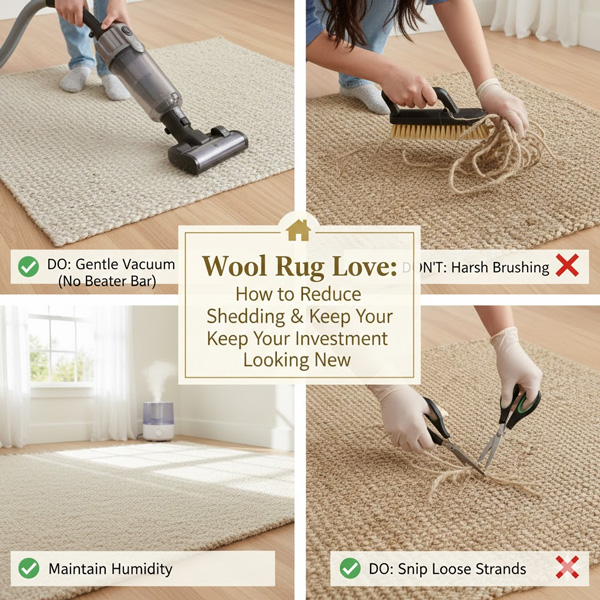
Why Does My New Wool Rug Shed? (It’s a Feature, Not a Bug)
What’s Actually Happening Inside the Rug
Wool rug shedding comes from loose fibers, not structural damage.
Wool fibers are naturally short “staples” that are spun and twisted together during rug production. Whether a rug is hand-knotted, hand-tufted, or loom-woven, some excess fibers remain trapped in the pile after manufacturing and shearing.
These fibers are:
- Not anchored into knots or backing
- Leftover from trimming the surface to an even height
- Perfectly normal byproducts of working with natural wool
As the rug is walked on and vacuumed, those loose fibers work their way out.
>>> Delicate Rug Warning: How to Safely Clean Viscose, Silk & Polyester Rugs
Construction Matters: Why Some Rugs Shed More Than Others
- Hand-tufted wool rugs → Shed more initially
(Fibers are punched through a backing, not individually knotted)
- Hand-knotted wool rugs → Shed less, but still shed
(Denser structure, fewer loose ends)
- Higher pile height → More potential shedding
Premium wool (e.g., New Zealand wool) → Softer feel, sometimes more initial shedding
Analogy:
Think of shedding like a new wool sweater. The first few wears (and washes) release extra fuzz — then the fabric stabilizes.
>> Professional vs. DIY: When to Clean Your Silk Rug at Home and When to Call the Experts
Your 4-Step “Shedding Management” Plan for the First 3 Months
This is where most owners go wrong — not by neglecting the rug, but by over-cleaning it the wrong way.
Step 1: Vacuum, Vacuum, Vacuum — The Right Way
This is the single most important action you can take.
Tool requirements:
- High-quality vacuum cleaner
- HEPA filter recommended (captures fine wool dust)
- Suction-only mode or “hard floor” setting
NEVER use the beater bar or rotating brush on a wool rug.
It doesn’t clean better — it pulls out healthy fibers.
Frequency (first month):
- Week 1–2: Daily or every other day
- Week 3–4: 3–4 times per week
- Month 2 onward: 2 times per week
Technique:
- Vacuum with and against the pile direction
- Slow passes, no aggressive pushing
- Empty the canister often — a full bin reduces suction efficiency
>>> Natural Fiber Rug Care: Your Guide to Wool, Sisal, Jute & Braided Rugs
Step 2: Employ Supplemental Tools (Optional but Effective)
For rugs shedding heavily in the first few weeks:
- Rubber broom or carpet rake:
Gently lifts loose fibers to the surface before vacuuming
- Lint rollers:
Perfect for spot cleanup on nearby furniture or clothing
These tools remove loose fibers without stressing the pile.
>> Rug Care 101: How to Clean Every Rug Material
Step 3: Be Patient and Follow the Shedding Reduction Timeline
The Shedding Reduction Timeline (What to Expect)
Weeks 1–4: The Intense Phase
- Visible fiber release
- Vacuum canister fills quickly
- Completely normal
Months 2–3: The Decline Phase
- Noticeably less shedding
- Fibers stabilize within the pile
Month 6 and Beyond: Maintenance Mode
- Minimal to no visible shedding
- Occasional fibers during vacuuming only
Most wool rugs show dramatic improvement after 4–6 weeks of proper care.
>>> The Truth About Jute Rugs and Water: Can They Get Wet?
Step 4: The Non-Negotiable — Use a High-Quality Rug Pad
If shedding management had a secret weapon, this would be it.
A proper rug pad:
- Reduces friction between rug and floor
- Absorbs foot traffic impact
- Prevents micro-movements that loosen fibers
- Protects both rug and flooring
Cheap pads (or no pad at all) increase shedding by allowing constant abrasion from below.
For wool rugs, a dense felt or felt-rubber combination pad is ideal.
>>> Sisal & Jute Rug Care: The Absolute Do’s and Don’ts for Natural Beauty
Long-Term Care to Minimize Shedding & Preserve Pile
Once the initial phase passes, maintenance becomes simple — but consistency matters.
Ongoing Vacuuming Routine
- 1–2 times per week
- Always suction-only
- Avoid high-powered commercial vacuums with stiff brushes
Rotate Your Rug
- Rotate 180 degrees every 6 months
- Distributes wear evenly
- Prevents localized shedding in high-traffic zones
Immediate Spill Cleanup
- Blot spills immediately with a white cloth
- Avoid sticky residues that cause fiber matting
- Matted fibers break more easily, increasing long-term shedding
>> Cowhide Rug Care 101: To Vacuum or Not to Vacuum? And Other Essential Tips
Professional Deep Cleaning (Critical)
Every 12–18 months, professional cleaning:
- Removes embedded grit that cuts fibers internally
- Restores pile resilience
- Extends rug lifespan significantly
Professional cleaning doesn’t increase shedding — it prevents it.
>>> Viscose Rug Nightmare? Why Water is the Enemy & How to Spot Clean Safely
Red Flags: When Shedding Isn’t Normal
Most shedding is harmless. Some shedding is not.
Quick Check: Normal vs. Problem Shedding
| Normal Shedding | Excessive / Problem Shedding |
|---|---|
| Fine loose fibers | Large clumps pulling out |
| Gradually decreases | Persists or worsens after 6 months |
| Even across rug | Bald or thin patches |
| Improves with vacuuming | Increases after vacuuming |
Possible Causes of Abnormal Shedding
- Beater bar or rotating brush damage
- Poor-quality wool or backing
- Fiber degradation from moisture or chemicals
- Pet claws snagging loops and pile
If you see bald spots or clumps coming out, stop vacuuming immediately and consult a professional or the manufacturer.
>> The Truth About Viscose Rugs: Luxe Look vs. High-Maintenance Reality
Embrace the Journey to a Lifetime of Beauty
The Takeaway
- Initial wool rug shedding is temporary
- It’s a sign of authentic, natural wool
- Proper tools + patience = long-term brilliance
With the right care, a wool rug doesn’t wear out — it settles in.
Final Thought
That initial shedding phase isn’t your rug failing — it’s your rug becoming yours.
With informed care, the fuzz fades, the fibers strengthen, and what remains is exactly why people have loved wool rugs for centuries: durability, warmth, and timeless beauty that only gets better with age.
