

Struggling to get the perfect rug fit for every space? The Definitive Guide to Rug Sizes from Bloom Nestify gives you clear, room-by-room guidance on sizing and placement—from living rooms to bedrooms and beyond. As part of our Rug Buying Guides, this comprehensive guide helps you create well-balanced layouts, define spaces beautifully, and elevate your home with confidence.
Why Rug Size & Placement Matter (More Than You Think)
A rug is not just something you place under furniture — it’s something that connects furniture.
When sized and placed correctly, a rug can:
- Define zones in open-concept spaces
- Anchor furniture, making a room feel intentional
- Visually expand or balance a room
- Add warmth, comfort, and acoustic softness
On the other hand, poor rug placement can:
- Make a room feel smaller than it is
- Break visual harmony between furniture pieces
- Create awkward gaps or floating layouts
That’s why professional designers always start with an area rug size guide before choosing colors or patterns.
Area Rug Placement Rules: A Foolproof Guide for Living Rooms & Bedrooms
Can a Rug Be Too Big? (And 5 Other Rug Sizing Mistakes to Avoid)
The Golden Rules of Rug Placement (Before You Measure)
Before we go room by room, keep these universal principles in mind:
Bigger Is (Almost Always) Better
If you’re deciding between two sizes, choose the larger rug. A rug that’s slightly oversized looks intentional; a rug that’s too small looks like a mistake.
Rugs Should Anchor Furniture
At least the front legs of major furniture pieces (sofa, bed, chairs) should sit on the rug.
Leave a Border of Floor
In most rooms, leave 8–18 inches of visible floor between the rug and the wall. Rugs rarely need to touch walls.
Keep It Centered
A rug should align with the main furniture layout — not necessarily the room itself.
Think of the rug as the stage, and the furniture as the performers.
Practical Guides: How to Measure for a Rug, Buy Your First, & Start Off Right
Room-by-Room Rug Sizing & Layout Guide
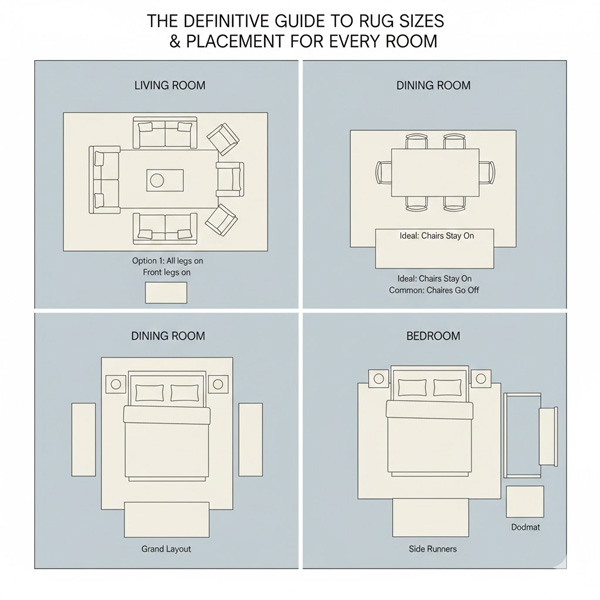
The Living Room (The Heart of the Home)
The living room is where rug placement makes the biggest visual impact — and where mistakes are most common.
Living Room Rug Placement Options
All Furniture Legs on the Rug (Best for Large Rooms)
- Sofa, chairs, and coffee table fully on the rug
- Creates a luxurious, cohesive look
- Ideal for open-concept or spacious living rooms
Recommended sizes:
- 9’ x 12’
- 10’ x 14’
Front Legs on the Rug (Most Popular Choice)
- Front legs of sofa and chairs on the rug
- Back legs off the rug
- Balanced, practical, and visually grounded
Recommended sizes:
- 8’ x 10’
- 9’ x 12’
Coffee Table Only (Not Recommended)
- Rug sits only under the coffee table
- Makes furniture feel disconnected
Designer tip: Avoid this layout whenever possible.
Runner Rugs 101: The Right Size & Placement for Hallways, Kitchens & Stairs
Sectional Sofa Rug Sizing: The Definitive Guide for L-Shaped and U-Shaped Layouts
Sectional Sofa Rug Rules
For sectionals, the rug should:
- Extend at least 6–12 inches beyond each side of the sectional
- Include the chaise portion fully or at least its front legs
Best sizes:
- 9’ x 12’
- 10’ x 14’
👉 If you’re searching for the perfect living room rug placement, always measure the sofa first — not the room.
The Dining Room (Function Meets Style)
Dining rooms follow one simple but critical rule:
The Golden Dining Room Rule
Your rug must be large enough so chairs stay on the rug when pulled out.
If chairs slide off the rug, it feels awkward and damages both the rug and flooring.
How to Calculate Dining Room Rug Size
- Measure your table
- Add 24–30 inches on all sides
Example:
- 72” table → minimum rug size: ~10’ x 14’
Common Dining Room Rug Sizes
- 6’ x 9’ → Small tables (4 chairs)
- 8’ x 10’ → Medium tables (6 chairs)
- 9’ x 12’ → Large tables (6–8 chairs)
Pro tip: Flatweave or low-pile rugs are easiest to clean and move chairs on.
Visual Guide: How Big Are Common Rug Sizes? (3×5, 5×7, 6×9 & More)
What Size Rug for a Queen Bed? (And King, Full, Twin) – Layouts That Work
The Bedroom (Your Cozy Sanctuary)
Bedrooms are about comfort — and rug placement plays a huge role in how cozy the space feels when you wake up.
Option 1: Rug Under the Lower Two-Thirds of the Bed
- Rug starts under the bed, stopping near the pillows
- Exposes rug where your feet land
- Most common and cost-effective option
Option 2: Rug Under Entire Bed & Nightstands
- Rug sits fully beneath bed and side tables
- Creates a hotel-style, luxurious feel
Option 3: Two Runners or Side Rugs
- One rug on each side of the bed
- Works well in smaller bedrooms
Bedroom Rug Size Guide
If you’re wondering what size rug for queen bed, here’s the answer:
- Twin Bed:
- 5’ x 8’ or two 2’ x 6’ runners
- Queen Bed:
- 8’ x 10’ (ideal)
- 6’ x 9’ (smaller rooms)
- King Bed:
- 9’ x 12’ (ideal)
- 8’ x 10’ (minimum)
👉 When learning how to place a rug in bedroom, always prioritize where your feet land first.
Dining Room Rug Size Calculator: How to Choose (So Chairs Don’t Catch)
The Hallway & Entryway (First Impressions Count)
Hallways and entryways benefit from runner rugs that guide the eye and protect high-traffic areas.
Runner Rug Placement Rules
- Leave 3–5 inches of floor visible on each side
- Runner should be shorter than the hallway, not wall-to-wall
- Center the rug visually, not mathematically
Common Runner Sizes
- 2’ x 6’
- 2’ x 8’
- 2’ x 10’
- 2’ x 12’
Entryway tip: Choose durable, easy-clean materials — this area sees the most wear.
The Ultimate Rug Sizing & Placement Guide
What Size Rug Under a Couch? Rules for Standard Sofas, Loveseats & Sectionals
Pro Tips, Tricks & Common Mistakes to Avoid
Use Painter’s Tape Before Buying
Outline the rug size on the floor using painter’s tape. This lets you see proportions before committing.
When in Doubt: Go Bigger
A rug that’s too large can be styled.
A rug that’s too small cannot.
Avoid These Common Mistakes
- ❌ Rugs floating in the middle of the room
- ❌ Chairs slipping off dining rugs
- ❌ Tiny rugs under large beds
- ❌ Ignoring furniture leg placement
Remember: Rugs are not accents — they’re foundations.
Your Quick-Reference Rug Size Chart
Quick Reference Rug Size Chart
| Rug Size | Best Room | Standard Furniture Fit |
|---|---|---|
| 2’ x 3’ | Entryway, Accent | Door clearance, small spaces |
| 5’ x 8’ | Bedroom, Small Living Room | Twin bed, small seating |
| 6’ x 9’ | Bedroom, Dining | Queen bed (partial), 4-seat table |
| 8’ x 10’ | Living Room, Bedroom | Queen bed, standard sofa |
| 9’ x 12’ | Living Room, Dining | King bed, sectional, 6–8 chairs |
| 10’ x 14’ | Large Living Room | Full furniture layout |
| 2’ x 8’ Runner | Hallway | Narrow walkways |
Use this rug size chart as a fast decision-making tool whenever you’re shopping.
Final Thoughts & Your Next Step
Perfect rug sizing isn’t about rules — it’s about balance, proportion, and comfort.
To recap:
- Measure furniture first, room second
- Anchor furniture with the rug
- Leave visible floor space
- Choose larger when unsure
When these principles come together, your home instantly feels more polished, welcoming, and complete.
✨ Ready to find the perfect rug?
Explore Bloom Nestify’s premium rug collections — thoughtfully curated by size, room, and style — so choosing the right rug is effortless and inspiring.
Your space deserves a foundation that feels just right. Bloom Nestify thanks you for reading our blog!
