

Want to truly understand what your rug is made of? Discover The Ultimate Guide to Every Rug Fiber in this comprehensive resource from Bloom Nestify. From natural materials to modern synthetics, this guide breaks down performance, feel, and care for each fiber type. As part of our Product Deep Dives, it helps you choose the perfect rug with confidence and clarity.
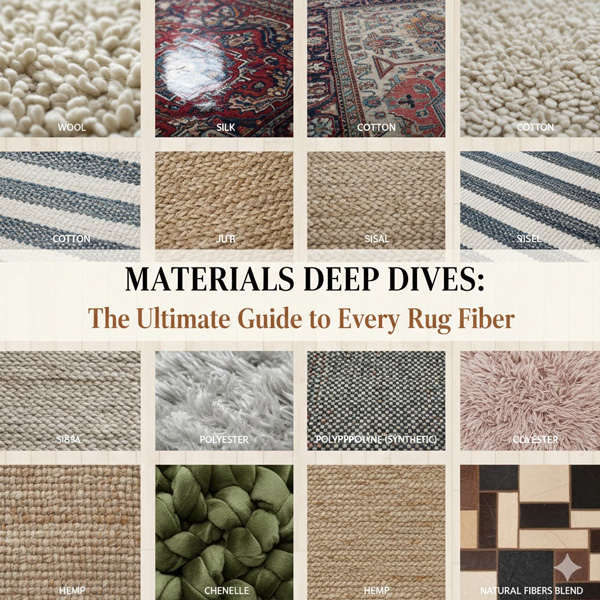
Why Rug Material Matters More Than You Think
When choosing a rug, most people focus on color, pattern, or size—but the material (fiber) is what truly determines how your rug looks, feels, and performs over time.
From plush wool to durable synthetics and eco-friendly natural fibers, each rug material has its own strengths and weaknesses. The right choice can mean the difference between a rug that lasts for years and one that quickly wears out.
In this ultimate guide, we’ll break down every major rug fiber, comparing durability, comfort, maintenance, and ideal use cases—so you can make a confident, informed decision.
Natural Fibers: Timeless & Organic
Wool Rugs – The Gold Standard
Wool is widely considered the best all-around rug material.
Pros:
- Extremely durable
- Naturally stain-resistant
- Soft and comfortable
- Insulates against cold and noise
Cons:
- Higher cost
- Initial shedding
Best for: Living rooms, bedrooms, and high-traffic areas.
>>> Beyond Wool: Understanding Olefin (Polypropylene) & Other Budget-Friendly Rug Options
Cotton Rugs – Lightweight & Practical
Cotton rugs are perfect for casual, low-maintenance spaces.
Pros:
- Affordable
- Easy to clean (often machine washable)
- Soft underfoot
Cons:
- Less durable than wool
- Can wear out faster
Best for: Kitchens, kids’ rooms, and small spaces.
Silk Rugs – Luxury Redefined
Silk rugs are all about elegance and craftsmanship.
Pros:
- Ultra-soft and smooth
- Stunning sheen and detail
- High-end aesthetic
Cons:
- Expensive
- Delicate and high maintenance
Best for: Decorative or low-traffic areas.
Jute Rugs – Rustic & Eco-Friendly
Jute offers a relaxed, earthy vibe.
Pros:
- Sustainable and biodegradable
- Affordable
- Adds texture
Cons:
- Rough texture
- Sensitive to moisture
Best for: Living rooms and bedrooms with a natural style.
>>> Nylon & Polyester Rugs: The Stain-Resistant Heroes for Busy Homes
Sisal Rugs – Tough & Functional
Sisal is known for its strength and durability.
Pros:
- Extremely tough
- Great for high traffic
- Minimalist look
Cons:
- Rough feel
- Limited color options
Best for: Hallways, entryways, and busy areas.
Synthetic Fibers: Durable & Budget-Friendly
Nylon Rugs – Built to Last
Nylon is one of the strongest synthetic fibers available.
Pros:
- Highly durable
- مقاوم للبقع (stain-resistant with treatment)
- Retains shape well
Cons:
- Slightly more expensive than other synthetics
Best for: High-traffic areas like living rooms and stairs.
>>> Natural Fiber Rug Guide: Wool, Cotton, Silk, Jute & Sisal Compared
Polyester Rugs – Soft & Colorful
Polyester rugs are loved for their softness and vibrant colors.
Pros:
- Naturally stain-resistant
- Affordable
- Soft and plush
Cons:
- Can flatten under heavy furniture
Best for: Bedrooms and low to medium traffic areas.
Polypropylene (Olefin) Rugs – Outdoor Champion
Polypropylene is ideal for indoor-outdoor use.
Pros:
- مقاوم للماء (water-resistant)
- مقاوم للبقع (stain-resistant)
- Budget-friendly
Cons:
- Less soft
- Can wear faster than nylon
Best for: Patios, kitchens, and entryways.
Specialty Fibers: Unique & Stylish
Cowhide Rugs – Natural Statement Pieces
Cowhide rugs add personality and uniqueness.
Pros:
- Durable
- Easy to clean
- Unique patterns
Cons:
- Irregular shape
- Not very soft
Best for: Accent pieces and layered designs.
Bamboo Silk (Viscose) – Affordable Luxury Look
Viscose mimics silk at a lower cost.
Pros:
- Soft and shiny
- Elegant appearance
- More affordable than silk
Cons:
- Less durable
- Sensitive to moisture
Best for: Low-traffic decorative areas.
Quick Comparison Table
| Fiber | Durability | Softness | Maintenance | Best Use |
|---|---|---|---|---|
| Wool | ⭐⭐⭐⭐⭐ | ⭐⭐⭐⭐ | Moderate | Living rooms, bedrooms |
| Cotton | ⭐⭐⭐ | ⭐⭐⭐⭐ | Easy | Casual spaces |
| Silk | ⭐⭐ | ⭐⭐⭐⭐⭐ | High | Decorative areas |
| Jute | ⭐⭐⭐ | ⭐⭐ | Moderate | Natural style spaces |
| Sisal | ⭐⭐⭐⭐⭐ | ⭐ | Moderate | High-traffic areas |
| Nylon | ⭐⭐⭐⭐⭐ | ⭐⭐⭐ | Easy | Busy homes |
| Polyester | ⭐⭐⭐⭐ | ⭐⭐⭐⭐⭐ | Easy | Bedrooms |
| Polypropylene | ⭐⭐⭐ | ⭐⭐ | Easy | Outdoor/entryways |
| Cowhide | ⭐⭐⭐⭐ | ⭐⭐ | Easy | Accent layering |
| Viscose | ⭐⭐ | ⭐⭐⭐⭐ | High | Decorative spaces |
How to Choose the Right Rug Fiber
Consider Traffic Levels
- High traffic: Nylon, wool, sisal
- Low traffic: Silk, viscose
Think About Comfort
- Soft: Wool, polyester, cotton
- Textured: Jute, sisal
Evaluate Maintenance
- Easy care: Synthetic fibers
- High maintenance: Silk, viscose
Match Your Style
- Modern: Polyester, nylon
- Rustic: Jute, sisal
- Luxury: Silk, wool
Final Thoughts: The Right Material Makes All the Difference
Choosing the right rug fiber is about more than just aesthetics—it’s about function, durability, and lifestyle fit.
If you want a long-lasting investment, wool or nylon is hard to beat. If you’re after softness and affordability, polyester or cotton might be perfect. And if you’re designing a statement space, silk or cowhide can elevate your interior instantly.
By understanding the strengths of each material, you can confidently choose a rug that not only looks beautiful but also stands the test of time.
