

Every rug tells a story. It anchors your furniture, softens your space, and quietly absorbs daily life—foot traffic, spills, sunlight, pets, and time itself.
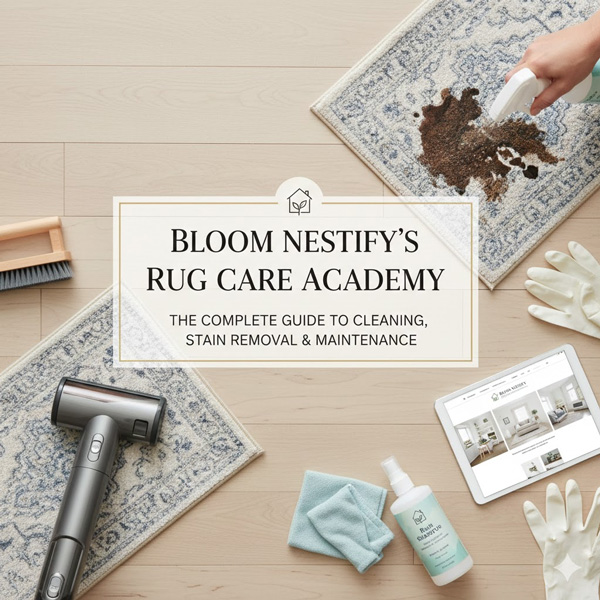
The mission of Bloom Nestify’s Rug Care & Cleaning is simple but serious: to help you protect your investment, preserve rug value, and extend rug longevity through informed, methodical care.
This Academy is built on three essential pillars that govern all professional rug maintenance:
- Preventive Maintenance – stopping damage before it starts
- Routine Cleaning – safe, consistent care that maintains beauty
- Emergency Response – fast, correct action when accidents happen
This page is your hub. Each section gives you the core knowledge—and then directs you to focused, in-depth lessons (“chapters”) so you can navigate exactly where you need to go.
Pillar 1: Know Your Rug – The Foundation of All Care
Golden Rule of Rug Care:
You cannot clean, treat, or protect a rug correctly until you know what it’s made of and how it’s constructed.
Every decision—from vacuum settings to stain removal methods—depends on rug material identification and rug construction.
Chapter 1.1: Rug Material & Construction 101
Not all rugs are created equal. A hand-knotted wool rug and a machine-made polypropylene rug may look similar at first glance—but they behave very differently under water, heat, friction, and chemicals.
Key rug materials you should be able to identify:
- Wool – resilient, naturally stain-resistant, sensitive to over-wetting
- Silk & Viscose – delicate fibers, prone to water marks and texture damage
- Synthetic fibers (polypropylene, polyester, nylon) – durable, forgiving, easier DIY care
- Natural fibers (jute, sisal, seagrass) – absorbent, low moisture tolerance
Construction matters just as much:
- Hand-knotted rugs – durable but require professional care
- Hand-tufted rugs – adhesive-backed, sensitive to moisture
- Machine-made rugs – consistent structure, easier maintenance
Choosing the wrong cleaning method can permanently damage fibers, backing, or dyes.
➜ Deep Dive: Read our
Rug Dictionary: Demystifying Rug Types, Terms & Materials
The A–Z Rug Glossary: Your Ultimate Guide to Materials, Construction & Styles
Rug Dictionary: Demystifying Rug Types, Terms & Materials
Chapter 1.2: Preventive Maintenance – Your First Line of Defense
The most effective rug care happens before dirt, wear, or stains appear.
Preventive measures that dramatically extend rug life:
- Rug pads
- Non-slip stability
- Cushioning to reduce fiber stress
- Floor protection from dye transfer
- Rug rotation every 6–12 months to balance traffic patterns
- Managing sunlight fading with curtains or UV-filtering windows
- Strategic placement away from heavy door swings and floor registers
These steps protect visual integrity, prevent uneven wear, and preserve resale value.
➜ Deep Dive: Learn more in
The Rug Care Calendar: Seasonal & Annual Maintenance Checklist
Pillar 2: The Care Routine – Daily, Weekly & Deep Cleaning
Routine cleaning isn’t about making rugs “look clean.”
It’s about removing abrasive soil before it destroys fibers from the inside out.
Chapter 2.1: The Art of Vacuuming (It’s Not What You Think)
Vacuuming is the single most important part of rug maintenance—and also the most misunderstood.
Best practices for regular vacuuming:
- Vacuum high-traffic areas 2–3 times per week
- Use suction-only or turn off the beater bar for wool, silk, and handmade rugs
- Never vacuum fringe directly—use handheld suction instead
Incorrect vacuuming causes fuzzing, fiber breakage, and premature wear.
➜ Deep Dive: See specifics in
Can You Vacuum a Cowhide Rug? And Other Vacuuming FAQs
Can I Do This to My Rug? Your DIY Decision Guide to Spot Cleaning, Fringe Repair & More
The Decorative Rug Handbook: From Hanging Hide Rugs to Styling Vintage Treasures
Chapter 2.2: Deep Cleaning – DIY vs. Professional Services
At some point, vacuuming isn’t enough. But deep cleaning methods vary dramatically in risk.
DIY cleaning is acceptable when:
- The rug is synthetic
- The rug is small and colorfast
- Moisture can be fully controlled
Professional rug cleaning is mandatory when dealing with:
- Wool, silk, viscose
- Hand-knotted or antique rugs
- Set-in stains or pet accidents
⚠ Critical Warning:
Over-wetting leads to dye bleeding, adhesive breakdown, odor, and mold growth.
➜ Deep Dive:
- Natural Fiber Rug Care: Your Guide to Wool, Sisal, Jute & Braided Rugs
- Delicate Rug Warning: How to Safely Clean Viscose, Silk & Polyester Rugs
Chapter 2.3: The Right Way to Dry a Rug
Cleaning doesn’t end when the dirt is gone—it ends when the rug is completely dry.
Improper drying causes:
- Mold and mildew
- Fiber distortion
- Lingering odors
- Structural damage to backing
Correct drying procedures:
- Air drying with active ventilation
- Elevating the rug to allow airflow
- Never using a household dryer or direct heat
➜ Deep Dive: Follow our step-by-step guide:
Wet Rug Crisis: How to Dry Any Rug Fast and Prevent Mold
Pillar 3: Crisis Management – Stain & Accident Response
Accidents happen. What matters is what you do in the first 60 seconds.
Chapter 3.1: The Stain Removal Commandments (Blot, Don’t Rub!)
All rug stain removal follows the same hierarchy:
- Identify the stain type (organic, oil-based, tannin)
- Blot—never rub
- Neutralize, don’t oversaturate
- Dry thoroughly
Organic stains (food, urine) require enzyme cleaners
Oil-based stains need absorption, not water
Tannin stains (wine, coffee) demand controlled dilution
➜ Deep Dive:
- Dog Urine on Your Rug? The Step-by-Step Rescue Guide
- Interactive Stain Removal Guide
Chapter 3.2: Handling Pet Accidents & Odors
Pet accidents are both a stain problem and an odor chemistry problem.
Key principles:
- Immediate blotting prevents penetration
- Enzyme cleaners break down odor-causing proteins
- Incomplete treatment leads to repeat soiling
Ignoring odor removal almost guarantees permanent damage.
➜ Deep Dive:
How to Get Dog Urine Out of a Wool Rug: The Ultimate Guide
Chapter 3.3: Water & Mold Damage Control
Flooding, leaks, or over-cleaning turn water into an enemy.
Immediate actions matter:
- Remove moisture fast
- Prevent backing separation
- Stop mold before spores activate
Health hazards and irreversible damage begin within 24–48 hours.
➜ Deep Dive: Emergency steps in
Can I Pressure Wash a Rug? When Water Becomes the Enemy
Your Rug Care Toolkit & Further Learning
Essential Products & Tools Checklist
- Microfiber cloths
- Mild detergent
- White vinegar
- Enzyme cleaner
- Quality rug pad
- Vacuum with adjustable settings
Interactive Help
Not sure where to start?
➜ Use our “What’s My Rug Made Of?” Interactive Guide to get a personalized care plan.
FAQ Library
Explore our full Rug “Can I?” Handbook for fast, specific answers.
Graduate with Confidence & Continue Your Journey
Proper rug care isn’t about perfection—it’s about consistency, knowledge, and respect for materials.
A well-maintained rug:
- Lasts decades longer
- Looks better with age
- Protects your home investment
Your Learning Path Continues
- Put Your Knowledge to Work: Explore our collection of Easy-Care & Stain-Resistant Rugs, designed for real life
- Download our free printable Rug Care Quick-Reference Chart—perfect for your laundry room or cleaning cabinet
For every specific question and advanced lesson, visit the full index of the
