

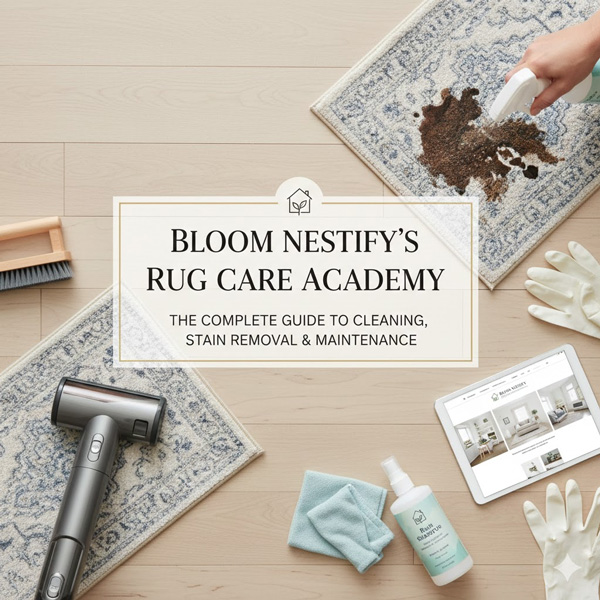
Every rug tells a story. It anchors your furniture, softens your space, and quietly absorbs daily life-foot traffic, spills, sunlight, pets, and time itself. The mission of Bloom Nestify’s Rug Care & Cleaning is simple but serious: to help you protect your investment, preserve rug value, and extend rug longevity through informed, methodical care.
Know Your Rug – The Foundation of All Care
Golden Rule of Rug Care:
You cannot clean, treat, or protect a rug correctly until you know what it’s made of and how it’s constructed.
Every decision-from vacuum settings to stain removal methods—depends on rug material identification and rug construction.
Rug Material & Construction 101
Not all rugs are created equal. A hand-knotted wool rug and a machine-made polypropylene rug may look similar at first glance—but they behave very differently under water, heat, friction, and chemicals.
Key rug materials you should be able to identify:
- Wool – resilient, naturally stain-resistant, sensitive to over-wetting
- Silk & Viscose – delicate fibers, prone to water marks and texture damage
- Synthetic fibers (polypropylene, polyester, nylon) – durable, forgiving, easier DIY care
- Natural fibers (jute, sisal, seagrass) – absorbent, low moisture tolerance
Construction matters just as much:
- Hand-knotted rugs – durable but require professional care
- Hand-tufted rugs – adhesive-backed, sensitive to moisture
- Machine-made rugs – consistent structure, easier maintenance
Choosing the wrong cleaning method can permanently damage fibers, backing, or dyes.
The A–Z Rug Glossary: Your Ultimate Guide to Materials, Construction & Styles
Rug Dictionary: Demystifying Rug Types, Terms & Materials
Preventive Maintenance – Your First Line of Defense
The most effective rug care happens before dirt, wear, or stains appear.
Preventive measures that dramatically extend rug life:
- Rug pads
- Non-slip stability
- Cushioning to reduce fiber stress
- Floor protection from dye transfer
- Rug rotation every 6–12 months to balance traffic patterns
- Managing sunlight fading with curtains or UV-filtering windows
- Strategic placement away from heavy door swings and floor registers
These steps protect visual integrity, prevent uneven wear, and preserve resale value.
The Care Routine – Daily, Weekly & Deep Cleaning
Routine cleaning isn’t about making rugs “look clean.”
It’s about removing abrasive soil before it destroys fibers from the inside out.
The Art of Vacuuming (It’s Not What You Think)
Vacuuming is the single most important part of rug maintenance—and also the most misunderstood.
Best practices for regular vacuuming:
- Vacuum high-traffic areas 2–3 times per week
- Use suction-only or turn off the beater bar for wool, silk, and handmade rugs
- Never vacuum fringe directly—use handheld suction instead
Incorrect vacuuming causes fuzzing, fiber breakage, and premature wear.
Can I Do This to My Rug? Your DIY Decision Guide to Spot Cleaning, Fringe Repair & More
The Decorative Rug Handbook: From Hanging Hide Rugs to Styling Vintage Treasures
Deep Cleaning – DIY vs. Professional Services
At some point, vacuuming isn’t enough. But deep cleaning methods vary dramatically in risk.
DIY cleaning is acceptable when:
- The rug is synthetic
- The rug is small and colorfast
- Moisture can be fully controlled
Professional rug cleaning is mandatory when dealing with:
- Wool, silk, viscose
- Hand-knotted or antique rugs
- Set-in stains or pet accidents
⚠ Critical Warning:
Over-wetting leads to dye bleeding, adhesive breakdown, odor, and mold growth.
The Right Way to Dry a Rug
Cleaning doesn’t end when the dirt is gone—it ends when the rug is completely dry.
Improper drying causes:
- Mold and mildew
- Fiber distortion
- Lingering odors
- Structural damage to backing
Correct drying procedures:
- Air drying with active ventilation
- Elevating the rug to allow airflow
- Never using a household dryer or direct heat
Crisis Management – Stain & Accident Response
Accidents happen. What matters is what you do in the first 60 seconds.
The Stain Removal Commandments (Blot, Don’t Rub!)
All rug stain removal follows the same hierarchy:
- Identify the stain type (organic, oil-based, tannin)
- Blot—never rub
- Neutralize, don’t oversaturate
- Dry thoroughly
Organic stains (food, urine) require enzyme cleaners
Oil-based stains need absorption, not water
Tannin stains (wine, coffee) demand controlled dilution
Handling Pet Accidents & Odors
Pet accidents are both a stain problem and an odor chemistry problem.
Key principles:
- Immediate blotting prevents penetration
- Enzyme cleaners break down odor-causing proteins
- Incomplete treatment leads to repeat soiling
Ignoring odor removal almost guarantees permanent damage.
Water & Mold Damage Control
Flooding, leaks, or over-cleaning turn water into an enemy.
Immediate actions matter:
- Remove moisture fast
- Prevent backing separation
- Stop mold before spores activate
Health hazards and irreversible damage begin within 24–48 hours.
Your Rug Care Toolkit & Further Learning
Essential Products & Tools Checklist
- Microfiber cloths
- Mild detergent
- White vinegar
- Enzyme cleaner
- Quality rug pad
- Vacuum with adjustable settings
Graduate with Confidence & Continue Your Journey
Proper rug care isn’t about perfection—it’s about consistency, knowledge, and respect for materials.
A well-maintained rug:
- Lasts decades longer
- Looks better with age
- Protects your home investment
