

Thinking about customizing your rug? Learn Can You Cut a Rug to Fit Your Space with this practical guide from Bloom Nestify. From when it’s safe to trim a rug to the risks and best techniques, this article helps you make smart decisions before you start. As part of our Rug Care & Cleaning, it ensures you protect both your rug and your investment while achieving the perfect fit.
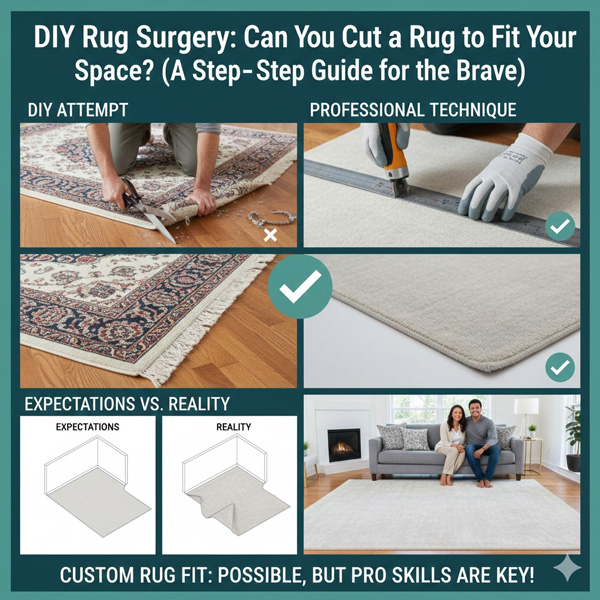
Can You Really Cut a Rug? (Short Answer: Yes… But Be Careful)
If you’ve ever found the perfect rug—but it’s just slightly too big or awkwardly shaped—you’ve probably wondered:
“Can I cut a rug to fit my space?”
The answer is yes, you can cut certain types of rugs. However, it’s not always simple, and doing it wrong can permanently damage your rug.
This guide will walk you through everything you need to know about DIY rug cutting (or “rug surgery”), including which rugs are safe to cut, step-by-step instructions, risks, and smarter alternatives.
Which Rugs Can You Safely Cut?
Not all rugs are created equal—especially when it comes to cutting.
✅ Best Rugs for DIY Cutting:
- Flatweave rugs (kilim, dhurrie)
- Low-pile synthetic rugs
- Machine-made rugs with stable backing
These rugs don’t rely heavily on complex structures, making them easier to trim without unraveling.
>>> Can I Iron or Steam a Wrinkled or Creased Rug? How to Flatten It Safely
Rugs You Should NOT Cut:
- Hand-knotted rugs (like Persian or oriental rugs)
- High-pile or shag rugs
- Wool rugs with intricate weaving
- Antique or expensive rugs
Cutting these can destroy their structure and significantly reduce their value.
Step 1: Measure Twice, Cut Once
Precision is everything.
How to Measure:
- Measure the exact area where the rug will go
- Mark the cutting line using chalk or painter’s tape
- Double-check your measurements
Pro Tip:
Leave a small margin (about 1–2 cm) for finishing edges later.
>>> Can I Re-Dye or Color-Correct a Faded or Stained Rug? The Truth About Transforming Color
Step 2: Cutting the Rug Properly
Tools You’ll Need:
- Sharp utility knife or carpet cutter
- Straight edge or ruler
- Cutting surface (like plywood)
Cutting Process:
- Place the rug upside down
- Cut along your marked line slowly
- Use a straight edge for clean lines
- Avoid cutting too quickly—precision matters
Important:
Always cut from the back of the rug to avoid damaging the visible fibers.
Step 3: Finishing the Edges (The Most Important Part)
Cutting is only half the job—unfinished edges will fray quickly.
Edge Finishing Options:
1. Binding Tape
- Available at carpet stores
- Creates a clean, professional edge
2. Fabric Glue
- Quick DIY solution
- Helps prevent fraying
3. Professional Binding
- Best for long-term durability
- More expensive but worth it
Why It Matters:
Without proper finishing, your rug may unravel within weeks.
>>>> Can I Repair a Frayed Edge or a Small Burn Hole in My Rug? DIY vs. Pro
Risks of Cutting a Rug
Before you start, it’s important to understand the risks:
- Fraying edges if not sealed properly
- Uneven cuts that ruin the appearance
- Loss of value for expensive rugs
- Structural damage to certain materials
DIY rug cutting is irreversible—so proceed with caution.
When Cutting a Rug Makes Sense
Good Situations:
- Fitting a rug into an awkward space
- Customizing a rug for under furniture
- Repurposing an old or inexpensive rug
Not Ideal:
- High-end or sentimental rugs
- Perfectly sized rugs that don’t need alteration
Alternatives to Cutting Your Rug
If you’re unsure about cutting, consider these safer options:
Layering Rugs
Place a smaller rug over a larger one for a stylish solution.
Folding or Tucking
Hide excess rug under furniture.
Custom Rug Orders
Many retailers offer custom sizing.
Professional Alteration
Carpet specialists can cut and bind rugs safely.
Pro Tips for DIY Success
- Always test on a small corner first
- Use sharp tools for clean cuts
- Work slowly and carefully
- Don’t skip edge finishing
- Practice on a cheap rug before cutting a valuable one
Final Thoughts: Should You Cut Your Rug?
So, can you cut a rug to fit your space? Yes—but it’s not always the best solution.
If you’re working with a simple, low-cost rug and need a custom fit, DIY rug cutting can be a practical and rewarding project. But for valuable or delicate rugs, it’s safer to explore alternatives or seek professional help.
Think of rug cutting as “surgery”—it requires precision, patience, and the right tools. Done correctly, it can transform your space. Done poorly, it can ruin a perfectly good rug.
Choose wisely, measure carefully, and you’ll end up with a result that looks custom-made for your home.
