

Dealing with damage and not sure what to do next? Learn Can I Repair a Frayed Edge or a Small Burn Hole in My Rug with this practical guide from Bloom Nestify. From simple DIY fixes to knowing when to call a professional, this article helps you restore your rug safely and effectively. As part of our Rug Care & Cleaning, it gives you the confidence to handle damage without making it worse.
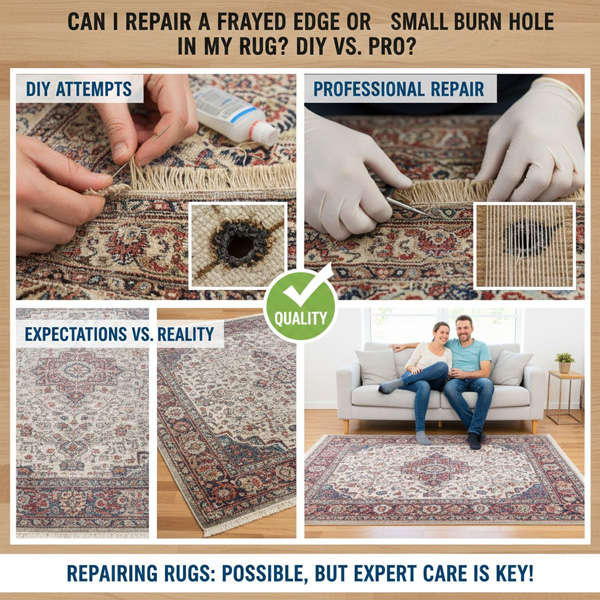
Rug Damage Happens—But It’s Not the End
Rugs take a lot of daily wear—foot traffic, furniture pressure, spills, and the occasional accident. Over time, this can lead to frayed edges or even small burn holes from candles, irons, or dropped items.
The big question is:
Can you fix these issues yourself, or should you call a professional?
The answer depends on the type of damage, the rug material, and your comfort level with DIY repairs. In this guide, we’ll break down everything you need to know so you can restore your rug without making things worse.
Understanding Common Rug Damage
Before jumping into repairs, it’s important to understand what you’re dealing with.
Frayed Edges
This happens when the rug’s border starts to unravel due to wear or poor binding.
Small Burn Holes
Usually caused by heat damage, leaving behind melted fibers or charred spots.
Why It Matters
Different problems require different solutions. Treating a burn hole like a frayed edge (or vice versa) can make the damage worse.
>>> Can I Re-Dye or Color-Correct a Faded or Stained Rug? The Truth About Transforming Color
DIY Fixes for Frayed Rug Edges
If the damage is minor, you can often fix frayed edges at home.
Method 1: Fabric Glue (Quick Fix)
Best for: Small frays
Steps:
- Trim loose fibers carefully
- Apply a thin line of fabric glue along the edge
- Press gently and let dry
Method 2: Edge Binding Tape
Best for: Moderate fraying
Steps:
- Cut binding tape to size
- Attach along the edge
- Secure with adhesive or stitching
Pros of DIY:
- Affordable
- Quick
- Easy for beginners
Cons:
- May not last long
- Visible repairs if not done neatly
>>> DIY Rug Surgery: Can You Cut a Rug to Fit Your Space?
DIY Repair for Small Burn Holes
Burn holes are trickier—but small ones can be fixed.
Method: Patch Repair
Best for: Tiny burn spots
Steps:
- Trim away the burnt fibers
- Take matching fibers from a hidden area (like under furniture)
- Glue the replacement fibers into the damaged spot
- Blend gently for a natural look
Alternative:
Use a small patch from leftover material if available.
Important:
This method works best on low-pile or synthetic rugs.
When DIY Repairs Are NOT Recommended
Some rugs should never be repaired at home.
Avoid DIY If:
- The rug is hand-knotted or antique
- The damage is large or spreading
- The pattern is intricate and hard to match
- The material is delicate (like silk or wool)
In these cases, DIY attempts can reduce the rug’s value or cause irreversible damage.
>>> Can I Iron or Steam a Wrinkled or Creased Rug? How to Flatten It Safely
Professional Rug Repair: What to Expect
Professional rug repair specialists have the tools and expertise to restore your rug properly.
Common Services:
- Rebinding edges
- Reweaving damaged areas
- Color matching and fiber replacement
- Burn hole restoration
Benefits:
- Long-lasting results
- Nearly invisible repairs
- Preserves rug value
Drawbacks:
- Higher cost
- May take time
DIY vs. Professional Repair: Which Is Better?
| Factor | DIY Repair | Professional Repair |
|---|---|---|
| Cost | Low | Higher |
| Skill Required | Basic | Expert |
| Durability | Short to medium-term | Long-lasting |
| Appearance | May be visible | Nearly invisible |
| Best For | Minor damage | Major or valuable rugs |
Quick Rule:
- Small, simple damage → DIY
- Large, complex, or valuable rug → Professional
Pro Tips for Better Repair Results
- Always test glue or materials on a hidden area
- Use sharp tools for clean trimming
- Work in good lighting for precision
- Don’t rush—slow work gives better results
- Match colors and textures as closely as possible
Preventing Future Damage
Prevention is always easier than repair.
Tips:
- Use a rug pad to reduce wear
- Keep rugs away from open flames or heat sources
- Vacuum regularly to prevent fiber breakdown
- Rotate rugs to ensure even wear
Final Thoughts: Fix It Smart, Not Fast
So, can you repair a frayed edge or a small burn hole in your rug? Yes—but the right approach depends on the situation.
DIY repairs are great for small, simple fixes and can save you money. But for valuable or heavily damaged rugs, professional repair is the smarter investment.
The key is knowing your limits. A careful, informed approach will not only restore your rug but also extend its life—keeping it beautiful and functional for years to come.
