

Looking for affordable rug options that still perform well? Start with Understanding Olefin and explore how polypropylene and other budget-friendly materials compare. In this guide from Bloom Nestify, you’ll learn about durability, stain resistance, and everyday practicality. As part of our Product Deep Dives, it helps you make smart, cost-effective choices without sacrificing style.
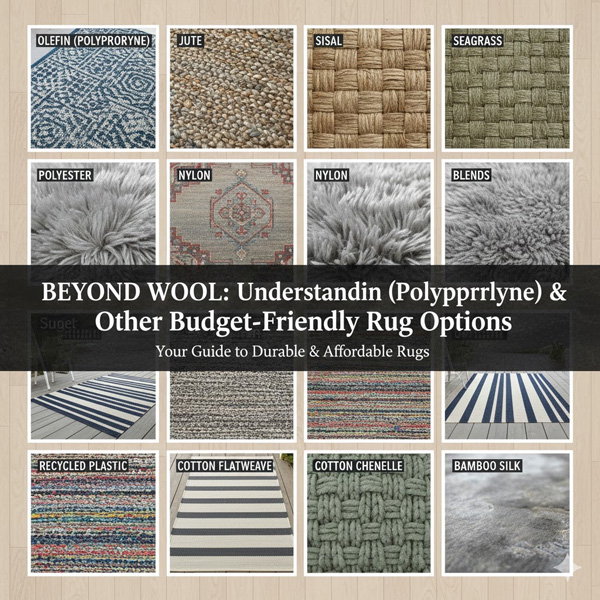
🔎 Material Matchmaker: Quick-Guide Table
| Material | Best For | Avoid In | Feel | Stain Superpower | Kryptonite |
|---|---|---|---|---|---|
| Olefin (Polypropylene) | High traffic, kids, pets, dining areas, basements | Near heat sources, kitchens with grease | Firm to slightly coarse | Water-based stains, fading | Oil-based stains, heat |
| Polyester | Bedrooms, low-traffic living spaces | Entryways, heavy foot traffic | Soft, plush | Bright color retention | Matting, wear over time |
| Nylon | Busy households, hallways | Tight budgets | Springy, resilient | Overall durability | Higher cost |
| Cotton | Layering, casual spaces, washable needs | Wet areas, heavy traffic | Flat, soft | Easy washing | Stains, stretching |
| Jute / Sisal | Texture-focused rooms, dry spaces | Homes with spills or pets | Coarse, natural | Dirt hiding | Any liquid, stains |
| Recycled Materials | Eco-conscious buyers, casual use | Heavy-duty zones (varies) | Varies widely | Depends on blend | Inconsistent quality |
Olefin (Polypropylene): The Stain-Resistant Champion
If there’s a workhorse in the rug world, this is it.
Olefin—also known as polypropylene—is one of the most common and misunderstood rug fibers on the market. It’s often dismissed as “cheap,” but that reputation ignores why it’s so widely used and how it performs in demanding environments.
>>> Materials Deep Dives: The Ultimate Guide to Every Rug Fiber
The Science of Solution-Dyed Fibers (Why Olefin Fights Stains So Well)
Most quality olefin rugs are made from solution-dyed fibers. This is the secret sauce.
Instead of dyeing the rug after it’s woven (piece-dyed), color is added while the fiber itself is being formed. Think of it like a carrot versus a radish—the color goes all the way through.
What this means for you:
- Exceptional fade resistance (sunrooms, bright spaces)
- Inherent stain resistance to water-based spills
- Colors that don’t bleach out easily
- Consistent tone, even after years of use
Juice, coffee, mud, wine, and everyday spills don’t easily penetrate the fiber because olefin is non-porous and moisture-wicking.
Ideal Use Cases: Where Olefin Shines
Olefin rugs are brilliant when durability and low maintenance matter more than luxury softness:
- High-traffic hallways & entry-adjacent spaces
- Kids’ bedrooms and playrooms
- Under dining tables
- Basements and finished lower levels
- Rental properties
- Indoor/outdoor patios (when labeled outdoor/indoor)
- Pet-friendly homes
If you need a stain resistant rug that won’t cause anxiety every time life happens, olefin delivers.
>>> Nylon & Polyester Rugs: The Stain-Resistant Heroes for Busy Homes
Trade-Offs & Limitations (The Honest Part)
No rug is perfect, and olefin has real weaknesses:
- Texture: It can feel firmer or slightly coarse compared to wool or polyester.
- Oil-based stains: Butter, cooking oil, lotion, lipstick—these can bond to the fiber and are harder to remove.
- Heat sensitivity: Olefin has a lower melting point. Hot embers, space heaters, or curling irons can cause damage.
- Style longevity: Trend-driven patterns may outlast your taste before the rug wears out.
🧠 Bloom Nestify Reality Check
“Stain-resistant” does not mean “indestructible.” Olefin laughs at juice but struggles with grease. Prompt blotting and gentle cleaners matter—always.
The Supporting Cast: Polyester, Nylon & Affordable Naturals
Olefin isn’t your only option. Let’s break down the rest—without hype.
Polyester Rugs: Softness & Color on a Budget
Polyester is the comfort king of affordable synthetics.
Strengths:
- Exceptionally soft and cozy
- Vibrant, saturated colors
- Often more plush than olefin
- Generally affordable
Limitations:
- Less resilient in high traffic
- Can matte down over time
- Not as durable as olefin or nylon
Best for:
Bedrooms, nurseries, guest rooms, and low-traffic living areas where feel matters more than wear.
>>> Natural Fiber Rug Guide: Wool, Cotton, Silk, Jute & Sisal Compared
Nylon Rugs: The Durability Heavyweight
Nylon is the most durable synthetic fiber in the rug world and widely used in commercial spaces.
Strengths:
- Excellent resilience (springs back)
- Handles heavy foot traffic
- Good stain resistance (with treatments)
Limitations:
- Higher price point
- Less common in decorative budget rugs
Best for:
Busy households that want maximum longevity and are willing to pay a bit more upfront.
Cotton Rugs: Casual, Washable, and Laid-Back
Cotton rugs—dhurries, flatweaves, rag rugs—are simple and versatile.
Strengths:
- Lightweight and affordable
- Often machine washable
- Easy to layer
- Casual, relaxed look
Limitations:
- Stain easily
- Less structure and durability
- Can stretch or ripple
Best for:
Kitchens, bedrooms, summer homes, layering under larger rugs.
Jute & Sisal: Texture Over Tolerance
Natural fiber rugs bring earthy texture at a relatively low cost.
Strengths:
- Durable for foot traffic
- Great at hiding dirt
- Adds warmth and structure
Limitations:
- Zero stain resistance
- Water = permanent damage
- Rough underfoot
Best for:
Dry, low-spill spaces where texture matters more than comfort.
How to Shop Smart: Your Checklist for Quality in Budget Rugs
You don’t have to sacrifice style for sanity—you just need to know what to look for.
Density Is King (Even on a Budget)
- Walk on it. Does it feel thin?
- Bend the rug. Can you see the backing clearly?
- Denser rugs last longer and look better over time.
Decode the Backing
- Look for clean, even backing
- Felt or woven backing = better construction
- Avoid cheaply glued-on fringes—they’re decorative, not structural
Choose the Right Pile Height
- Low to medium pile = best for durability and easy cleaning
- Very high pile synthetics flatten quickly in traffic zones
🏷️ The Label Decoder
- “Solution-dyed” → Excellent fade and stain resistance
- “100% Polypropylene” → Durable, moisture-resistant
- “Latex backing” → Common, but quality varies
- “Indoor/Outdoor” → Built for moisture and UV exposure
Set Realistic Lifespan Expectations
A great affordable rug lasting 5–10 years in heavy use is a win. That’s value—not failure.
Conclusion: Strategic Style for Your Real Life
Choosing an affordable rug material isn’t a compromise—it’s a smart, strategic decision.
When you use olefin, polyester, cotton, or other budget-friendly options in the right spaces, you protect your sanity, your budget, and your ability to invest in heirloom pieces later—when your life is ready for them.
Great design should work for your life, not against it.
