

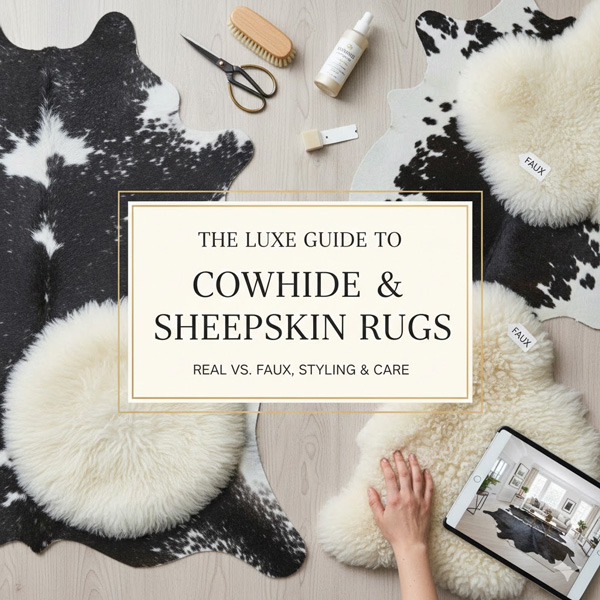
Looking to elevate your space with soft texture and natural elegance? Discover The Luxe Guide to Cowhide & Sheepskin Rugs in this in-depth feature from Bloom Nestify. From real vs. faux options to styling tips and proper care, this guide covers everything you need to know. As part of our Product Deep Dives, it helps you choose and style these luxurious rugs with confidence and ease.
Real vs. Faux: What’s the Difference?
Choosing between real and faux rugs is the first—and most important—decision.
Real Cowhide & Sheepskin
Pros:
- Unique, one-of-a-kind patterns
- Long-lasting with proper care
- Naturally soft and breathable
Cons:
- Higher cost
- Requires specialized care
- Ethical concerns for some buyers
Faux Cowhide & Sheepskin
Pros:
- Budget-friendly
- Animal-free
- Easier to clean and maintain
Cons:
- Less authentic texture
- May flatten over time
- Typically shorter lifespan
Bottom line: Real rugs offer authenticity and durability, while faux rugs provide convenience and affordability.
>>> Can I Use an Indoor Rug Outdoors? (And Vice Versa) – The Durability Guide
Cowhide Rugs: Bold, Durable, and Versatile
Cowhide rugs are known for their striking patterns and durability.
Why Choose Cowhide:
- Naturally stain-resistant
- Durable for moderate traffic
- Adds visual interest to minimalist spaces
Styling Ideas:
- Layer over a neutral flatweave rug
- Use as a focal point in living rooms
- Place under coffee tables for contrast
Care Basics:
- Shake out regularly to remove dust
- Spot clean with a damp (not wet) cloth
- Avoid soaking or machine washing
Cowhide is surprisingly low-maintenance compared to other natural rugs.
Sheepskin Rugs: Softness You Can Feel
Sheepskin rugs are all about comfort. Their plush texture makes them perfect for cozy interiors.
Why Choose Sheepskin:
- Ultra-soft and warm
- Adds a luxurious, inviting feel
- Great for layering and styling
Styling Ideas:
- Drape over chairs or benches
- Place beside the bed for a soft landing
- Use in reading nooks or nurseries
Care Basics:
- Shake and air out regularly
- Brush gently to maintain fluff
- Spot clean with mild detergent if needed
Sheepskin rugs thrive in low-traffic, comfort-focused spaces.
Faux Alternatives: Practical and Stylish
Faux rugs have come a long way in both look and feel.
Benefits of Faux Options:
- Machine washable (in many cases)
- Resistant to stains and spills
- Ideal for homes with pets or kids
Styling Tips:
- Use in high-traffic areas without worry
- Pair with modern or minimalist décor
- Mix textures for a layered look
While they may not fully replicate the real thing, faux rugs offer unbeatable practicality.
Styling Tips: Elevate Your Space Like a Designer
No matter which type you choose, styling makes all the difference.
Embrace Layering
Place cowhide over larger rugs for depth and contrast.
Play with Shapes
Cowhide’s natural shape adds visual interest compared to standard rectangles.
Keep It Balanced
Pair bold rugs with neutral furniture to avoid visual overload.
Use as Accents
Sheepskin works beautifully as a throw or decorative accent—not just a floor piece.
Cleaning & Maintenance: Keep the Luxe Look Alive
Proper care is essential to maintaining the beauty of these rugs.
For Real Cowhide:
- Avoid excess moisture
- Brush lightly to remove dirt
- Keep away from prolonged sunlight
For Real Sheepskin:
- Air dry if damp
- Use specialized wool cleaners
- Avoid heat and harsh chemicals
For Faux Rugs:
- Follow label instructions
- Machine wash if permitted
- Air dry to maintain shape
Consistency is key—regular light maintenance prevents major issues.
Common Mistakes to Avoid
Overexposing to Moisture
Water can damage both real cowhide and sheepskin.
Using Harsh Cleaners
These can strip natural oils or damage synthetic fibers.
Ignoring Placement
High-traffic areas can wear down delicate rugs quickly.
Skipping Maintenance
Even low-maintenance rugs need regular care.
Avoiding these mistakes will keep your rug looking luxurious for years.
Choosing the Right Rug for Your Lifestyle
Cowhide and sheepskin rugs offer a unique blend of luxury, texture, and personality. Whether you choose real or faux depends on your priorities—authenticity versus convenience, investment versus practicality.
If you’re after a statement piece with natural character, real hides are hard to beat. But if ease of care and versatility matter more, faux options are a smart and stylish alternative.
In the end, the best rug is the one that fits your lifestyle as beautifully as it fits your space.
