

Curious about cleaning your area rug safely? Discover Can I Use a Carpet Cleaner on My Area Rug with expert advice from Bloom Nestify. Dive into our Rug Care & Cleaning guide to learn the essential dos and don’ts for keeping your rugs spotless and well-maintained.
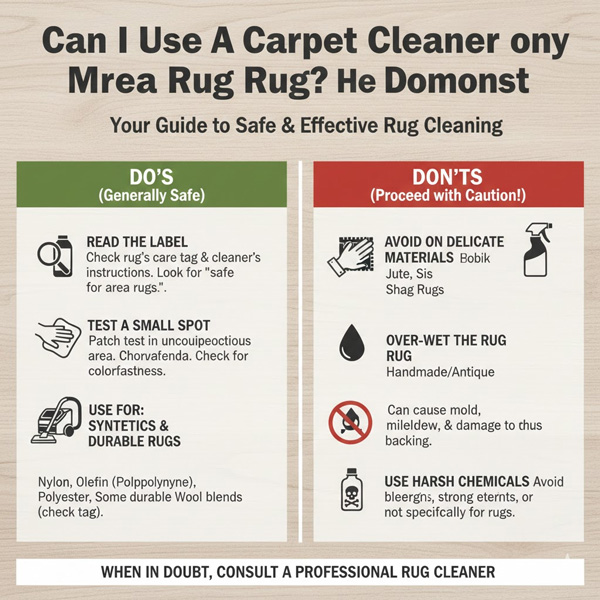
60‑Second Risk Assessment
❌ STOP — Do NOT use a carpet cleaner if your rug has ANY of the following:
- Hand‑knotted or hand‑tufted construction
- Wool, silk, viscose, cotton, or other natural fibers
- A fabric, jute, felt, or canvas backing
- Fringe (especially sewn‑on fringe)
- High pile or shag texture
- Antique, vintage, heirloom, or sentimental value
If even one box is checked, put the machine away.
✔️ PROCEED WITH EXTREME CAUTION ONLY IF your rug has ALL of the following:
- Machine‑woven (not tufted)
- Synthetic fibers only (polypropylene/olefin is safest)
- Low to medium pile
- Solid, non‑absorbent rubber or latex backing
- Inexpensive and easily replaceable
If this describes your rug exactly, continue—slowly.
>>> Can You Put a Rug in the Dryer? The Safe Way to Dry Small Rugs
The Ultimate Rule: Why Most Area Rugs Fail the Shampooer Test
A home carpet cleaner works by:
- Forcing large volumes of water and detergent into fibers
- Agitating mechanically
- Extracting some of the moisture back out
Wall‑to‑wall carpet is glued to a subfloor and dries upward. Area rugs are freestanding textiles with backs, edges, warps, and bindings that trap moisture.
This difference is everything.
Overwetting is the root cause of:
- Dye migration and bleed
- Shrinkage and buckling
- Latex breakdown
- Mold and mildew
- Structural rot in warp threads
Once these start, they cannot be undone.
The “Do” Protocol: A Safe Step‑by‑Step Guide (Approved Rugs Only)
Follow this checklist to the letter—or do not proceed.
Step 1: Pre‑Vacuum Thoroughly
Dry soil turns into mud when wet.
- Vacuum both sides if possible
- No beater bar
- Multiple slow passes
Skipping this step guarantees poor results.
Step 2: Solution & Dilution
- Use manufacturer‑approved solution only
- Dilute more than instructed for carpet (at least 25–50% weaker)
- Never use vinegar, bleach, ammonia, or DIY mixes
More soap ≠ cleaner. It equals residue.
Step 3: The Golden Rule of Moisture
Never saturate.
- Use minimal solution
- One slow wet pass only
- Follow with two to three dry suction passes
If the backing feels damp—not just cool—you are using too much water.
Step 4: Drying Is Everything
Drying must complete within 6–12 hours.
- Elevate the rug on blocks or a drying rack
- Use fans on both sides
- Add a dehumidifier
If it still feels damp the next morning, damage has already begun.
The “Don’t” Disasters: What Happens When the Rules Are Broken
Disaster 1: The Drowned Handmade Rug
Handmade rugs rely on cotton or wool warp threads.
What happens:
- Water wicks deep into the foundation
- Dyes migrate laterally
- Shrinkage pulls the rug out of square
Result: Structural distortion and color bleed—permanent.
Disaster 2: The Delaminated Tufted Rug
Hand‑tufted rugs are held together with latex adhesive.
What happens:
- Moisture re‑emulsifies the glue
- Face fibers detach from the backing
Bloom Nestify Autopsy Report:
Rug #7432: Latex backing dissolved from overwetting. Fiber shedding progressed within weeks. Result: Total loss.
Disaster 3: The Mildew Farm
Dense piles trap moisture internally.
What happens:
- Incomplete drying creates microbial growth
- Odors become permanent
- Health risks emerge
Surface dryness is misleading. Mold grows from the inside out.
Cost Comparison: The Real Math
Described Infographic
- Home shampooer rental: $40–$60
- Replacement synthetic rug: $150–$300
Versus:
- Water‑damaged hand‑tufted wool rug repair: $1,200+ (if salvageable)
- Antique rug damage: Often total loss
The savings are an illusion.
A Safe DIY Alternative for Light Soil
If your rug is lightly soiled but fails the shampooer test:
- Vacuum regularly
- Spot clean spills only
- Use dry compound cleaning designed for area rugs
- Rotate rug for even wear
These methods reduce soil load without introducing dangerous moisture.
The Professional Deep Clean: How It’s Done Right
Professional rug cleaning is not scaled‑up DIY. It is a different discipline.
The Difference
- Full fiber and dye testing
- pH‑controlled immersion washing
- Thorough rinsing
- Hydraulic extraction (far beyond home machines)
- Climate‑controlled drying rooms
This is the only safe deep‑clean method for:
- Handmade rugs
- Wool or silk rugs
- Tufted construction
- Valuable or sentimental pieces
When in Doubt, Dry It Out
The convenience of a home carpet cleaner is rarely worth the risk.
If your rug doesn’t meet every strict criterion, do not gamble. A shampooer can shorten a rug’s life from decades to months.
