

Wondering Can I Use Essential Oils or Fragrance Sprays on My Rug without causing damage? This helpful guide from Bloom Nestify explores safe ways to deodorize your rug while protecting its fibers and color. As part of our Rug Care & Cleaning, it gives you practical tips to keep your rug smelling fresh without risking long-term harm.
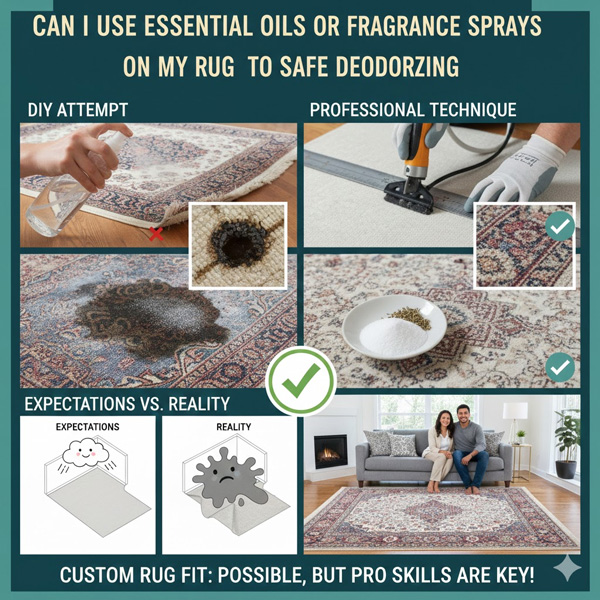
Understanding How Rugs React to Fragrances
Rugs do more than enhance your home’s style—they also absorb daily life. From foot traffic and pet activity to cooking smells and humidity, rugs naturally trap odors over time. It’s no surprise many homeowners turn to essential oils or fragrance sprays as a quick fix. But the real question is: are these solutions safe for your rug?
The answer depends largely on the type of rug you own. Natural fiber rugs like wool, silk, or cotton are more sensitive to liquids and chemicals. Synthetic rugs (like polyester or nylon) tend to be more durable but can still be affected by repeated exposure to oils or sprays.
Essential oils are highly concentrated plant extracts, while fragrance sprays often contain a mix of synthetic scents, alcohol, and stabilizers. Both can interact differently with rug fibers, potentially causing damage if used incorrectly.
Understanding your rug’s composition is the first step in choosing the safest deodorizing method.
Risks of Using Essential Oils on Rugs
Essential oils are popular for their natural scents and therapeutic properties, but they can pose several risks when applied directly to rugs.
Staining and Discoloration
Because essential oils are oil-based, they can leave behind dark or greasy stains. Light-colored rugs are especially vulnerable. Oils like patchouli, sandalwood, or vetiver are thicker and more likely to stain.
Fiber Damage
Natural fibers such as wool and silk are delicate. Strong essential oils can weaken these fibers over time, causing them to become brittle or lose their softness.
Residue Build-Up
Even if staining isn’t immediately visible, oils can leave a sticky residue that attracts dirt and dust. This can make your rug appear dull and dirty faster than usual.
Pet Safety Concerns
If you have pets, be extra cautious. Some essential oils—like tea tree, eucalyptus, and citrus oils—can be harmful to animals when inhaled or absorbed through their paws.
Safe Use Tip
If you still want to use essential oils, always dilute them with water and avoid direct application. A light mist sprayed from a distance is far safer than pouring or dabbing oil directly onto the rug.
>>> The Rug First-Aid Kit: 10 Essential Items Every Homeowner Should Have
Are Fragrance Sprays a Better Option?
Fragrance sprays are often marketed as fabric-friendly, making them seem like a better option for rugs. In many cases, they are—but not all sprays are created equal.
What Makes a Spray Safe?
Look for products that are:
- Specifically labeled safe for fabrics or upholstery
- Free from harsh chemicals or heavy dyes
- Low in alcohol content to prevent drying out fibers
Potential Downsides
Even fabric sprays can cause issues if overused. Too much liquid can seep into the rug backing, leading to mold or mildew growth—especially in humid environments.
Some sprays also leave behind a chemical residue that builds up over time, similar to essential oils.
Best Practice
Use fragrance sprays sparingly. Hold the bottle at least 12–18 inches away and apply a light mist rather than soaking the rug.
The Safest Ways to Deodorize Your Rug Naturally
If you want to eliminate odors without risking damage, natural methods are your best bet. These options are not only effective but also safe for most rug types.
Baking Soda Method
Baking soda is a powerful odor neutralizer. Sprinkle it evenly across your rug and let it sit for 20–30 minutes (or longer for strong odors). Then vacuum thoroughly.
For a subtle scent, you can mix a few drops of essential oil into the baking soda before applying—but make sure it’s well blended to avoid direct oil contact.
Fresh Air and Sunlight
Sometimes, the simplest solution is the most effective. Take your rug outside and let it air out. Sunlight helps kill odor-causing bacteria while fresh air removes trapped smells.
नियमित Vacuuming
Regular vacuuming prevents odor buildup by removing dust, dirt, and debris before they settle deep into the fibers.
Professional Cleaning
For persistent odors like pet urine or smoke, professional rug cleaning is the safest and most thorough solution. Experts use specialized equipment and cleaning agents designed for different rug materials.
>>> The Rug Defense Calendar: A Strategic Map for Seasonal & Annual Rug Preservation
DIY Rug Deodorizing Spray (Safe Recipe)
If you prefer a homemade solution, here’s a safe and simple DIY rug spray:
Ingredients:
- 1 cup distilled water
- 1 tablespoon white vinegar
- 5–10 drops of essential oil (optional)
Instructions:
- Mix all ingredients in a spray bottle
- Shake well before use
- Lightly mist over the rug from a distance
- Allow to air dry completely
This mixture helps neutralize odors without leaving heavy residue or damaging fibers.
Pro Tips for Long-Lasting Freshness
Keeping your rug fresh isn’t just about removing odors—it’s about preventing them in the first place.
- Always spot test any product on a hidden area
- Avoid over-wetting your rug
- Clean spills immediately to prevent lingering smells
- Rotate your rug regularly to ensure even wear
- Use rug pads to improve airflow and reduce moisture buildup
Consistency is key. A simple weekly cleaning routine can make a huge difference in maintaining a fresh-smelling home.
>>> How to Read a Rug Label: A Guide to Symbols (Cleaning, Pile, Material)
Should You Use Essential Oils or Fragrance Sprays?
So, can you use essential oils or fragrance sprays on your rug? The answer is yes—but with caution.
Essential oils offer natural fragrance but come with higher risks, especially if used improperly. Fragrance sprays are generally safer, but only when labeled for fabric use and applied sparingly.
If you want the safest approach, stick to natural deodorizing methods like baking soda, proper ventilation, and regular cleaning. These techniques not only protect your rug but also ensure a healthier indoor environment.
By understanding your rug’s material and using the right techniques, you can keep your space smelling fresh without compromising quality or longevity.
