

Wondering Can I Use an Indoor Rug Outdoors or bring an outdoor rug inside? This durability guide from Bloom Nestify breaks down what works, what doesn’t, and how different materials handle changing environments. As part of our Rug Care & Cleaning, it helps you make smart choices to protect your rugs and extend their lifespan-no matter where you use them.
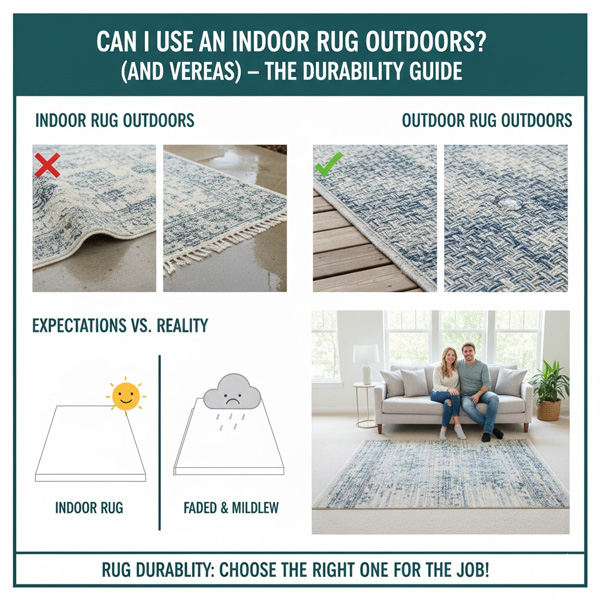
Indoor vs. Outdoor Rugs: What’s the Real Difference?
Before making any decisions, it’s important to understand how these rugs are designed.
Indoor Rugs:
- Made from materials like wool, cotton, silk, or viscose
- Focus on comfort, softness, and aesthetics
- Not designed to handle moisture or UV exposure
Outdoor Rugs:
- Typically made from synthetic fibers like polypropylene
- Built to resist water, mold, and sun damage
- Easier to clean and maintain
In short, indoor rugs prioritize feel, while outdoor rugs prioritize function.
>>> The Luxe Guide to Cowhide & Sheepskin Rugs: Real vs. Faux, Styling & Care
Can You Use an Indoor Rug Outdoors?
Short Answer: Not Recommended (But Sometimes Possible)
Indoor rugs are not designed for outdoor conditions—but there are a few exceptions if you’re careful.
What Can Go Wrong:
- Moisture Damage: Rain and humidity can cause mold, mildew, or fiber breakdown
- Fading: Sunlight can quickly bleach colors
- Structural Damage: Natural fibers may warp, shrink, or weaken
When It Might Work:
You can temporarily use an indoor rug outdoors if:
- It’s in a covered area (like a balcony or patio)
- There’s minimal exposure to rain or direct sun
- The rug is made of durable materials (like tightly woven cotton)
Best Practice:
Treat it as a temporary styling choice—not a permanent setup.
Can You Use an Outdoor Rug Indoors?
Short Answer: Yes—And It’s Often a Smart Choice
Outdoor rugs are surprisingly versatile indoors.
Why It Works:
- Highly durable and stain-resistant
- Easy to clean (great for messy areas)
- Resistant to spills and wear
Ideal Indoor Spaces:
- Kitchens
- Entryways
- Dining rooms
- Playrooms
The Trade-Off:
- Less soft underfoot
- More functional than luxurious in appearance
If practicality matters more than plush comfort, outdoor rugs can be a great indoor solution.
Material Matters: What Performs Where
The material of your rug plays the biggest role in whether it can handle different environments.
Best for Outdoor Use:
- Polypropylene: Water-resistant, mold-resistant, durable
- Polyester: Good UV resistance, easy to clean
Risky Outdoors:
- Wool: Absorbs moisture, prone to mildew
- Jute/Sisal: Extremely sensitive to water
- Viscose: Weakens with moisture, stains easily
Flexible Options:
- Cotton: Can work in covered outdoor areas but not ideal long-term
Knowing your rug’s material helps you avoid costly mistakes.
Durability Test: Questions to Ask Before Moving Your Rug
Before relocating any rug, ask yourself:
- Will it be exposed to rain or moisture?
- How much direct sunlight will it receive?
- Is the area high-traffic or low-traffic?
- Can I clean it easily if it gets dirty?
If the answer raises concerns, it’s best to keep the rug in its intended environment.
Tips for Extending Rug Life (Indoors or Outdoors)
No matter where your rug lives, these tips will help maximize its lifespan:
Use Rug Pads
They provide cushioning and reduce wear—especially on hard surfaces.
Rotate Regularly
Prevents uneven fading and traffic patterns.
Clean Appropriately
Match your cleaning method to the rug material.
Protect from Elements
Even outdoor rugs last longer with some shade or cover.
When to Invest in the Right Rug Instead
Sometimes, trying to “make it work” isn’t worth the risk.
Consider buying a dedicated rug if:
- Your outdoor space is fully exposed
- You need long-term durability
- You want low maintenance
- Your current rug is expensive or delicate
Outdoor rugs are designed to handle tough conditions—and often cost less than replacing a damaged indoor rug.
Flexibility Has Limits
So, can you use an indoor rug outdoors or vice versa?
- Indoor → Outdoor: Possible, but risky and temporary
- Outdoor → Indoor: Safe, practical, and often recommended
The key is understanding your rug’s material, environment, and purpose. While it’s tempting to repurpose what you already have, using the right rug in the right place will always give you better results in the long run.
When in doubt, prioritize durability over convenience—you’ll save money, time, and frustration.
