

Confused by the symbols on your rug tag? Learn How to Read a Rug Label with this easy-to-follow guide from Bloom Nestify. From cleaning instructions to pile types and material details, this article helps you decode every detail with confidence. As part of our Product Deep Dives, it empowers you to care for your rug properly and make smarter buying decisions.
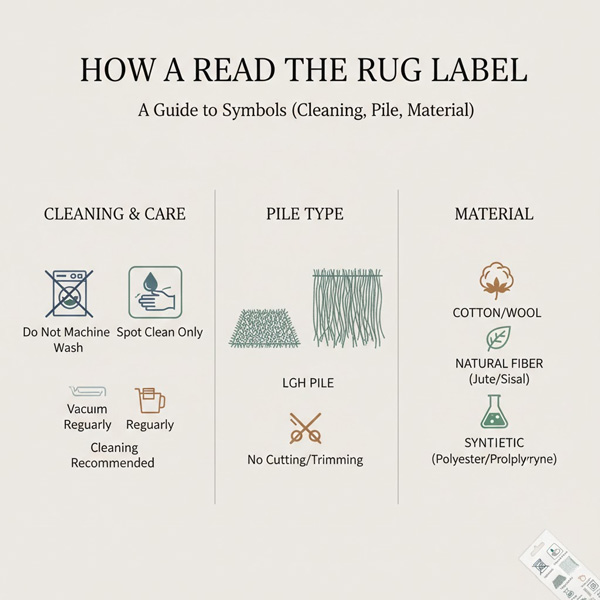
Why Rug Labels Matter
Rug labels aren’t just there for decoration—they’re your care manual.
What They Tell You:
- Proper cleaning methods
- Material composition
- Pile height and construction
- Safety and usage recommendations
Ignoring these details can lead to fading, damage, or even permanent stains.
Cleaning Symbols: What You Can (and Can’t) Do
Water Wash Symbol
- Tub icon: Machine washable
- Tub with hand: Hand wash only
Tip: Always follow temperature guidelines if provided.
Do Not Wash
- Crossed-out tub: Avoid water entirely
This is common for delicate rugs like wool, silk, or viscose.
Dry Clean Only
- Circle symbol: Professional cleaning recommended
Best for high-end or fragile rugs.
Bleach Warning
- Triangle symbol:
- Empty triangle → Bleach allowed
- Crossed triangle → No bleach
Bleach can damage fibers and fade colors if misused.
>>> The Rug Defense Calendar: A Strategic Map for Seasonal & Annual Rug Preservation
Pile & Construction Symbols
Pile Height Indicators
Some labels include descriptions like:
- Low pile: Flat and durable
- Medium pile: Balanced comfort
- High pile: Thick and plush
What it means: Higher pile rugs need more careful maintenance.
Construction Type
Labels may include terms like:
- Hand-knotted
- Hand-tufted
- Machine-made
Why it matters: Construction affects durability, value, and cleaning methods.
>>> Can I Use Essential Oils or Fragrance Sprays on My Rug? A Guide to Safe Deodorizing
Material Labels: What Your Rug Is Made Of
Natural Fibers
- Wool: Durable, stain-resistant
- Cotton: Lightweight and washable
- Jute/Sisal: Textured but moisture-sensitive
Synthetic Fibers
- Polypropylene: Stain-resistant and easy to clean
- Polyester: Soft and vibrant
- Nylon: Strong and resilient
Blended Materials
A mix of fibers designed to balance durability, comfort, and cost.
Tip: Always check percentages to understand performance.
Safety & Usage Symbols
Slip Resistance
- Indicates whether the rug has non-slip backing
If not included, consider adding a rug pad.
Indoor vs. Outdoor Use
- Icons may indicate suitability for outdoor conditions
Outdoor rugs are typically water- and UV-resistant.
Underfloor Heating Compatibility
- Some rugs are safe for heated floors, others are not
Important: Using the wrong rug can trap heat or damage fibers.
Common Label Terms You Should Know
“Spot Clean Only”
Clean small areas instead of washing the entire rug.
“Do Not Tumble Dry”
Air drying is required to maintain shape and fibers.
“Colorfast”
Indicates resistance to fading or bleeding when cleaned.
“Shedding Expected”
Common with wool rugs—normal and temporary.
How to Use Label Information in Real Life
Before Cleaning:
Check symbols to avoid damaging fibers.
Before Placement:
Ensure the rug suits the room (e.g., indoor vs. outdoor).
Before Buying:
Compare materials and care requirements to match your lifestyle.
>>> The Rug First-Aid Kit: 10 Essential Items Every Homeowner Should Have
Common Mistakes to Avoid
Ignoring Symbols
Assuming all rugs can be cleaned the same way leads to damage.
Misreading Material Labels
Not all “natural” rugs are easy to maintain.
Skipping Care Instructions
Even durable rugs have limits.
Removing Labels Too Soon
Keep them until you fully understand your rug’s needs.
From Confusion to Confidence
Rug labels may seem small, but they carry big importance. They’re your roadmap to proper care, helping you protect your investment and extend your rug’s lifespan.
Once you understand the symbols and terms, you’ll never look at a rug label the same way again. Instead of confusion, you’ll have confidence—knowing exactly how to clean, place, and maintain your rug.
